Family: Redstone
Juno I
Launch statistics
- 0
- Total launches
- 0
- Successes
- 0
- Failures
- —
- Success rate


_launch_vehicle_in_the_gantry%2C_Cape_Canaveral-800.webp)


_and_Juno_II_rockets.jpg)


_and_its_Explorer_1_payload-1600.webp)


_used_to_launch_Explorer_1-800.webp)


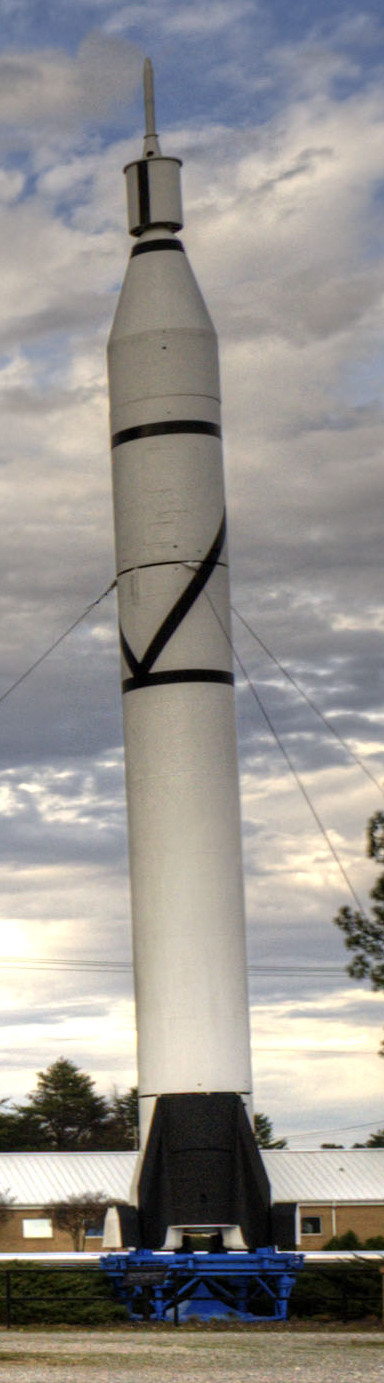

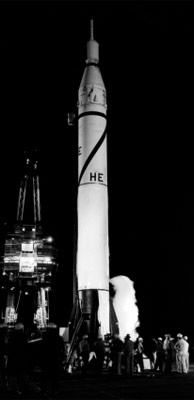
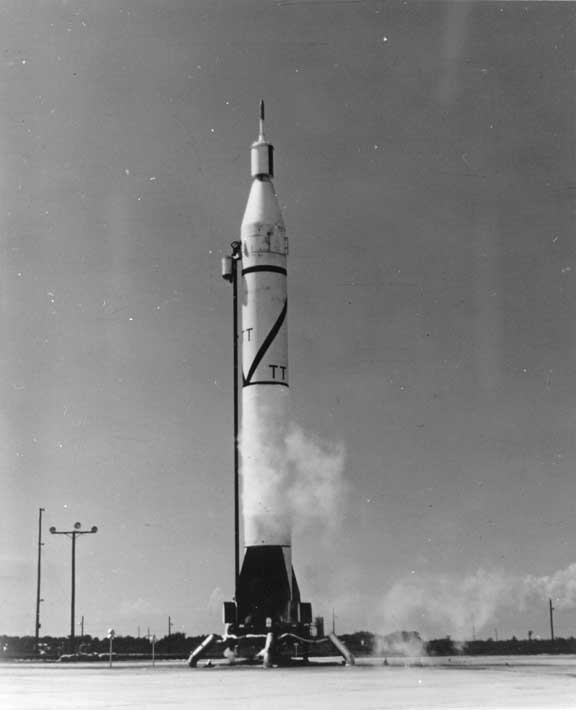
Juno I was the four-stage launch vehicle that placed the first American satellite, Explorer 1, in orbit in 1958. Derived from the Jupiter-C sounding rocket and therefore from the Redstone missile, it flew for barely nine months and in that time changed the standing of the United States in the space race.
Three-view drawing
History
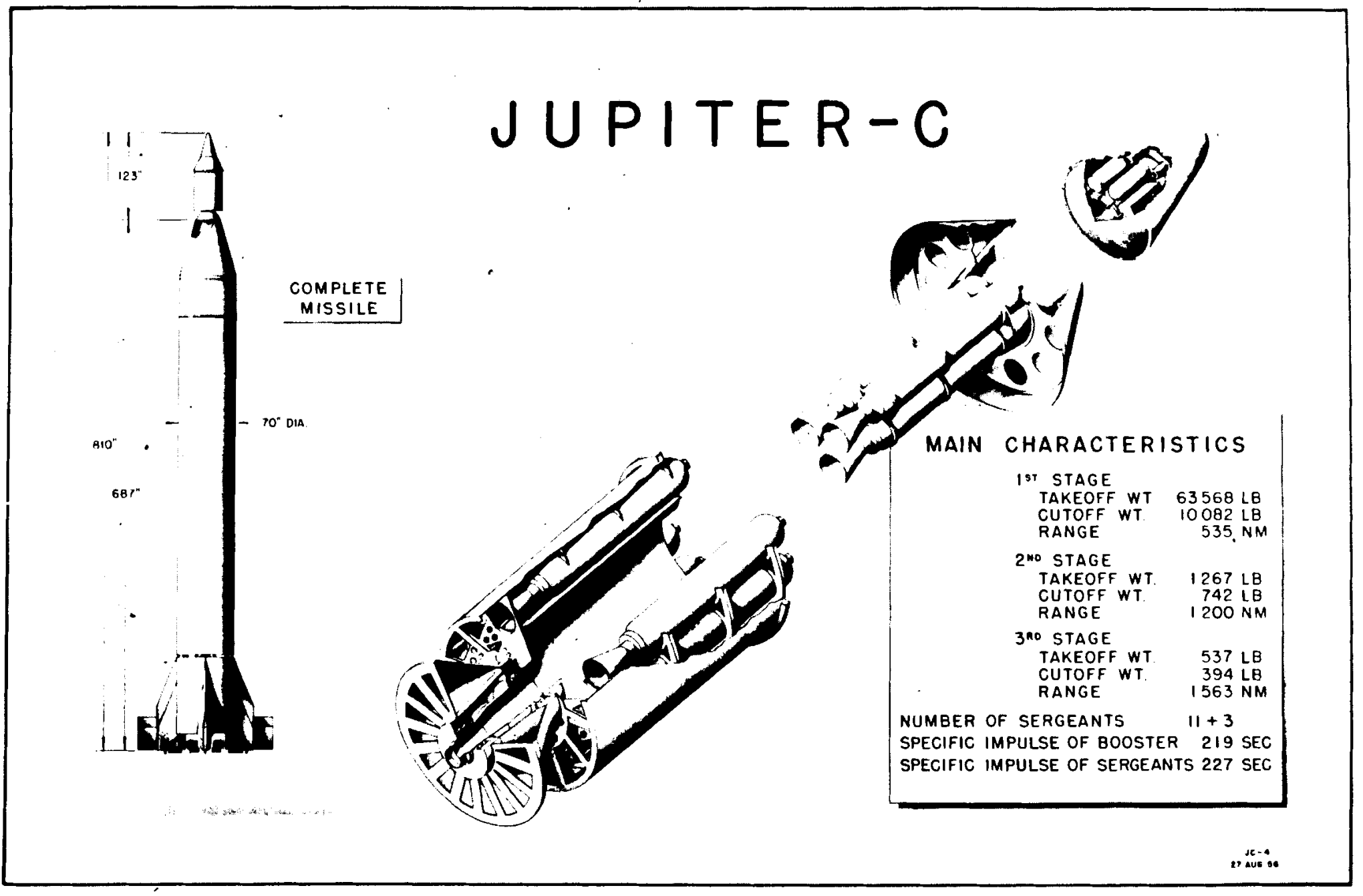
Juno I belonged to the Redstone launch vehicle family and was drawn from the Jupiter-C sounding rocket, whose first stage came from the Redstone missile. Three solid-fuel stages derived from the Sergeant missile were stacked on top of it, for four in all. The fourth sat on the spinning "tub" of the third stage and fired after third-stage burnout to push the payload to roughly 8 kilometres per second, orbital velocity. There was no upper-stage guidance: the tub and the fourth stage were spun up while the vehicle was still on the pad, so gyroscopic stiffness replaced an attitude control system that would otherwise have needed thrust vectoring or vernier thrusters.
The programme was the Army route into the Explorer Project. After the Soviet launch of Sputnik 1 on 4 October 1957 and the failure of the Vanguard attempt, the effort was funded to match Soviet achievements; the name was proposed in November 1957 by Jet Propulsion Laboratory director William Pickering, who picked Juno for the Roman goddess and for the vehicle's role as the satellite-launching version of the Jupiter-C. The first flight, on 1 February 1958, put Explorer 1 into orbit, the first successful US satellite and the confirmation that the Van Allen radiation belt existed.
The rocket's record was as short as it was uneven: six attempts, three successes and three failures, a 50 % hit rate. The successful flights carried Explorer 1, Explorer 3 and Explorer 4; the last attempt, on 23 October 1958 from Cape Canaveral Launch Pad 5, ended in failure. At 21.2 metres tall, 1.78 metres across, 29,060 kilograms in mass and with a capacity of a mere 11 kilograms to low Earth orbit, Juno I was soon superseded by Juno II, which derived from the Jupiter missile rather than the Redstone.
Launch timeline
| Date | Launch site | Outcome | Payload |
|---|
Versions
| Juno I | Juno I (five-stage) | |
|---|---|---|
| First launch | February 1, 1958 | October 23, 1958 |
| Last launch | August 24, 1958 | October 23, 1958 |
| Height | 21.2 m | — |
| Diameter | 1.8 m | — |
| Mass | 29,060 kg | — |
| Stages | 4 Best value in this row | 5 |
| LEO capacity | 11 kg | — |
| Reusable | No | No |
Images