Electron version
Electron with Photon
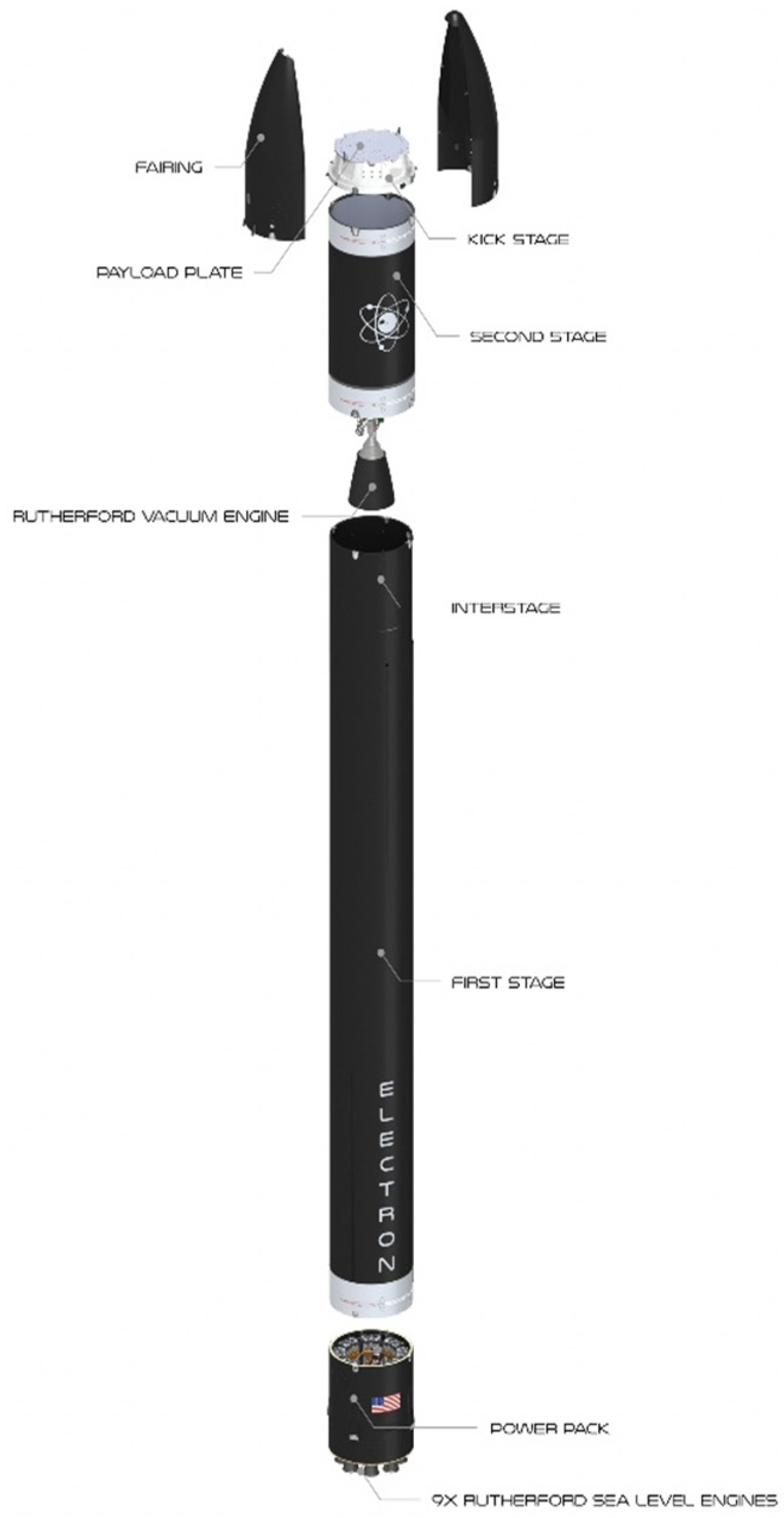
Electron topped with Photon, a satellite bus derived from the kick stage that first acts as the final stage and then operates as a satellite. It first flew on 31 August 2020 and on 28 June 2022 sent NASA's CAPSTONE probe towards the Moon, Electron's first lunar launch.
- August 31, 2020
- First launch
- No
- Reusable
History
From stage to spacecraft
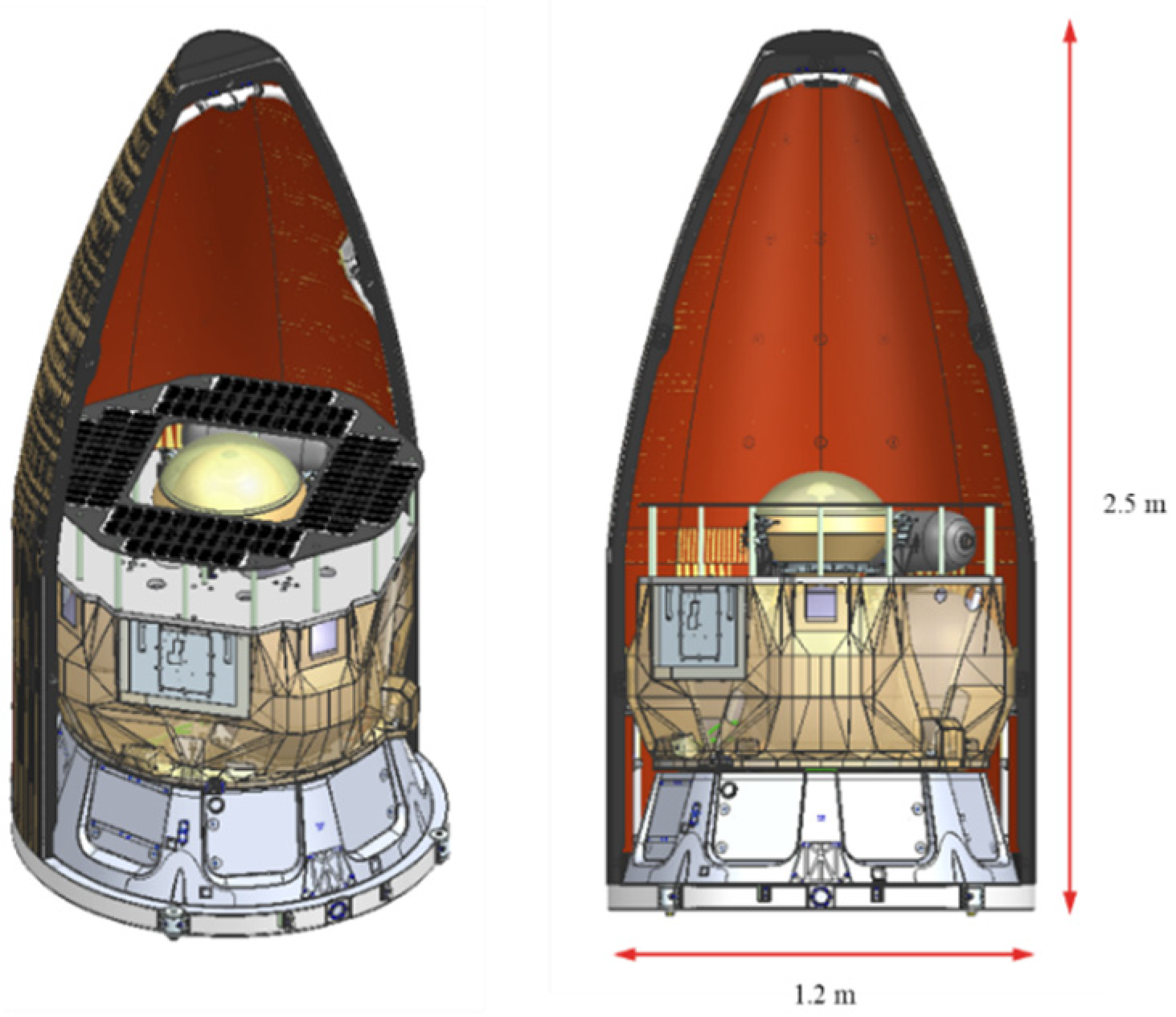
In the "Electron with Photon" configuration the rocket's third stage is not the standard kick stage but Photon, a satellite bus Rocket Lab derived from that same kick stage. The company announced the project in April 2019 with two aims: to give customers a ready-to-fly platform for technology demonstrations without developing a full spacecraft, and to diversify its revenue beyond launch services. From the outset it named lunar orbit as a target, enabled by a bipropellant propulsion system. Photon is built at Rocket Lab's factory in Huntington Beach, California, communicates on S-band and can carry different engines: the kick stage's Curie, the HyperCurie—a hypergolic, electrically pumped evolution of Curie—and even third-party engines.
The practical difference from the kick stage lies in what happens after deployment. The kick stage's job ends once it releases its payloads; Photon first acts as the launcher's final stage and then stays in orbit as a standalone satellite with its own power, attitude control and communications. That dual role is what sets this Electron configuration apart.
First Light and Pathstone
The debut came on 31 August 2020 with "I Can't Believe It's Not Optical", Electron's fourteenth mission and its return to flight after the failure of 4 July that year. It lifted off from Mahia (LC-1A, New Zealand), and the Photon, named First Light, placed Capella Space's Sequoia radar satellite, of about 100 kg, into a 500 km, 45° low Earth orbit. With that done, First Light went on to operate on its own to demonstrate the systems a long life in orbit demands and the plain kick stage lacked; it also carried a low-resolution video camera to show off its payload-hosting capability.
The second unit, Pathstone, flew on 22 March 2021 on "They Go Up So Fast", Electron's nineteenth mission. Before turning into a satellite it deployed payloads for BlackSky, Fleet Space, Myriota, Care Weather Technologies, the University of New South Wales Canberra Space and the US Army Space and Missile Defense Command into 450 km and 550 km orbits; on that flight Rocket Lab deployed its 100th satellite to orbit. Pathstone was a risk-reduction demonstration for NASA's lunar mission, testing power and thermal management, attitude control with reaction wheels, and communications. On both flights Photon used the Curie engine.
CAPSTONE, bound for the Moon
The first operational mission was CAPSTONE, a 12-unit, 80 kg CubeSat tasked with verifying in flight the stability of the near-rectilinear halo orbit planned for the Gateway station. NASA announced in February 2020 that it would launch from Rocket Lab's new complex at Wallops, Virginia, but certification of the autonomous flight termination system took longer than expected and the launch moved to Mahia. The launch contract was worth US$9.95 million.
Electron lifted off from LC-1B on 28 June 2022. It was the rocket's first launch to the Moon and, because of the heavy payload, the first stage flew stripped to its bare frame, with no recovery hardware and no cameras: that hardware takes about 10 to 15 per cent of a launch's payload capability. The mission used Photon's deep-space version, which Rocket Lab calls Explorer, with the HyperCurie engine and larger tanks. After separating from the second stage, Photon raised its apogee over six days with six burns at perigee and finished with the trans-lunar injection, after which it released CAPSTONE. The probe followed a ballistic transfer of about four months and entered its lunar orbit on 14 November 2022. Once NASA's requirements were met, Rocket Lab used the Photon itself for a low-altitude lunar flyby.
Stage versus spacecraft
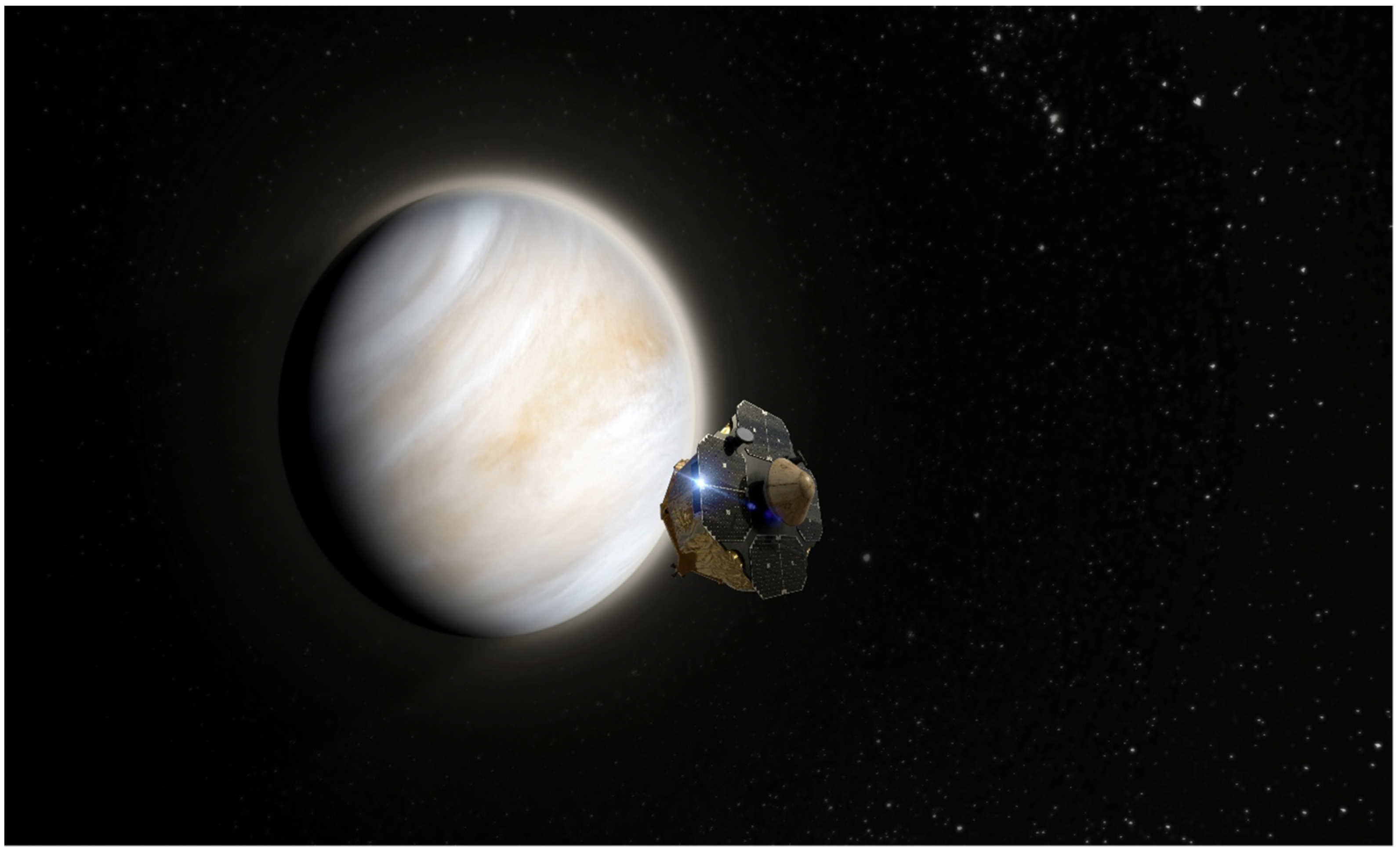
This configuration should be kept apart from Photon as a product. Rocket Lab later split the platform into several families—Explorer, Lightning, Pioneer and Photon—and some have flown on other rockets: Varda Space Industries' Pioneer buses, for example, rode Falcon 9. Those flights are not "Electron with Photon". The missions on Electron's manifest are: a Photon for LOXSAT, a cryogenic fluid management demonstration for Eta Space and NASA, and the private Venus mission, in which a Photon will fly past the planet to relay data from an atmospheric-entry probe developed with MIT; its date has kept slipping from one source to the next.
.webp)
Powerplant
Photon third stage atop Electron's two stages. Low-Earth-orbit version (First Light, Pathstone): Curie engine, about 0.12 kN. Lunar and interplanetary version (Explorer, CAPSTONE): HyperCurie engine, electrically pumped hypergolic bipropellant, about 0.4 kN and 310 s specific impulse.
Multimedia
%2C_seen_from_Nuhaka%2C_New_Zealand-1600.webp)