Project Mercury · NASA · Crewed
Mercury-Atlas 9
- May 15, 1963, 1:04 PM
- Launch date
- 1
- Crew size
- 1 day 10 hr
- Duration
- Success
- Outcome
-1600.webp)


-1600.webp)


Mercury-Atlas 9 was the ninth and final mission of Project Mercury, and the only American flight of its era to spend more than a full day in orbit. It lifted off from Launch Complex 14 at Cape Canaveral on 15 May 1963 with U.S. Air Force major L. Gordon Cooper, Jr. aboard spacecraft No. 20, which he named Faith 7, atop Atlas No. 130-D. Cooper completed 22 Earth orbits before splashing down in the Pacific 34 hours, 19 minutes and 49 seconds after liftoff — the longest flight an American astronaut had made to that point, and the last time an American was launched alone on an entirely solo orbital mission. The flight was not a foregone conclusion. After the six-orbit flight of Mercury-Atlas 8, NASA argued internally over whether the first-generation hardware had been pushed far enough and whether it was time to move on to Gemini. Manned Spacecraft Center officials took the opposite view: the Mercury team deserved the chance to keep a man in space for a full day, not least because every Soviet Vostok after the first had already exceeded that mark. That view prevailed. In September 1962 NASA concluded negotiations with McDonnell to modify four spacecraft to a one-day configuration, and in January 1963 the plan grew from 18 orbits to 22. Flying for a day meant rebuilding the capsule from the inside out. The periscope and a redundant set of thrusters came out; extra batteries and oxygen tanks went in. With all the added equipment and consumables, Faith 7 came to weigh over 3,000 pounds (1,400 kg), the heaviest Mercury spacecraft flown. The launch vehicle was modified too: an upgraded propulsion system with a hypergolic igniter that removed the need for hold-down time at liftoff, booster actuators offset to prevent a repeat of the roll transient seen on MA-8, and a list of detail fixes drawn from the previous year's Atlas failures. In orbit Cooper worked a programme of eleven experiments — a xenon-strobe sphere ejected from the nose, a tethered balloon that never deployed, radiation measurements, dim-light photography, infrared weather imagery — and transmitted the first television pictures sent back from space by an American astronaut. He also slept in fragments, ate little and badly, and demonstrated that a human being could keep working in orbit well past the few hours of the earlier flights. It was the end of the flight that fixed the mission in history. On the 19th orbit the 0.05 g light came on when the spacecraft was not reentering; on the 20th Cooper lost all attitude readings; on the 21st a short circuit in the bus bar feeding the main inverter left the automatic stabilization and control system without electrical power. With John Glenn reading up a revised checklist from the tracking ship Coastal Sentry Quebec, Cooper held retro attitude by hand, fired the retrorockets manually and flew the reentry using lines drawn on his window and his wristwatch for timing. He splashed down four miles (6 km) from the carrier USS Kearsarge, the most accurate landing of the programme. A tenth mission — three days and 48 orbits, flown by Alan Shepard — was debated afterwards; NASA decided it was time for Gemini, and Mercury closed having met all of its goals.
Payload
Faith 7 was Mercury spacecraft No. 20, launched by Atlas 130-D and modified by McDonnell for a one-day mission: the periscope and a redundant set of thrusters came out, extra batteries and oxygen tanks went in. The added equipment and consumables pushed it past 3,000 pounds (1,400 kg), the heaviest Mercury capsule, though Wikipedia also gives a launch mass of 1,360 kg; both figures are Wikipedia's, not NASA's. Cooper carried 11 experiments in flight engineering, biomedicine and space science. On the third orbit, at T+3 hours 25 minutes, he ejected from the nose a six-inch (152 mm) sphere fitted with xenon strobe lights to practise acquiring a flashing beacon: he tracked it from the fourth to the sixth orbit, becoming the first man to launch a satellite from space. At about T+9 hours he tried, without success, to deploy a tethered balloon: 30 inches (762 mm) of PET film inflated with nitrogen, tied by a 100-foot (30 m) nylon line to the antenna canister and fitted with a strain gauge to measure atmospheric drag. He also made Geiger-counter radiation measurements, dim-light photographs of the zodiacal light and the night airglow, terrain photography and infrared weather pictures. An 8-pound Lear Siegler slow-scan television system sent back, on the 17th orbit, the first television images from an American astronaut. The only crew was Gordon Cooper, a USAF major: he could not prepare the freeze-dried food packages and kept to cubed food and bite-sized sandwiches; the urine collection system worked well, and before re-entry he took a dextroamphetamine tablet on orders.
History
A decision that was not obvious: one more flight, or straight to Gemini?
When Walter Schirra splashed down after the six orbits of Mercury-Atlas 8 in October 1962, Project Mercury had already done what had been asked of it: put an American in orbit, keep him there for several revolutions, bring him home and do it again. The argument that opened inside NASA was strategic rather than technical. One side held that MA-8 should be the last Mercury mission: the first-generation hardware had been pushed far enough, taking more chances on a still longer flight was not warranted, and the sensible course was to move on to the Gemini programme.
Manned Spacecraft Center officials argued the opposite. They believed the Mercury team should be given the chance to test a human being in space for a full day. There was also a direct comparison at stake: every Soviet single-seat Vostok launched after Vostok 1 had lasted more than a day, so a long Mercury flight would bring the American spacecraft up to the same level as the Soviet one.
The argument was settled in favour of flying. In September 1962 NASA concluded negotiations with McDonnell to modify four Mercury spacecraft — numbers 12, 15, 17 and 20 — to a configuration that could support a one-day mission. In October, spacecraft 20 was delivered to Cape Canaveral explicitly assigned to the MA-9 one-day flight, and on 19 October McDonnell reported that all of its system tests were complete. The programme machinery moved in parallel: on 16 November the Manned Spacecraft Center presented the Department of Defense with recovery and network support requirements for the mission; on 28 November Mercury Simulator 2 was modified to the one-day orbital configuration; and on 3 and 4 December a pre-operational conference was held at Patrick Air Force Base, Florida, to review plans and the readiness of Defense Department support.
The scope of the flight grew as planning advanced. On 3 January 1963 NASA made tentative plans to extend the mission from 18 orbits to 22, and that same month the centre's public affairs officer told an audience of Texas Associated Press managing editors that Cooper's flight might run to 22 orbits and last 34 hours. In December 1962 three categories of experiment had been proposed that would shape the flight plan: space flight engineering and operations, biomedical experiments, and space science. And when a Congressional committee asked in January 1963 whether NASA planned another Mercury flight after MA-9, the answer was that if the flight did not accumulate sufficient test data, backup launch vehicles and spacecraft were available to meet the requirements.
Spacecraft 20: rebuilding a Mercury for a full day
The one-day modifications followed a simple, hard logic: take out what was not essential to make room for what would let the spacecraft last. The periscope and a redundant set of thrusters were removed; extra batteries and oxygen tanks were added. The price was mass. The added equipment and the consumables needed for a day-long mission raised the weight of Faith 7 considerably: it came to weigh over 3,000 pounds (1,400 kg), making it the heaviest Mercury capsule flown.
Those changes were tracked meticulously. On 11 January 1963 the Project Engineering Field Office at Cape Canaveral reported on the number of changes made to spacecraft 20 since its arrival from McDonnell, in a document devoted precisely to the differences between spacecraft 16 (MA-8) and spacecraft 20 (MA-9). Three days later spacecraft 15A was redesignated 15B and allocated as the MA-9 backup. Training was planned with the same care: on 21 January, after reviewing the spacecraft systems and the mission rules, the Simulations Section drafted a simulator training plan for the flight.
Atlas 130-D
The launch vehicle received as much attention as the capsule. The Atlas flown on MA-9 carried several technical improvements, most notably an enhanced propulsion system with a hypergolic igniter that eliminated the need for hold-down time at launch to prevent rough combustion. The upgraded MA-2 engines had baffled injector heads as well as the hypergolic igniter, so the rough combustion cutoff sensors were operated open loop and for qualitative purposes only. Dispensing with the three-second hold-down had a useful consequence: the propellant conserved would allow a longer booster burn. On MA-8, 112 gallons of fuel had been removed before launch and an extended burn had not been possible; on this flight there would be enough propellant to extend burn time.
Confidence was not blind, however. With seven successful Mercury launches in a row, the failures of the early days seemed like a distant memory by early 1963, yet the Atlas launch record remained spotty. At the first senior meeting of the year, on 11 January, Walter Williams noted that the Air Force had still not explained two Atlas F failures from the second half of 1962; until the investigation committees released their findings and cleared the Atlas D of guilt by association, Cooper's flight could be delayed. In the seven months between Schirra's flight and Cooper's there were five Atlas D failures, one of them an Atlas-Agena and the rest operational ICBM tests.
Vehicle 130-D itself caused a scare before it ever flew: at its factory rollout on 30 January it was found to have damaged wiring and had to be sent back for repairs. It rolled out a second time on 15 March and passed its tests with flying colours, to the point that Convair engineers called it their best bird yet. The booster actuators were offset slightly to prevent a recurrence of the liftoff roll transient seen on MA-8, and several minor modifications were made as a result of post-flight findings from the previous year's failed Atlas launches: a plastic liner inside the turbopumps to stop turbine blades rubbing against the casing and triggering an explosion from a friction spark, improvements to the programmer wiring, and additional steps to prevent a fire breaking out in or around the thrust section.
The pilot: Gordon Cooper and the run-up to the flight
Gordon Cooper had served as Schirra's backup on MA-8. On 13 November 1962 he was named pilot of the MA-9 one-day orbital mission, then slated for April 1963, with Alan Shepard as backup. Cooper chose the name Faith 7 for his capsule because of the faith he had in the Atlas booster and the Mercury spacecraft to carry the mission out successfully — a choice that, as The Washington Post reported, some NASA officials viewed with scepticism.
At his first press conference, on 8 February, Cooper admitted to not knowing much about the booster's problems and talked instead about the enhancements made to his capsule. Preparation continued until 22 April 1963, when Atlas 130-D and spacecraft 20 were stacked on the pad at Launch Complex 14.
The support and recovery effort was enormous, and it followed from a particularity of the mission: MA-9 would orbit over nearly every part of the world between 32.5 degrees north and 32.5 degrees south. Covering that band took 28 ships, 171 aircraft and 18,000 servicemen. Cooper's fellow Mercury Seven astronauts spread out across the globe: besides Shepard as backup, John Glenn was aboard a command ship near Japan, Scott Carpenter in Hawaii, Gus Grissom at a tracking station in Mexico, Wally Schirra served as capsule communicator at Mercury Control at Cape Canaveral and Deke Slayton was an observer at the Cape. Flight direction was split into two shifts, with Chris Kraft leading the Red Team and John Hodge the Blue.
The first attempt came on 14 May. When Cooper boarded Faith 7 at 6:36 that morning he found a gift left by Shepard: knowing that Cooper would have a new version of the urine containment device Shepard had lacked on his Mercury-Redstone 3 flight — which had forced him to relieve himself inside the suit during a long countdown hold — Shepard had left a suction-cup pump as a joke, with instructions on the handle reading Remove Before Launch. Neither the gift nor Cooper made the trip that day: problems with radar in Bermuda and with the diesel engine that rolled back the gantry forced a cancellation until 15 May.
15 May 1963: launch
Faith 7 lifted off from Launch Complex 14 at 8:04:13 a.m. Eastern time on 15 May 1963. At T+60 seconds the Atlas began its pitch program, and shortly afterwards the vehicle passed through max Q. At T+2 minutes 14 seconds Cooper felt booster engine cutoff and staging as the two Atlas booster engines were left behind; the launch escape tower was jettisoned next. At T+3 minutes the cabin pressure sealed at 5.5 psi (38 kPa) and Cooper reported that Faith 7 was all go.
At about T+5 minutes came sustainer engine cutoff and Faith 7 entered orbit at 17,547 mph (7,844 m/s). After separation the spacecraft turned around to orbit attitude and Cooper watched the spent Atlas lag behind and tumble for about eight minutes. Over Zanzibar on the first orbit he learned that the orbital parameters were good enough for at least 20 orbits; passing over Guaymas, Mexico, still on the first orbit, capsule communicator Gus Grissom told him the ground computers said he was go for seven orbits.
Atlas performance was excellent overall. The upgraded propulsion system worked well, with slightly above nominal booster engine thrust. Measurable propellant slosh occurred from T+55 to T+120 seconds, caused by slightly lower than nominal autopilot gains. The trajectory was slightly more lofted than nominal because the DC voltage in the booster electrical system ran about 0.7 volts above normal, an effect counteracted by the better than nominal engine performance. Booster engine cutoff came at T+132 seconds, escape tower jettison at T+141 seconds and sustainer cutoff at T+303 seconds.
Twenty-two revolutions and eleven experiments
At the start of the third orbit Cooper went through his list of eleven experiments. The first was to eject a six-inch (152 mm) sphere fitted with xenon strobe lights from the nose of the spacecraft, to test whether a pilot could spot and track a flashing beacon in orbit. At T+3 hours 25 minutes he threw the switch and heard and felt the beacon detach, but failed to see it in the approaching dusk or on the nightside pass. On the fourth orbit he did see it pulsing and told Scott Carpenter on Kauai, Hawaii, that he had been with the little rascal all night. He spotted it again on the fifth and sixth orbits.
Also on the sixth orbit, at about T+9 hours, he set up cameras, adjusted attitude and set switches to deploy a tethered balloon from the nose: a 30-inch (762 mm) PET film balloon painted fluorescent orange, inflated with nitrogen and attached by a 100-foot (30 m) nylon line to the antenna canister. A strain gauge in the canister was to measure the difference in atmospheric drag between the roughly 100-mile (160 km) perigee and the roughly 160-mile (260 km) apogee. Cooper tried several times to eject it; the balloon never came out.
On the seventh orbit, while engaged in radiation experiments, Cooper passed Schirra's orbital record. After ten hours the Zanzibar tracking station told him the flight was go for 17 orbits. He was circling the Earth every 88 minutes 45 seconds at an inclination of 32.55 degrees to the equator.
The observational harvest was substantial. Cooper reported that he could see roads, rivers, small villages and even individual houses when lighting and background conditions were right — a claim later confirmed by the two-person Gemini crews, one of which included Cooper himself. On the ninth orbit, not sleepy, he took some of the best photographs of the flight: the Tibetan highlands and the Himalayas. On the sixteenth, entering night, he pitched the spacecraft to follow the plane of the ecliptic slowly and watched the zodiacal light and the night airglow layer through the window, photographing both dim-light phenomena from Zanzibar across the nightside to Canton Island; the pictures were later found to be overexposed but still held valuable data. He also obtained images of North Africa, the Arabian peninsula, eastern India, Burma and the Himalaya region, plus a few of the Pacific and Indian Oceans. Worldwide weather during the flight was extremely favourable, with most of the regions overflown dominated by high pressure zones — on the three previous flights only the Western Sahara and the southwestern United States had been reliably cloudless — although haze and air pollution defeated him over Los Angeles and Calcutta, neither of which he could see through the smog.
At the start of the 17th orbit, crossing Cape Canaveral, Cooper transmitted slow-scan black and white television pictures to Mercury Control. The image showed a ghostly figure in which little more than a helmet and hoses could be made out; it was the first time an American astronaut had sent back television images from space. On the 17th and 18th orbits he took infrared weather photographs and moonset Earth-limb pictures and resumed Geiger counter measurements of radiation. He sang during orbits 18 and 19 and marvelled at the greenery of the Earth. It was nearing thirty hours since liftoff.
Eating, sleeping and enduring a day in a cabin
The scheduled rest period ran from the ninth through the thirteenth orbit. Cooper had a dinner of powdered roast beef mush and water, photographed Asia and reported spacecraft condition, but was not sleepy and used the ninth orbit for photography. He then slept intermittently for six hours across orbits 10 to 13, waking from time to time to take more pictures, tape status reports and readjust his suit temperature control, which kept getting too hot or too cold. Over the flight he took several naps of about an hour each and suffered some discomfort from the pressure suit compressing his knees, which he relieved by moving his feet slightly upward.
Food was the weak point. Cooper had little appetite and ate only because it was scheduled. The food containers and the water dispenser system proved unwieldy and he could not properly prepare the freeze-dried packages, so he limited himself to cubed food and bite-sized sandwiches; he found the cubes largely unpalatable, which contributed to his eating so little. He had no difficulty urinating and the collection system worked well, though transferring urine to storage bags in the cramped cabin proved awkward. Some time before reentry, complying with an order, he took a dextroamphetamine tablet to ensure his alertness, and reported no sleepiness for the remainder of the flight.
On the fourteenth orbit he took stock of the spacecraft: the oxygen supply was sufficient and the attitude control peroxide stood at 69 percent in the automatic tank and 95 percent in the manual one. He spent most of the fifteenth orbit calibrating equipment and synchronising clocks.
The electrical failure of the final orbits
The first sign of trouble came on the 19th orbit, when the spacecraft 0.05 g light came on. It turned out to be a faulty indicator: the spacecraft was not reentering. On the 20th orbit Cooper lost all attitude readings. On the 21st a short circuit occurred in the bus bar serving the 250 VA (115 V, 400 Hz) main inverter, leaving the automatic stabilization and control system without electrical power. The failure was therefore progressive: a false warning, then the loss of the attitude reference, and finally the loss of the automatic system that would have pointed the capsule for retrofire.
A further discomfort was added to the failures: Cooper noted that the carbon dioxide level was rising both in the cabin and in his suit. Passing over Zanzibar he told Carpenter, in a line that entered the programme's folklore, that things were beginning to stack up a little. Throughout the sequence he stayed calm.
Retrofire and a hand-flown reentry
On the 21st orbit John Glenn, aboard the tracking ship Coastal Sentry Quebec near Kyushu, Japan, helped Cooper prepare a revised retrofire checklist: because of the malfunctions, many of the steps would have to be done manually. Only Hawaii and Zanzibar were within radio range on that last orbit, but communications were good.
At the end of the 21st orbit Cooper contacted Glenn again. He reported that the spacecraft was in retro attitude and that he was holding it manually, and that the checklist was complete. Glenn gave him a ten-second countdown. Cooper kept the spacecraft aligned at a 34-degree pitchdown angle and fired the retrorockets manually on the mark. To fly the manoeuvre he had drawn lines on his window to stay aligned with the constellations; he later said he used his wristwatch to time the burn and his eyes to hold attitude.
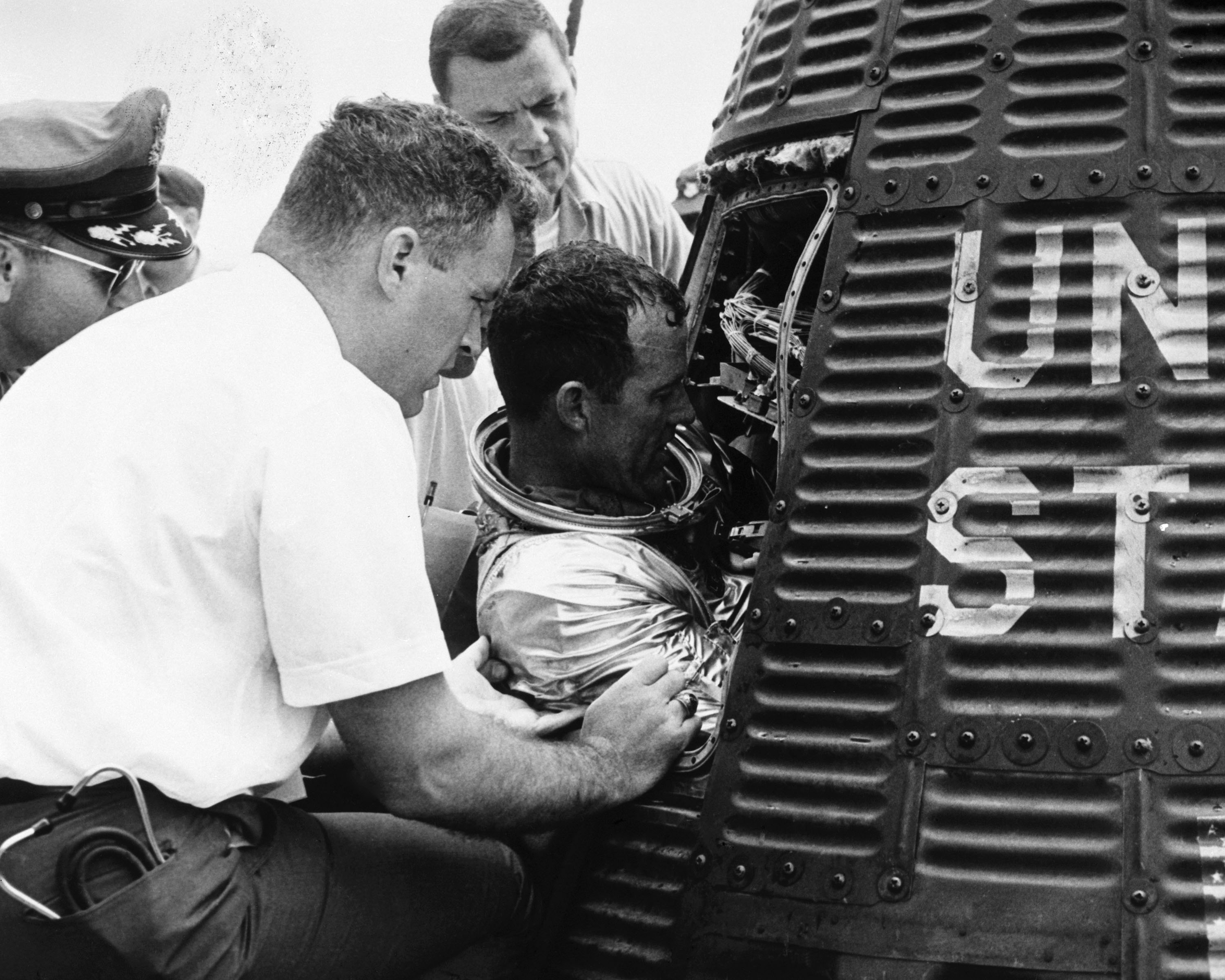
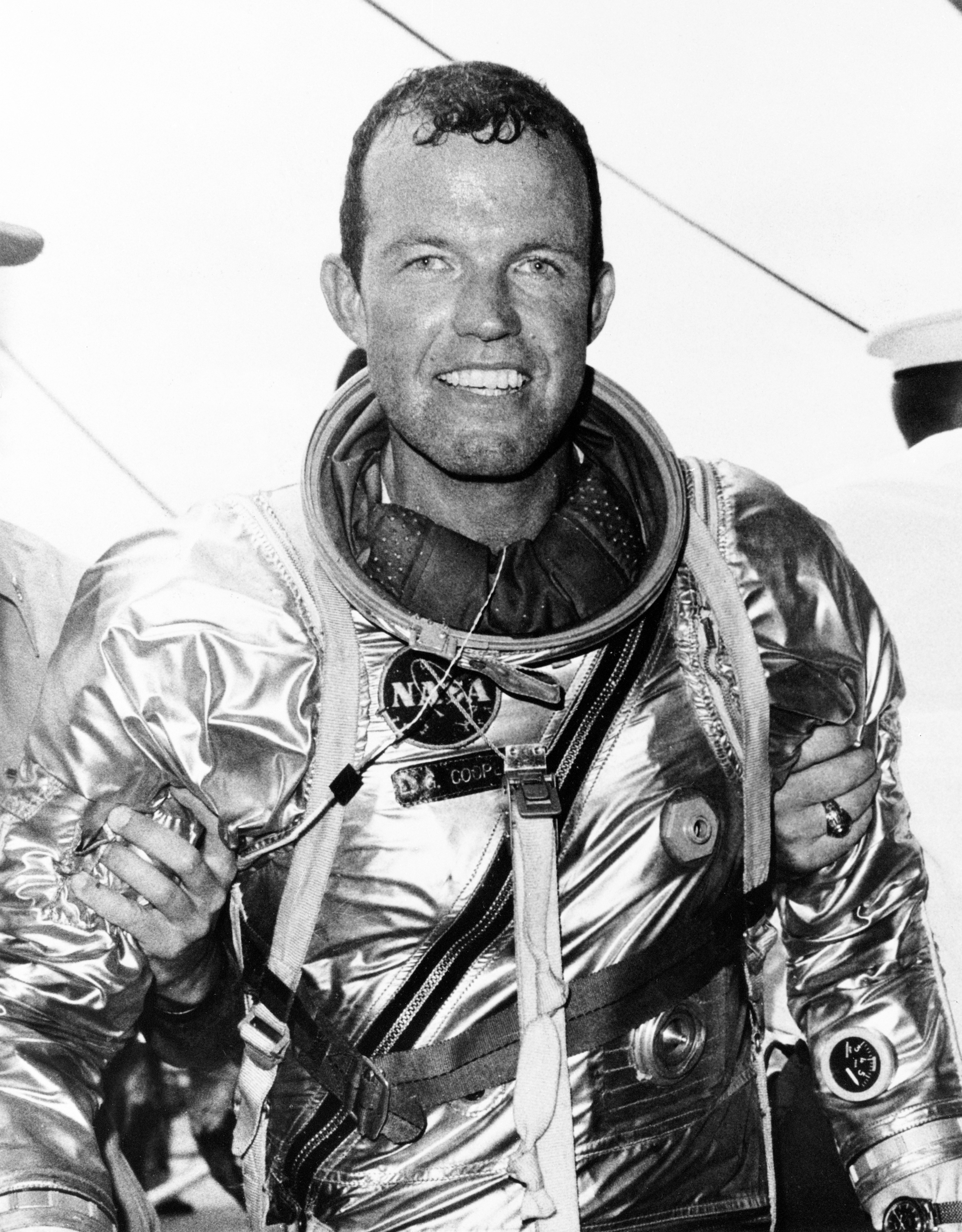
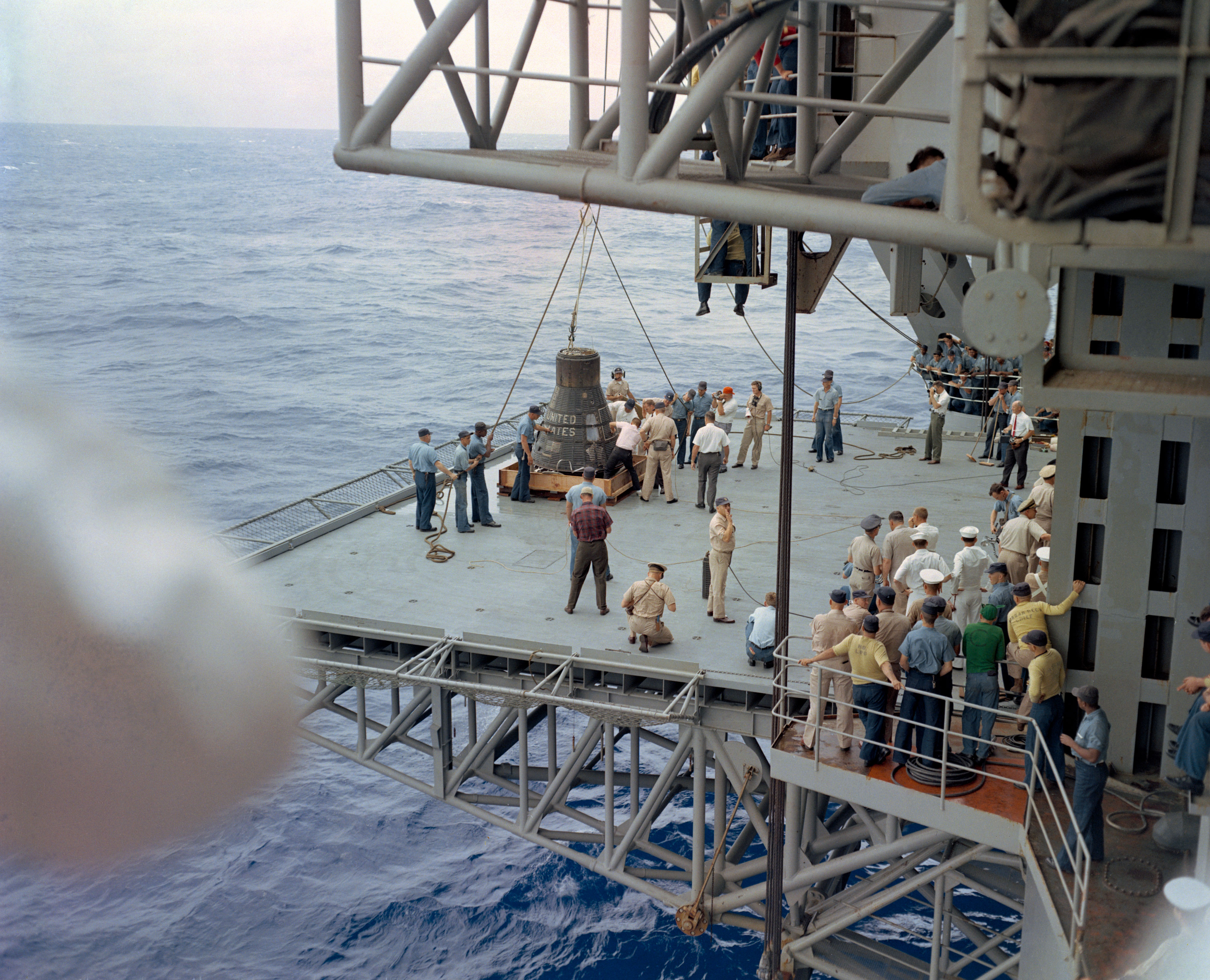
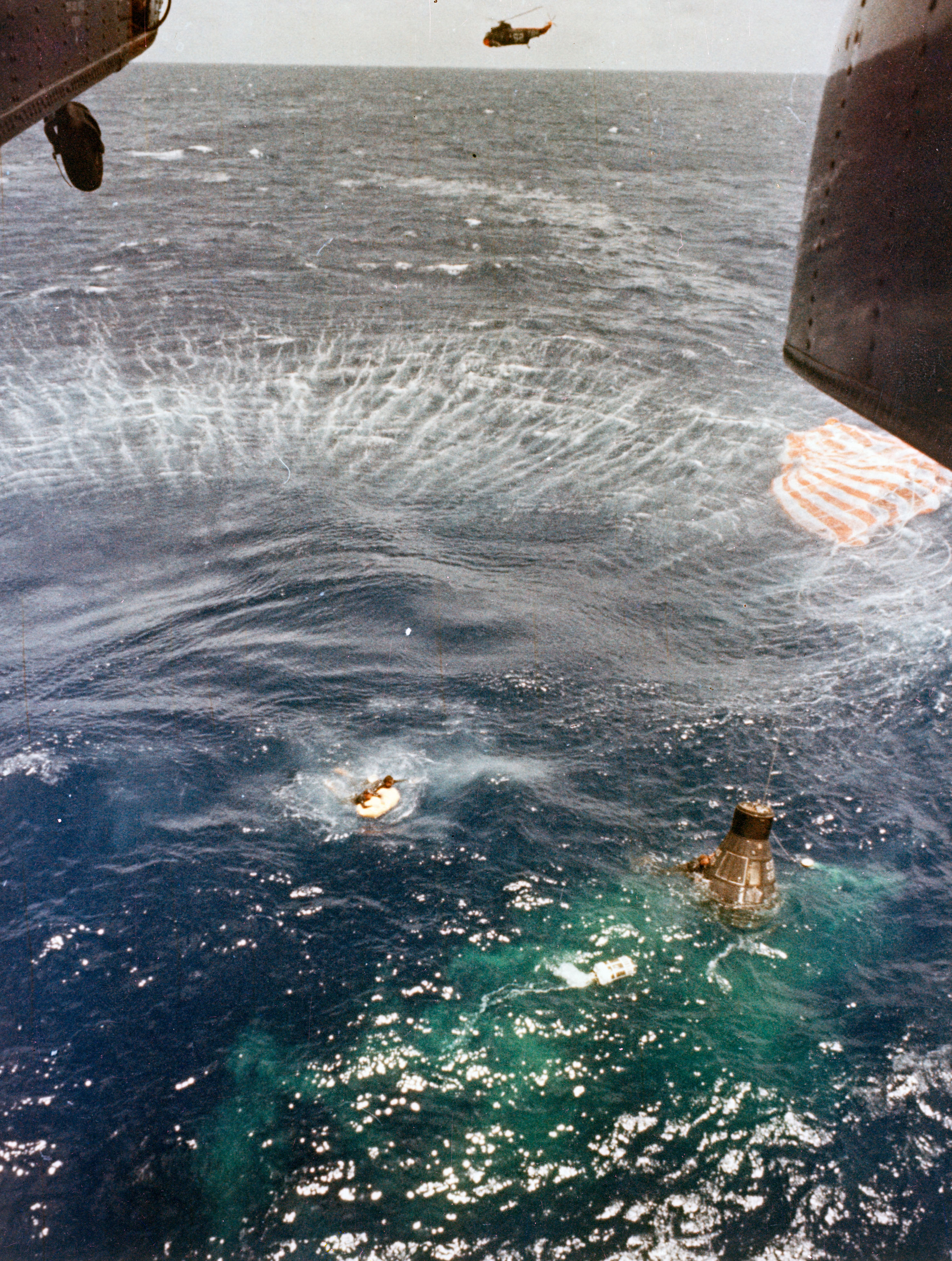
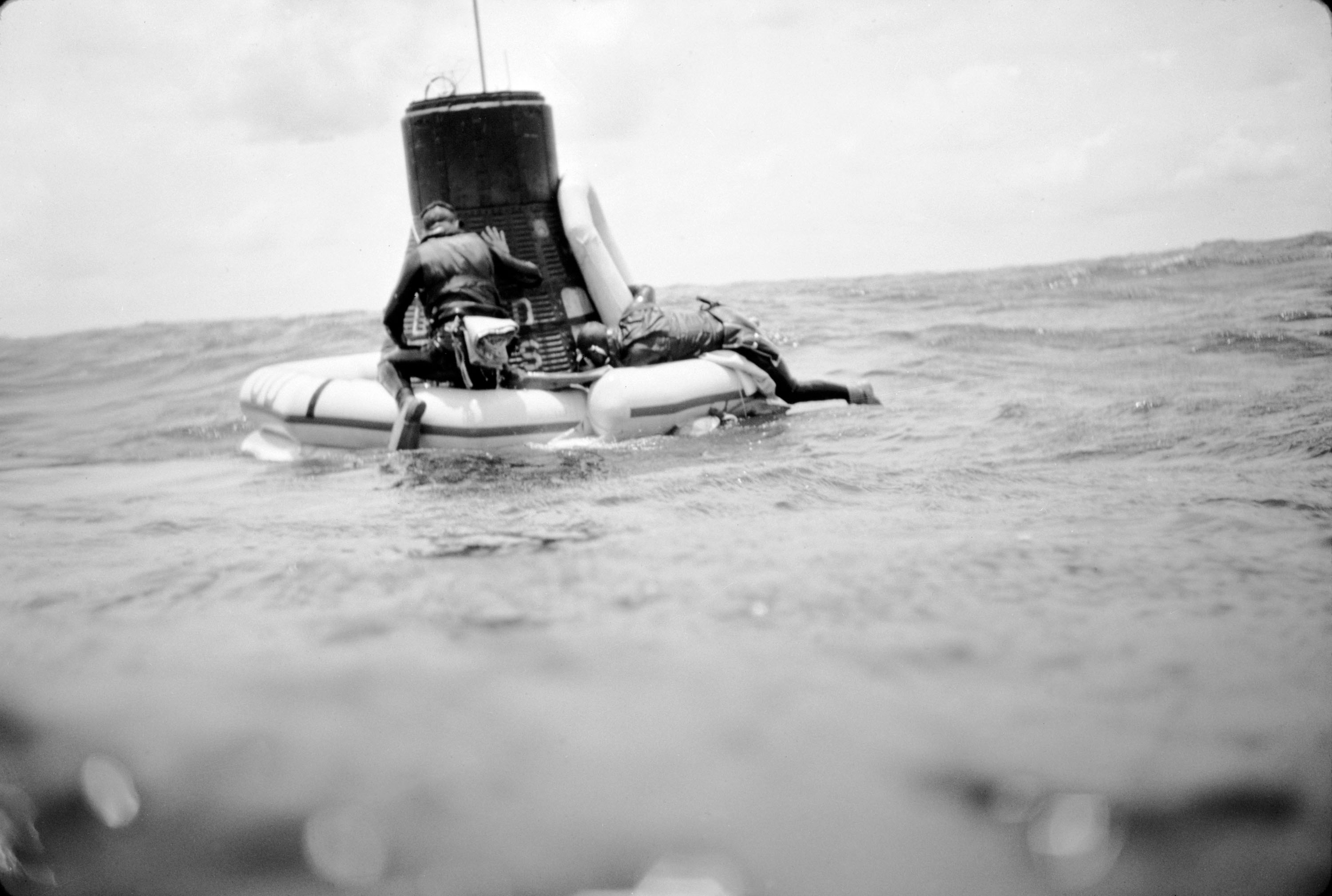
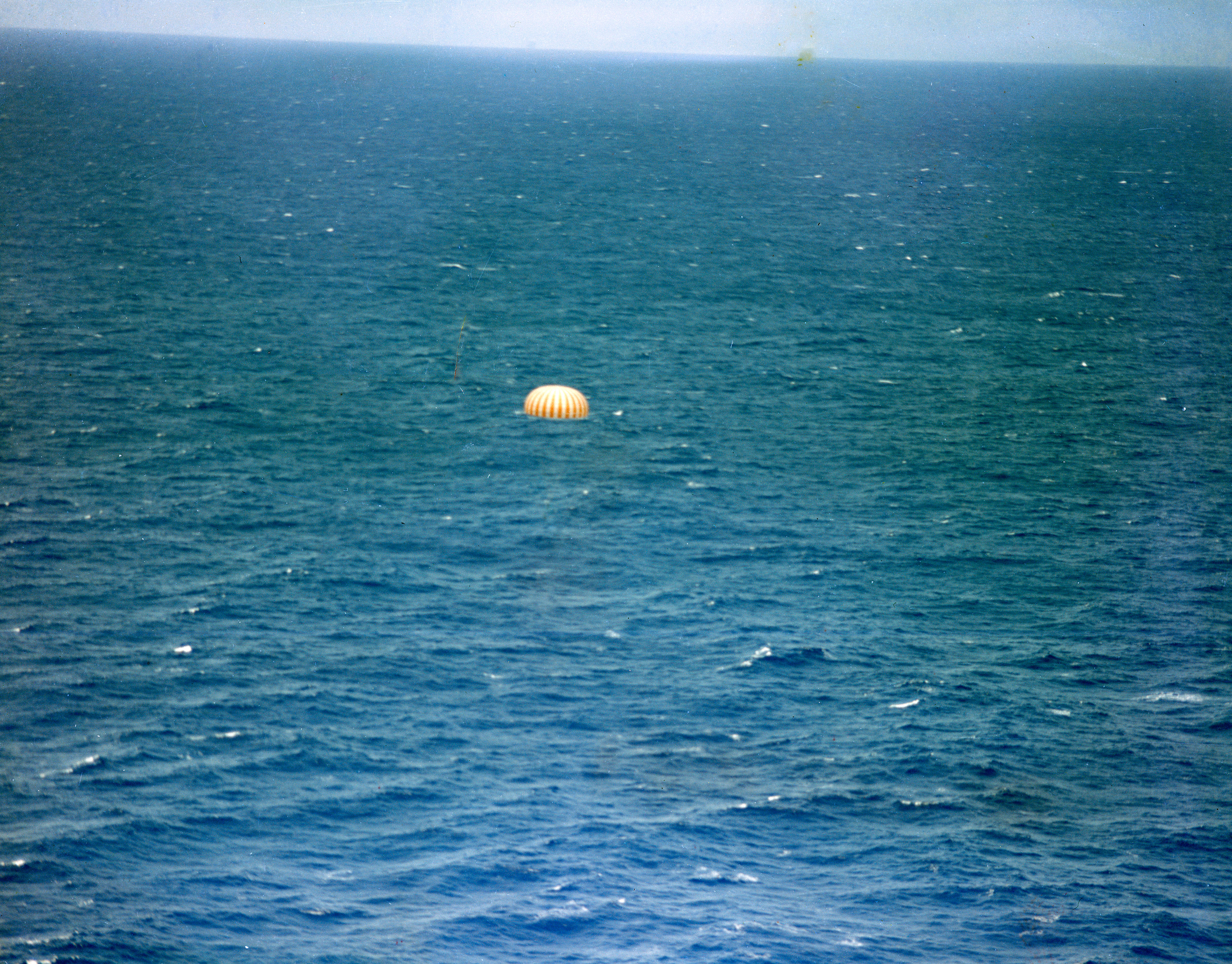
Fifteen minutes later Faith 7 landed just four miles (6 km) from the prime recovery ship, the carrier USS Kearsarge, 70 nautical miles (130 km) southeast of Midway Island in the Pacific. It was the most accurate landing to date — achieved, precisely, without automatic controls. Splashdown came 34 hours 19 minutes 49 seconds after liftoff. The spacecraft tipped over in the water momentarily, then righted itself. Helicopters dropped rescue swimmers and relayed Cooper's request, as an Air Force officer, for permission to be hoisted aboard the Navy's carrier; permission was granted. Forty minutes later the explosive hatch blew open on the deck of Kearsarge and Cooper stepped out of Faith 7 to a warm greeting.
After the flight: medicine and recognition
The post-flight medical examination found Cooper slightly dehydrated and with a degree of orthostatic hypotension from being seated in the capsule an entire day; beyond that, no significant effects of the flight were noted. That was exactly the kind of data the mission had gone looking for: what happens to a human being after more than twenty-four hours of weightlessness.
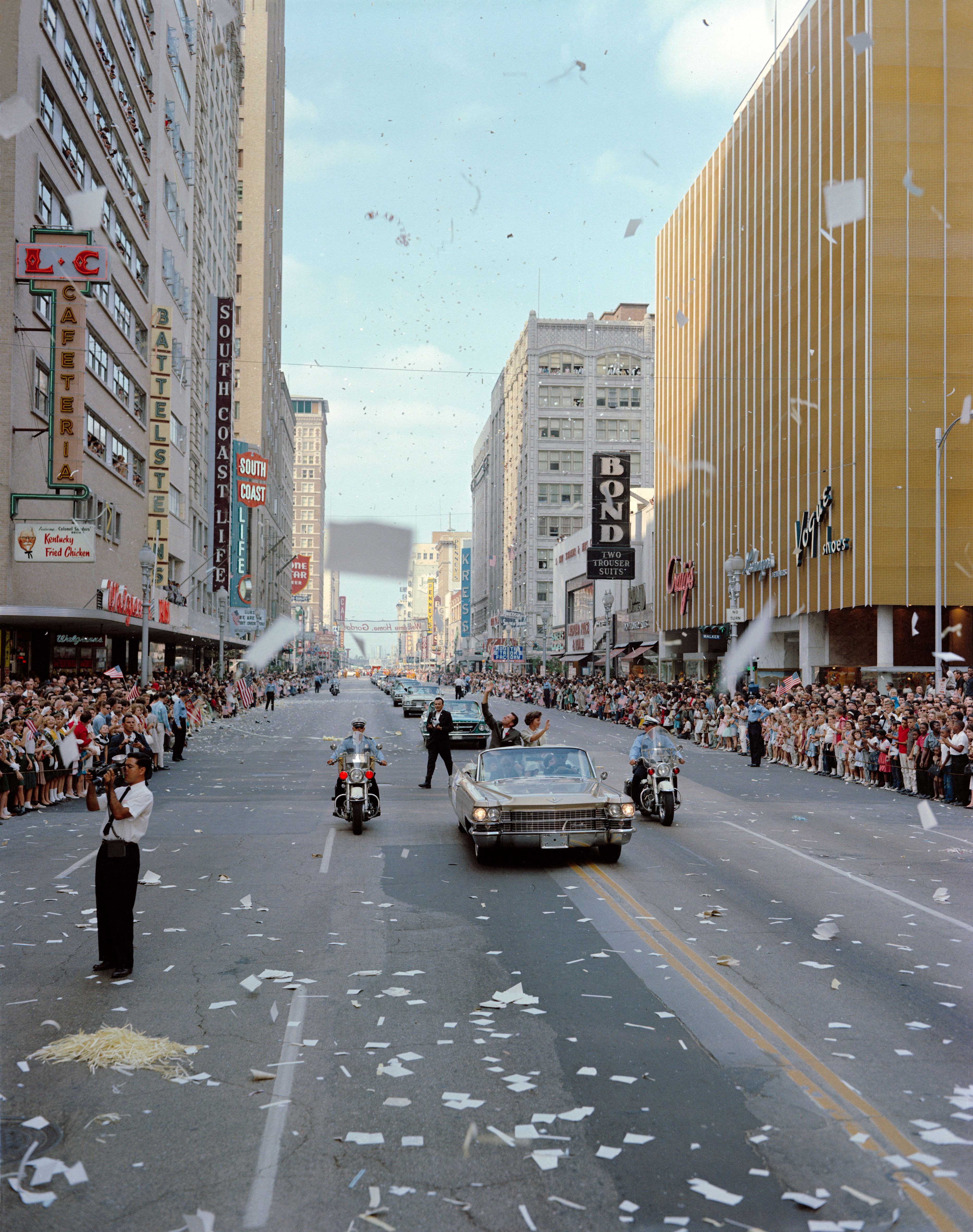
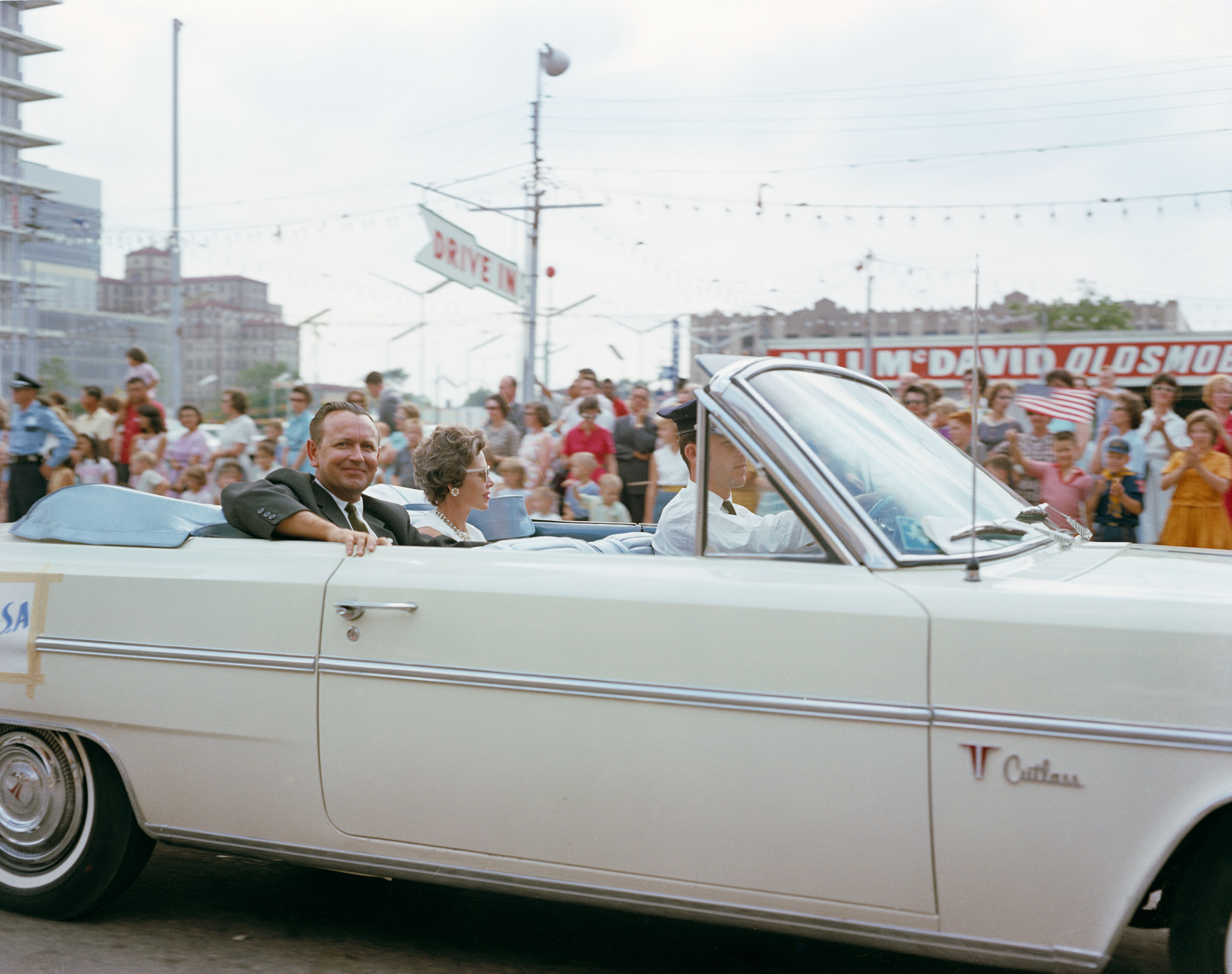
Public recognition was immediate. On 21 May 1963 President John F. Kennedy awarded Cooper the NASA Distinguished Service Medal at the White House, and the astronaut addressed a joint session of Congress the same day. The following day, 22 May, New York celebrated the mission and its pilot with a ticker tape parade down the Canyon of Heroes on Broadway, with millions turning out.
Closing Mercury, and what Gemini inherited
After MA-9 the question of one more Mercury flight was debated again. The proposal, Mercury-Atlas 10, was a three-day, 48-orbit mission to be flown by Alan Shepard in October 1963. In the end NASA officials decided it was time to move on to Project Gemini, and MA-10 never flew. The Mercury programme had fulfilled all of its goals.
Cooper's flight left two legacies of different kinds. One is data: the demonstration that capsule and pilot could withstand more than a day in orbit, with the medical record, the consumables and the behaviour of the systems measured across that period. The other is doctrine: when the electronics failed, the flight was saved because there was a pilot aboard able to replace them, and that lesson — the human being as a backup system rather than a passenger — carried whole into the next programme, where the two-person Gemini crews would also confirm the visual observations Cooper had reported from Faith 7. The spacecraft itself survives: Faith 7 is displayed at Space Center Houston, in Houston, Texas.
Images
Elsewhere
- Naval History and Heritage CommandNavy frogman makes contact with Cooper inside the Faith 7 capsule after splashdown (UA 343.01.01) ↗
- Naval History and Heritage CommandNavy frogmen deploy from a hovering helicopter to begin recovery of the Faith 7 capsule (UA 343.01.02) ↗
- Naval History and Heritage CommandNavy frogmen work on the Faith 7 capsule with Gordon Cooper aboard, Mercury-Atlas 9 recovery (UA 343.01.03) ↗
- Naval History and Heritage CommandThe Faith 7 capsule is hoisted aboard USS Kearsarge during Mercury-Atlas 9 recovery operations (UA 343.01.04) ↗
- Smithsonian National Air and Space MuseumCapsule, Mercury, MA-9 — Faith 7 spacecraft, collection object record ↗
- Space Center HoustonMercury 9 "Faith 7" — Starship Gallery exhibit page, Space Center Houston ↗
- Library of CongressL. Gordon Cooper, Jr., Major USAF, who flew the 22-orbit mission in Faith 7, May 15-16 1963 ↗
- Library of CongressAstronaut L. Gordon Cooper poses with his family in front of the Faith 7 spacecraft ↗
- Library of CongressAstronaut Gordon Cooper in a car with Vice President Lyndon B. Johnson during a parade in Washington, D.C. ↗
- STARS – University of Central FloridaFaith 7 Astronaut Gordon Cooper Grinning from Inside His Spacecraft (published 05/18/1963) ↗
- RICHES – UCF Public HistoryAstronaut Gordon Cooper and Faith 7 Capsule at Cape Canaveral Air Force Station Launch Complex 14 ↗
- Wikimedia CommonsUSS Kearsarge (CVS-33) crew spells out "Mercury 9" on the flight deck, 15 May 1963 ↗