Did you know…
Why do jet engines have a spiral?
Short answer
The spiral painted on a jet engine's spinner is a safety marking. When the fan is turning, the spiral blurs into a visible, pulsing pattern that warns ground crew from a distance that the engine is running, even over ramp noise. It also gives a quick check of rotation and, some operators argue, helps birds see the moving intake.
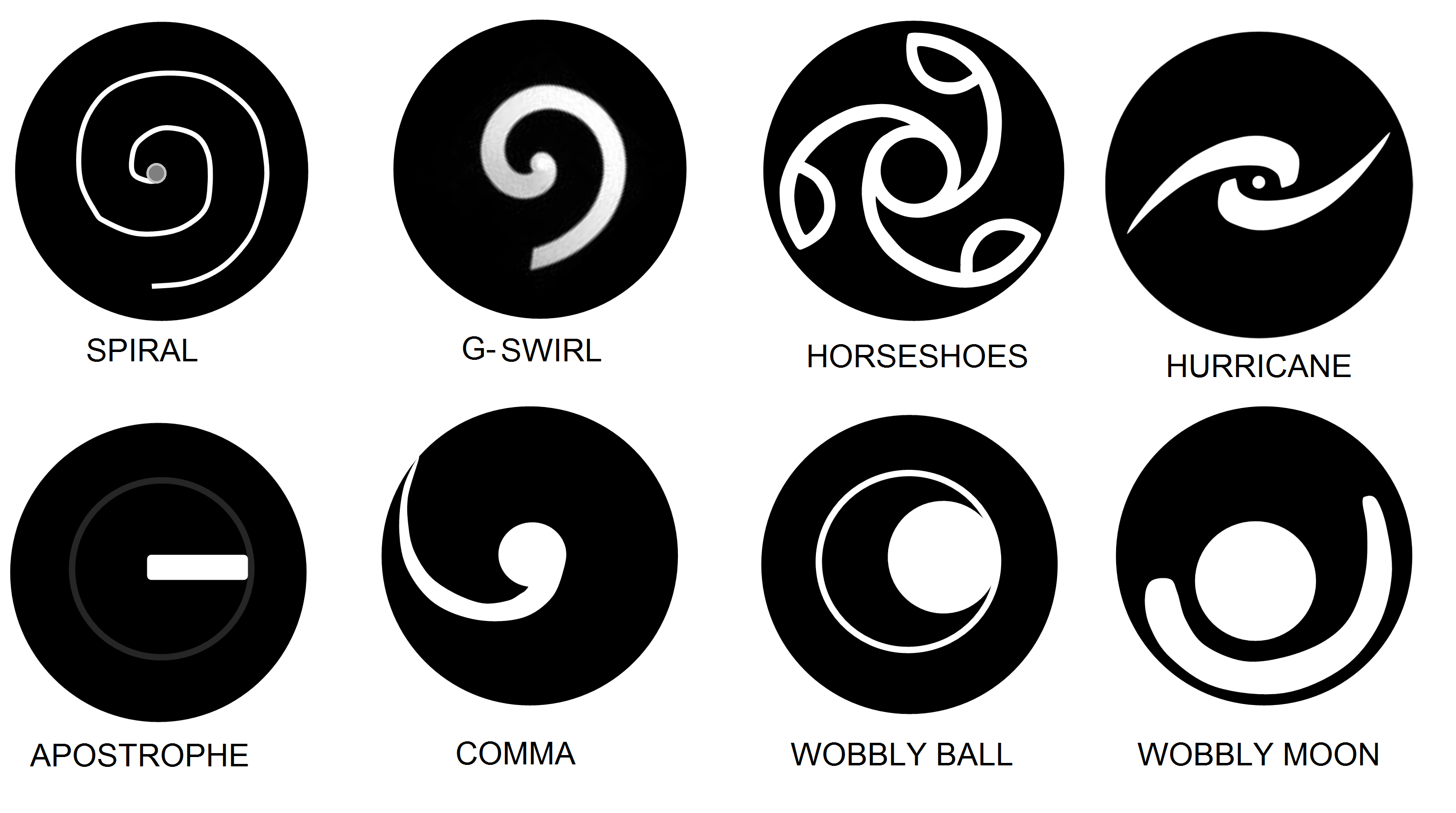
A marking that moves
Look at the centre of almost any turbofan and you will find a painted spiral, comma or hook on the nose cone, the spinner that fairs the hub of the fan. It is not decoration and it has no aerodynamic role. Its purpose is to make a rotating engine unmistakable to people standing near it. A fan idling at a few hundred revolutions per minute is hard to see moving: the blades blur into a grey disc and, on a busy ramp with hearing protection on, the sound of one engine is easily lost among others. The spiral changes that. As the spinner turns, the painted shape appears to pulse or flick, producing a hypnotic pattern that the eye picks up from tens of metres away.
Why the intake is dangerous
The hazard is real. A high-bypass engine at ground idle draws in a large volume of air, and the suction zone in front of the intake extends several metres forward and outward. Manufacturers publish inlet hazard areas in ground handling manuals; for a large engine at takeoff thrust the zone can reach more than four metres in front of the cowl. People, tools and debris inside that radius can be pulled in, with fatal consequences for the person and destruction of the engine. Ground crew are trained to approach only from the side, behind a marked line, and only when the engine is confirmed stopped. The spiral gives an instant visual confirmation at a glance, independent of radio calls or beacon lights.
Origins and variants
The practice began in the 1950s and was standardised by engine makers such as Rolls-Royce and General Electric, each with its own house shape: a tight white spiral, a comma, an apostrophe, a hooked stripe. Airlines sometimes adapt the shape to their livery. A secondary claim, often repeated but hard to prove, is that the flickering pattern helps birds recognise the intake as a moving object and steer clear. Engine manufacturers themselves do not usually make that claim; the documented purpose is ground safety. The pattern also offers a quick check that the fan is windmilling freely after shutdown, and it reveals whether a rotor has stopped completely before an inspection begins.
More questions
Physics of flight
Why does the sound barrier exist?
The sound barrier exists because pressure disturbances travel through air at the speed of sound. Below Mach 1 the air ahead of an aircraft receives warning… more…
Physics of flight
Why does the speed of sound change with altitude?
The speed of sound changes with altitude because it depends on air temperature, and temperature falls as you climb through the troposphere. Colder molecules… more…
Physics of flight
Why do planes need airplane mode?
Airplane mode is required mainly by regulation and caution, not by a proven history of accidents. Regulators such as the FAA and EASA require devices to stop… more…
Physics of flight
How far is the speed of sound?
The speed of sound is a speed, not a distance: in air at 20 °C and sea level it is about 343 m/s (1,235 km/h, 667 kn), so sound covers one kilometre in… more…
Physics of flight
How much is the sound barrier?
The sound barrier is not a price or a quantity: it is the speed of sound, which an aircraft meets at Mach 1. That speed is about 343 m/s (1,235 km/h, 667 kn)… more…
Physics of flight
How does the sound barrier break?
The sound barrier is not broken so much as crossed: an aircraft with enough thrust and a shape that tolerates shock waves accelerates through Mach 1. Chuck… more…