Did you know…
Where were the elevators on the Vulcan B.1, given it had no horizontal stabiliser?
Short answer
On the wing's own trailing edge. The Vulcan B.1 had four elevators on the inner section and four ailerons on the outer section; the tail only had a fin and a rudder. On the B.2 those eight surfaces were replaced by eight elevons, which performed both functions.

A wing that also acted as a tail
The Vulcan was a delta with no horizontal stabiliser. The only tail surface was a large vertical fin with a single rudder on its trailing edge. Pitch and roll control therefore had to come from the wing, which on a delta has a long trailing edge set well back from the centre of gravity, allowing it to act as if it were a tail.
Eight surfaces on the B.1
On the Vulcan B.1, the wing's trailing edge carried four elevators on the inner section and four ailerons on the outer section, all power-assisted. The elevators controlled pitch and the ailerons controlled roll, as on any aircraft, even though they were mounted on the same edge of the wing. The aircraft also carried six electric air brakes with three settings: retracted, medium drag, and high drag.
Elevons on the B.2
The Vulcan B.2 simplified that arrangement: it replaced the four elevators and four ailerons with eight elevons, surfaces that combine both functions, moving together to pitch or in opposite directions to roll. This was one of the changes brought by the larger, thinner phase 2C wing, with which the second prototype VX777 flew in August 1957.
The B.1's elevators also played a safety role: an automatic Mach trimmer applied up-elevator when speed increased excessively, to counter the aircraft's tendency to pitch into a dive.
The aircraft originated from Air Ministry specification B.35/46.
More questions
Physics of flight
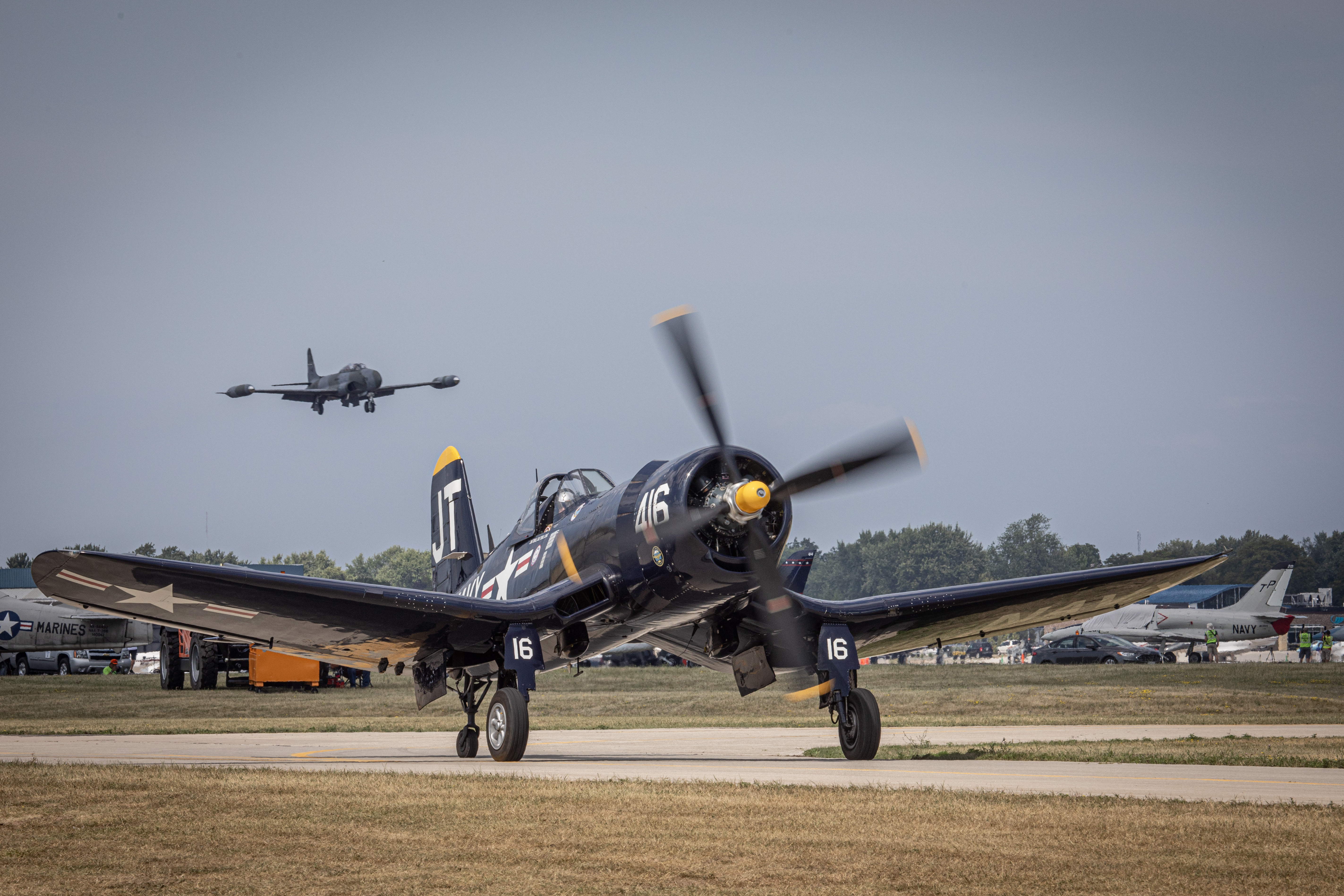
Why can't a Corsair pilot apply full power when going around after a failed carrier landing?
Because at low speed and high power the Corsair would drop its left wing suddenly and with almost no warning, due to propeller torque. If the throttle was… more…
Physics of flight
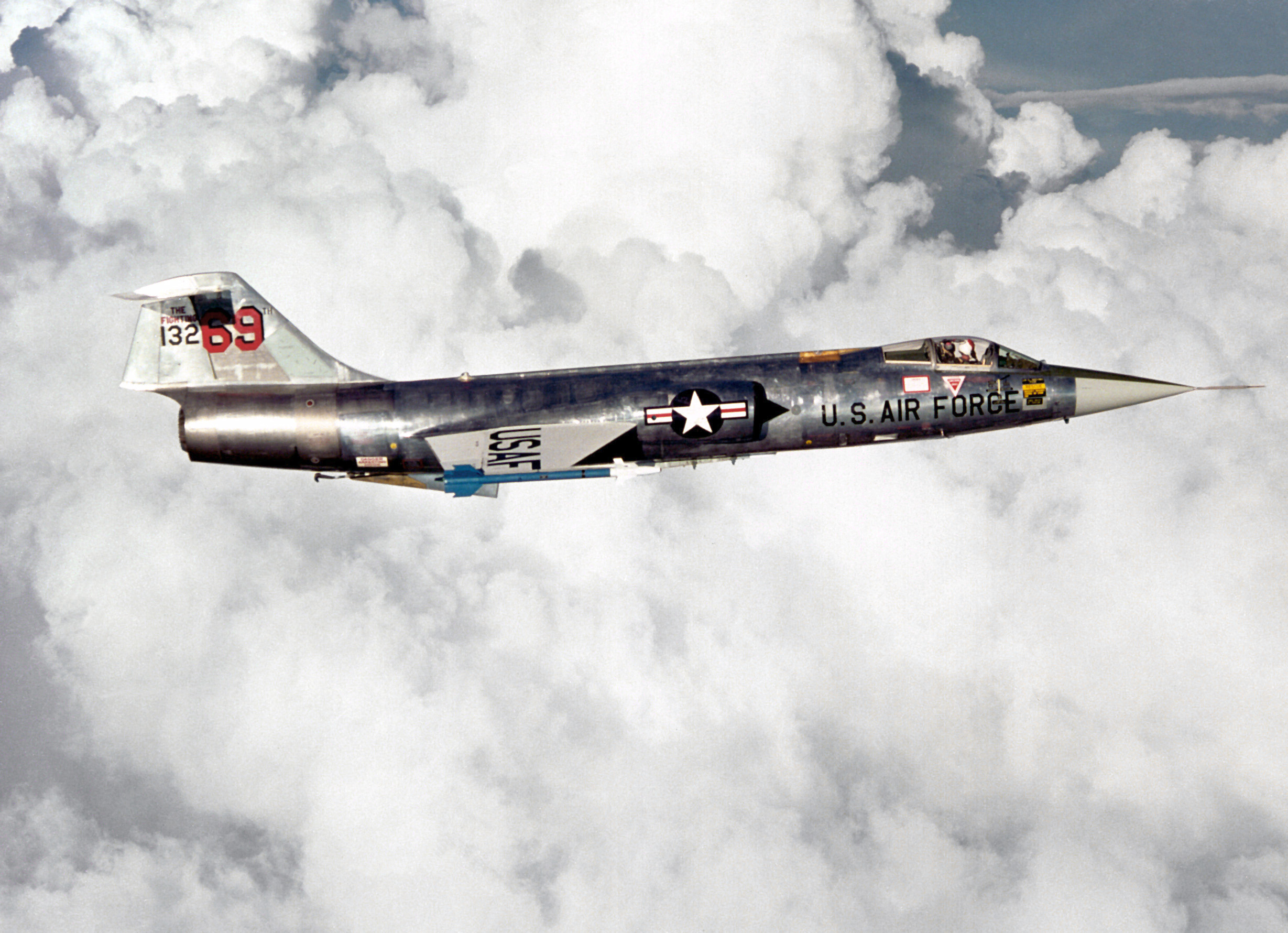
What did the phrase "banking with intent to turn" mean among F-104 pilots?
It was a joke among Canadian F-104 pilots: banking the aircraft "with intent to turn" referred to its poor low-speed turning. Its sustained turn capability… more…
Julian Herzog (Website) (CC BY), vía commons Physics of flight
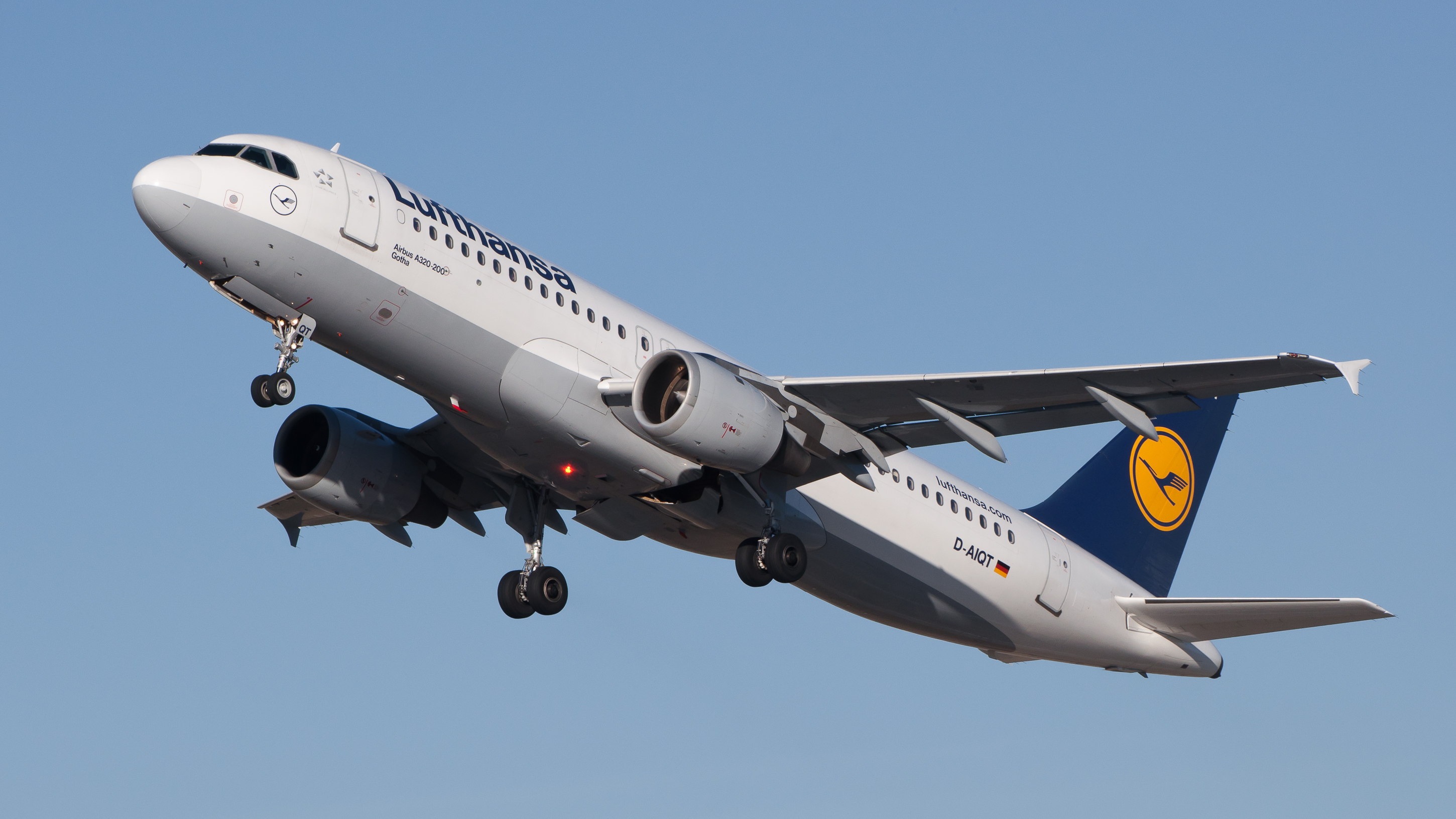
What is "flight envelope protection," which the A320 pioneered?
A set of limits embedded in the flight control software: it calculates the flight envelope, adds a safety margin, and blocks pilot inputs that would take the… more…
Julian Herzog (Website) (CC BY), vía commons Physics of flight
What is the A320's SHARP package for?
SHARP (SHort AiRfield Package) improves takeoff and landing performance on short runways and is designed to increase low-speed lift. It combines aerodynamic… more…
Physics of flight
What flaw sank Vought's all-metal V-141 fighter?
It wasn't a single flaw: tests showed the V-141 still flew poorly, was prone to spinning, and also suffered tail flutter, which is why it was rejected. It… more…
Physics of flight
What wind tunnel did NACA use to study the Corsair, and how big was it?
The full-scale 30- by 60-Foot Tunnel at the Langley Research Center, in Hampton, Virginia. NACA dedicated the facility on 27 May 1931 and used it to test the… more…


