Did you know…
Where was the engine located in the Bell P-39 Airacobra?
Short answer
In the center of the fuselage, behind the pilot: the P-39 drove a propeller in the nose through a long shaft. That shaft, 10 feet (3 m) long and built in two sections, ran through a tunnel in the cockpit floor to a gearbox housed in the nose.

Engine behind the pilot
The P-39 had an unusual layout, with the engine mounted in the center of the fuselage, behind the pilot, driving a propeller in the nose through a long shaft. The aircraft, originally known as the Bell Model 4, was designed to serve as a platform for the 37 mm T9 cannon. It was also the first fighter fitted with tricycle landing gear. Bell's limited prior work in fighter design had earlier produced the unusual Bell YFM-1 Airacuda.
The drive shaft
The tractor propeller was driven by a 10-foot (3 m) shaft built in two sections, which incorporated a self-aligning bearing to absorb fuselage flexing during violent maneuvers. That shaft ran through a tunnel in the cockpit floor and connected to a gearbox in the nose of the fuselage, which in turn drove the three-blade propeller — or four-blade on later examples — through a short central shaft.
Production and shipments to the USSR
P-39 production ended in August 1944, after Bell built 9,558 Airacobras. Nearly half of all P-39s were sent to the Soviet Union, where they accounted for more than a third of all fighters supplied by the United States and the United Kingdom to the VVS. Those shipped to the USSR under the Lend-Lease program were mostly -39N and -39Q models.
More questions
Aviation history
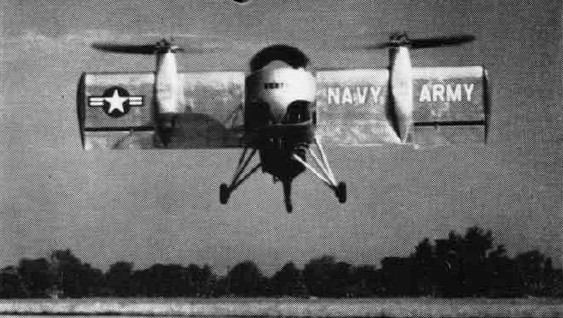
What was special about the Vertol 76?
Vertol's VZ-2 tested the tiltwing concept for vertical take-off and landing. After ground trials beginning in April 1957, it first took off on 13 August only… more…

Aviation history
Which was the most-produced American fighter of the Second World War?
The Republic P-47 Thunderbolt, of which 15,636 or 15,683 units were built, depending on the source. It was also one of the heaviest fighters of the conflict… more…

Aviation history
Who flew the E-66 at 2,149 km/h?
Konstantin or Vladimir Kokkinaki, depending on the source. Konstantin is credited with the absolute record on a closed 100 km circuit, at 2,148.66 km/h, set… more…

Fly-by-Owen (CC BY SA), vía commons Aviation history
How many I-11Bs were built?
Between 208 and around 450, depending on the source: one of the AISA I-11 reference sheets gives 208 examples built, while All-Aero speaks of around 400 built… more…

Aviation history
How many HH-53s could be converted to Pave Low III?
Eight HH-53C aircraft received an improved systems package and were redesignated HH-53H Pave Low III. The other figure in circulation, nine MH-53H and 32… more…

SCDBob (CC BY SA), vía commons Aviation history
What did the A129 Mangusta's armor protect?
The fuselage: the A129's airframe is armored and, according to All-Aero, designed to protect against 12.7 mm rounds, with partial protection against 23 mm… more…


