Did you know…
What happens if Mars collides with Earth?
Short answer
It can't happen on any human timescale: Mars's and Earth's orbits are separate and stable. The scenario only shows up in billion-year simulations — of more than 2,500 trajectories calculated at the IMCCE, about 1% ended in a collision within 5 billion years, and 29 of those cases involved Mars hitting Earth.
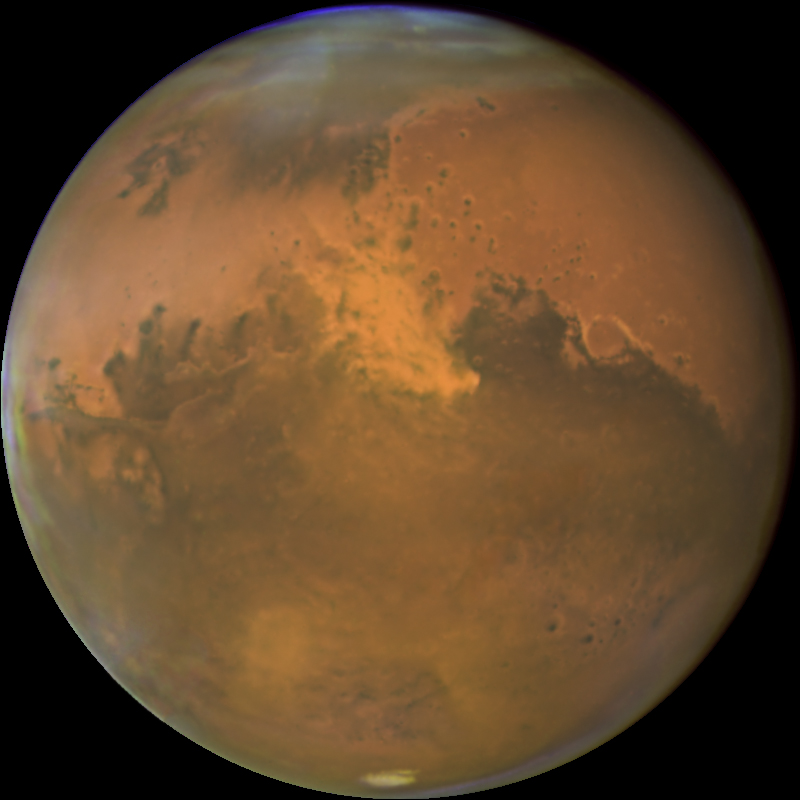
The orbits don't cross
The premise behind the question doesn't hold on any human timescale. Mars orbits the Sun at an average distance of 228 million kilometers (142 million miles), 1.5 astronomical units, outside Earth's orbit. The two paths are separate, the solar system has behaved in an orderly fashion for billions of years, and there's no known mechanism that could put the red planet on a collision course within the next few millennia.
What the simulations say over 5 billion years
The scenario only appears once orbits are integrated over billions of years, a span long enough for the chaotic nature of the many-body problem to become noticeable. Jacques Laskar and Mickaël Gastineau, of the IMCCE and the Paris Observatory, calculated more than 2,500 trajectories from a realistic solar system model, including general relativity and the Moon's contribution.
Around 1% of the cases ended in a collision between planets, or between a planet and the Sun, within less than 5 billion years. The trigger is Mercury: if its orbit stretches enough, it ends up destabilizing all the inner planets, a process that in one of the solutions begins around 3.4 billion years from now. That produces 29 cases of Mars colliding with Earth, 18 of Venus colliding with Earth, and one of Mercury.
What a collision like that would mean
We'd be talking about two bodies of planetary mass, not an asteroid: something on the order of the impact that, according to NASA, roughly 4.5 billion years ago flung molten and vaporized debris from the young Earth into space, which went on to form the Moon — possibly from a single object the size of Mars. But those numbers don't describe a risk; they describe the margin of uncertainty in a calculation spanning billions of years. For any practical purpose, Mars will keep being an orange dot in the sky.
More questions
Moon and Mars
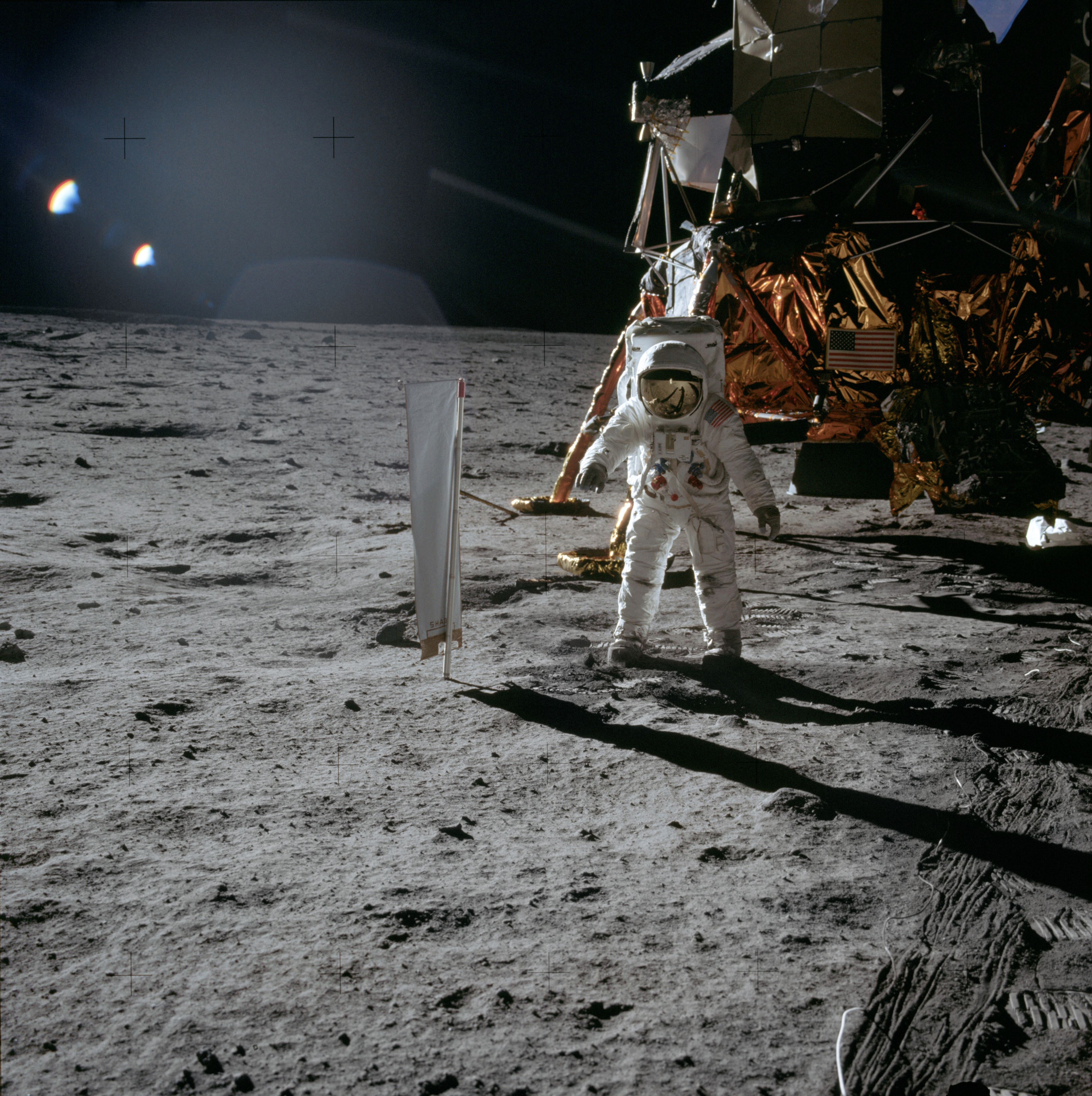
How does neil armstrong look like?
The face most people picture is not his: the gold-visored astronaut in the famous Apollo 11 photograph is Buzz Aldrin, shot by Armstrong. Armstrong himself is… more…

Richard Dorrell (CC BY SA), vía commons Moon and Mars
How does the moon affect the tides?
By pulling unevenly on it. Tidal forces vary inversely as the cube of the distance, so the near side of the Earth is tugged harder than the far side: one… more…
Moon and Mars
Why does neil armstrong have a hollywood star?
Strictly he does not have a star. Armstrong, Aldrin and Collins share four circular monuments resembling the Moon, one at each corner of Hollywood and Vine… more…
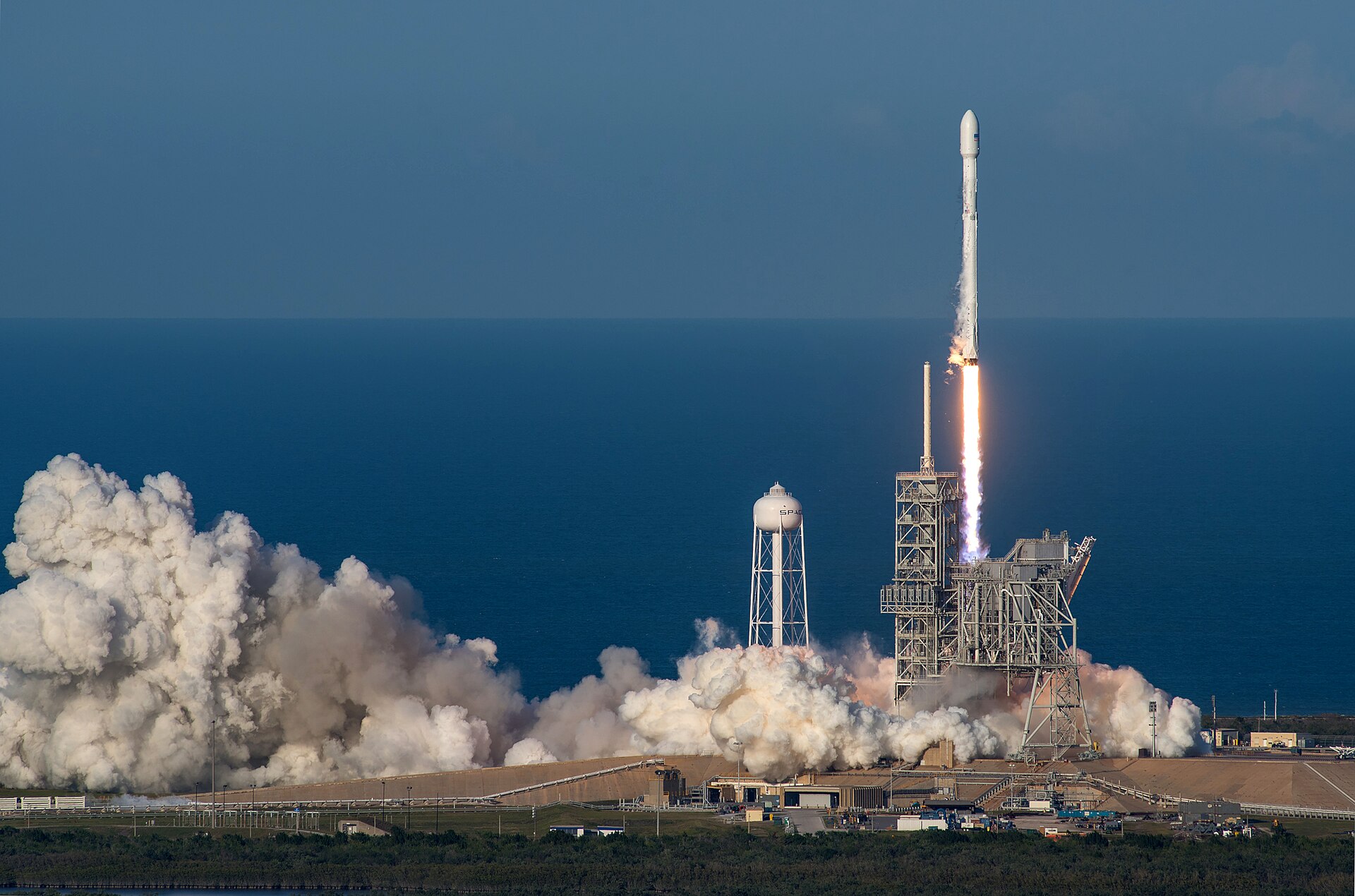
Foto: SpaceX (CC0) Moon and Mars
Why did falcon 9 hit the moon?
Because a spent upper stage on a lunar trajectory has no mission and no way to steer. A Falcon 9 upper stage from the January 2025 Firefly Blue Ghost 1 launch… more…
Moon and Mars
How much apollo 11 cost?
NASA never published a price for Apollo 11 on its own; what is documented is the program. The United States spent $25.8 billion on Project Apollo between 1960… more…
Moon and Mars
How much time neil armstrong spent on moon?
Armstrong and Aldrin spent 21 hours, 36 minutes on the Moon's surface, almost all of it inside the lunar module Eagle. Armstrong stepped onto the surface… more…

