Did you know…
Why can't a Corsair pilot apply full power when going around after a failed carrier landing?
Short answer
Because at low speed and high power the Corsair would drop its left wing suddenly and with almost no warning, due to propeller torque. If the throttle was advanced abruptly during an aborted landing, that wing could stall so fast the fighter would flip over. The aft-mounted cockpit and long nose also made landings dangerous.

Propeller torque and the left wing drop
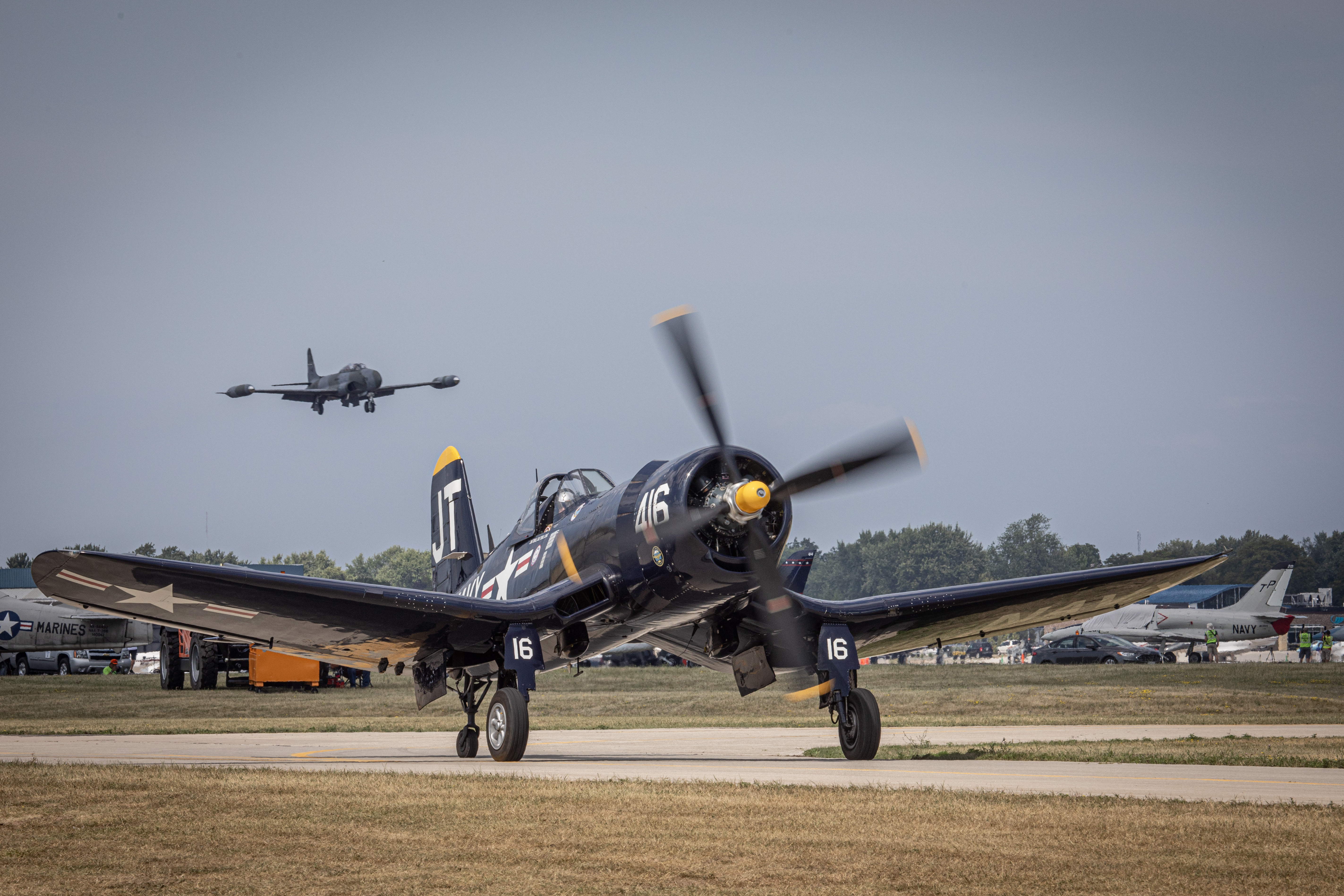
At low speed and with high power, the Corsair tended to drop its left wing abruptly and with very little warning, as a result of propeller torque. During slow carrier approaches, that wing could stall and drop quickly without warning. If the pilot suddenly advanced the throttle, for example during an aborted landing, the left wing could stall and drop so fast that the fighter would flip over.
A nose-first approach
The combination of a cockpit mounted far aft and a long nose caused visibility problems that made landings dangerous. With the nose-up attitude typical of a carrier approach, pilots found their forward visibility almost entirely blocked by the engine cowling. Oil from the hydraulically operated cowl flaps could splash onto the windshield when they opened, severely reducing visibility.
Bouncing on the deck
The landing gear's oleo-pneumatic shock absorbers had poor rebound characteristics, which allowed the aircraft to bounce along the carrier deck. That stiff gear made it relatively easy to string together bad bounces. A bounce of that kind could send the aircraft veering into the carrier's island. The Corsair's early carrier-landing problems were real, not bureaucratic timidity, and some pilots died learning the aircraft's limits.
More questions
Physics of flight
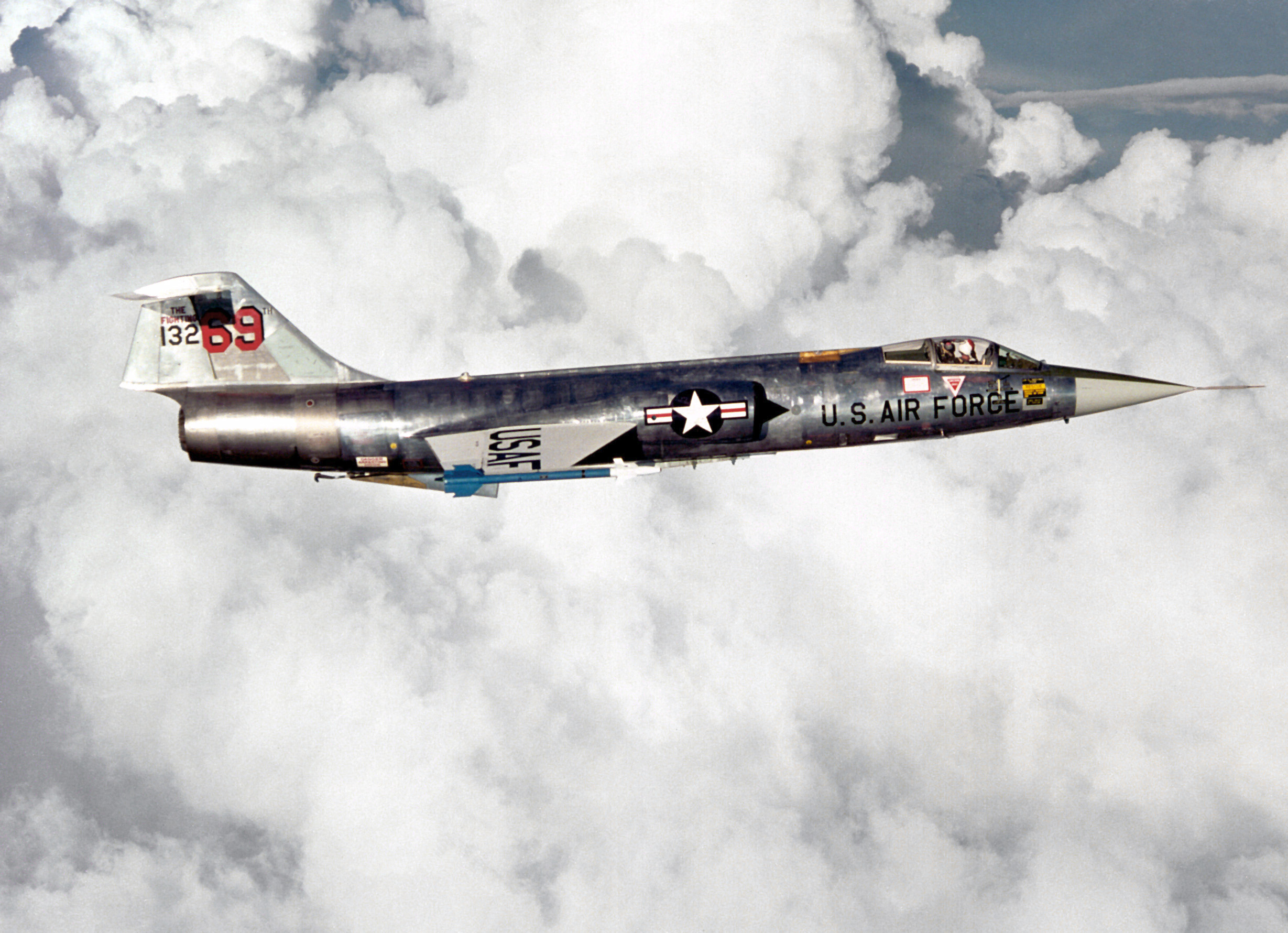
What did the phrase "banking with intent to turn" mean among F-104 pilots?
It was a joke among Canadian F-104 pilots: banking the aircraft "with intent to turn" referred to its poor low-speed turning. Its sustained turn capability… more…
Julian Herzog (Website) (CC BY), vía commons Physics of flight
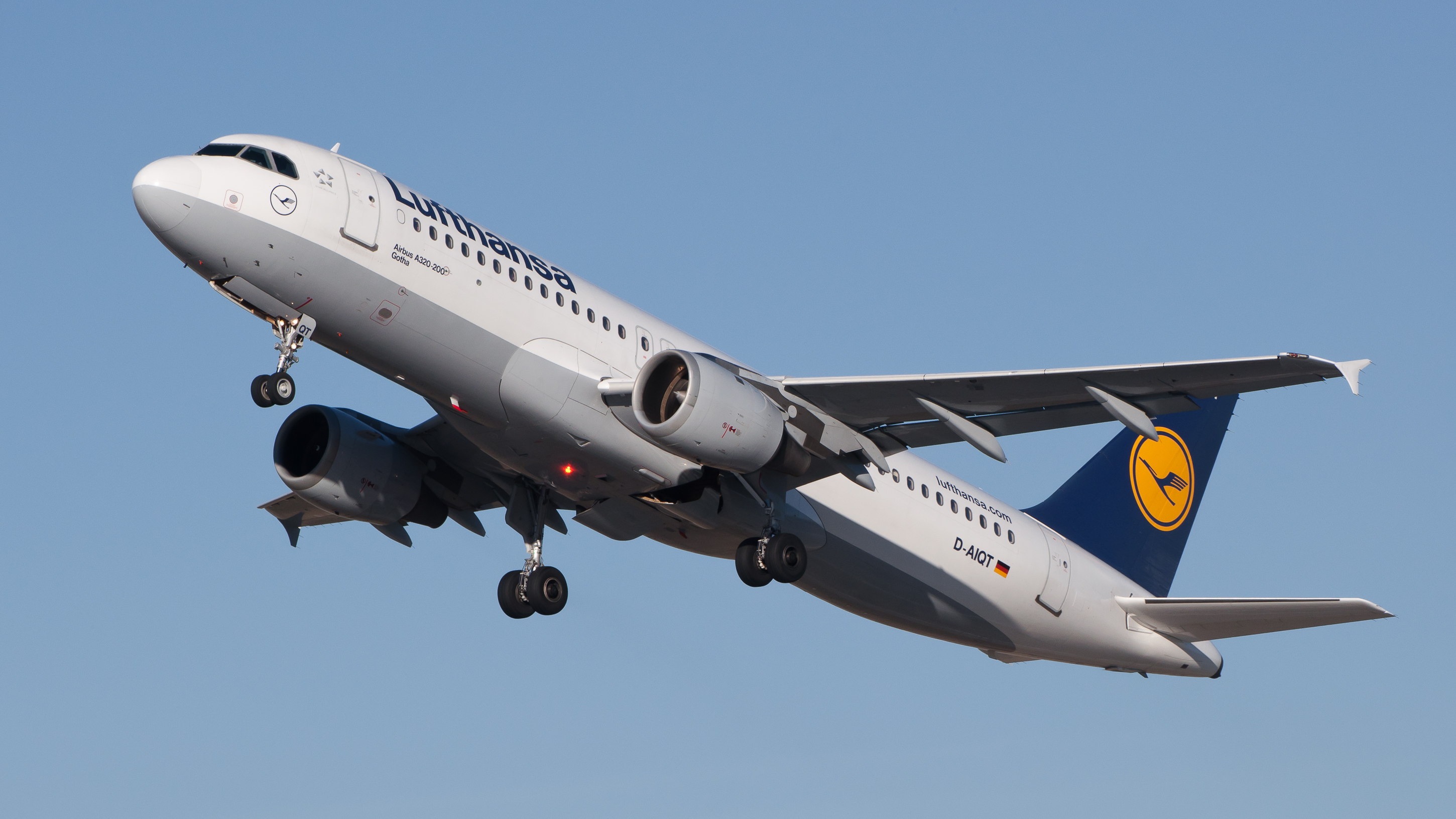
What is "flight envelope protection," which the A320 pioneered?
A set of limits embedded in the flight control software: it calculates the flight envelope, adds a safety margin, and blocks pilot inputs that would take the… more…
Julian Herzog (Website) (CC BY), vía commons Physics of flight
What is the A320's SHARP package for?
SHARP (SHort AiRfield Package) improves takeoff and landing performance on short runways and is designed to increase low-speed lift. It combines aerodynamic… more…
Physics of flight
What flaw sank Vought's all-metal V-141 fighter?
It wasn't a single flaw: tests showed the V-141 still flew poorly, was prone to spinning, and also suffered tail flutter, which is why it was rejected. It… more…
Physics of flight
What wind tunnel did NACA use to study the Corsair, and how big was it?
The full-scale 30- by 60-Foot Tunnel at the Langley Research Center, in Hampton, Virginia. NACA dedicated the facility on 27 May 1931 and used it to test the… more…
Physics of flight
What type of flap helped a World War II fighter turn best?
The slotted flap, the NACA type fitted to the F4U Corsair, with a dedicated 20° maneuver setting usable at 200 knots indicated or less. With it the fighter… more…

