Did you know…
What fuel do planes use?
Short answer
Jet and turboprop aircraft burn aviation kerosene — Jet A-1 almost everywhere, Jet A in the United States; the military use variants such as JP-8. Light piston aircraft and helicopters use 100LL avgas, a leaded gasoline. More flights now blend in sustainable aviation fuel (SAF), approved up to a 50% mix.

It depends on the engine, not the size
The rule of thumb is simple: turbine, kerosene; piston, gasoline. An Airbus A320, an ATR 72 turboprop and a turbine-engine helicopter like the H145 all fill up with the same Jet A-1, because all three machines burn fuel continuously in a combustion chamber and don't need the resistance to detonation that a spark-ignition engine requires. A Cessna 172 or a Piper with a Lycoming piston engine, on the other hand, run on avgas, a 100-octane gasoline with a small amount of tetraethyl lead (grade 100LL, dyed blue). Some light-aviation diesel engines, such as those from Continental and Austro, were designed precisely to take advantage of Jet A-1, which is cheaper and available at virtually any airport in the world.
The kerosene family
Jet A-1 is the international specification, defined by the ASTM D1655 and DEF STAN 91-091 standards, with a maximum freezing point of −47 °C. Jet A, used almost exclusively in the United States, is identical except for its freezing point, set at −40 °C. Jet B is a kerosene-naphtha blend, more volatile, used in Arctic regions of Canada and Russia where extreme cold makes starting difficult. Armed forces use their own grades: JP-8 is essentially Jet A-1 with a military additive package, and JP-5, with a higher flash point, is the fuel used on aircraft carriers, where the risk of an onboard fire justifies the extra cost.
How much they consume
A single-aisle airliner burns on the order of 2,400-2,700 kg of kerosene per hour in cruise; a long-haul Boeing 777 or A350 burns between 5,500 and 7,000 kg per hour depending on weight. Translated per passenger, a modern long-haul flight at full capacity works out to around 3 liters per 100 km flown per seat. That consumption explains why fuel has come to account for between a quarter and a third of an airline's operating costs, and why each new generation of engines is justified by its reduction in fuel burn.
What's coming
Sustainable aviation fuel (SAF) is produced from used cooking oils, agricultural waste or, in the future, hydrogen and captured CO₂, and is blended with fossil kerosene without modifying the aircraft: several production pathways are certified, and the maximum authorized blend is 50%. The European Union has required 2% SAF in fuel supplied at its airports since 2025, a figure that will rise in stages through 2050. Hydrogen and batteries are being researched, but remain far from large-capacity commercial aviation.
More questions
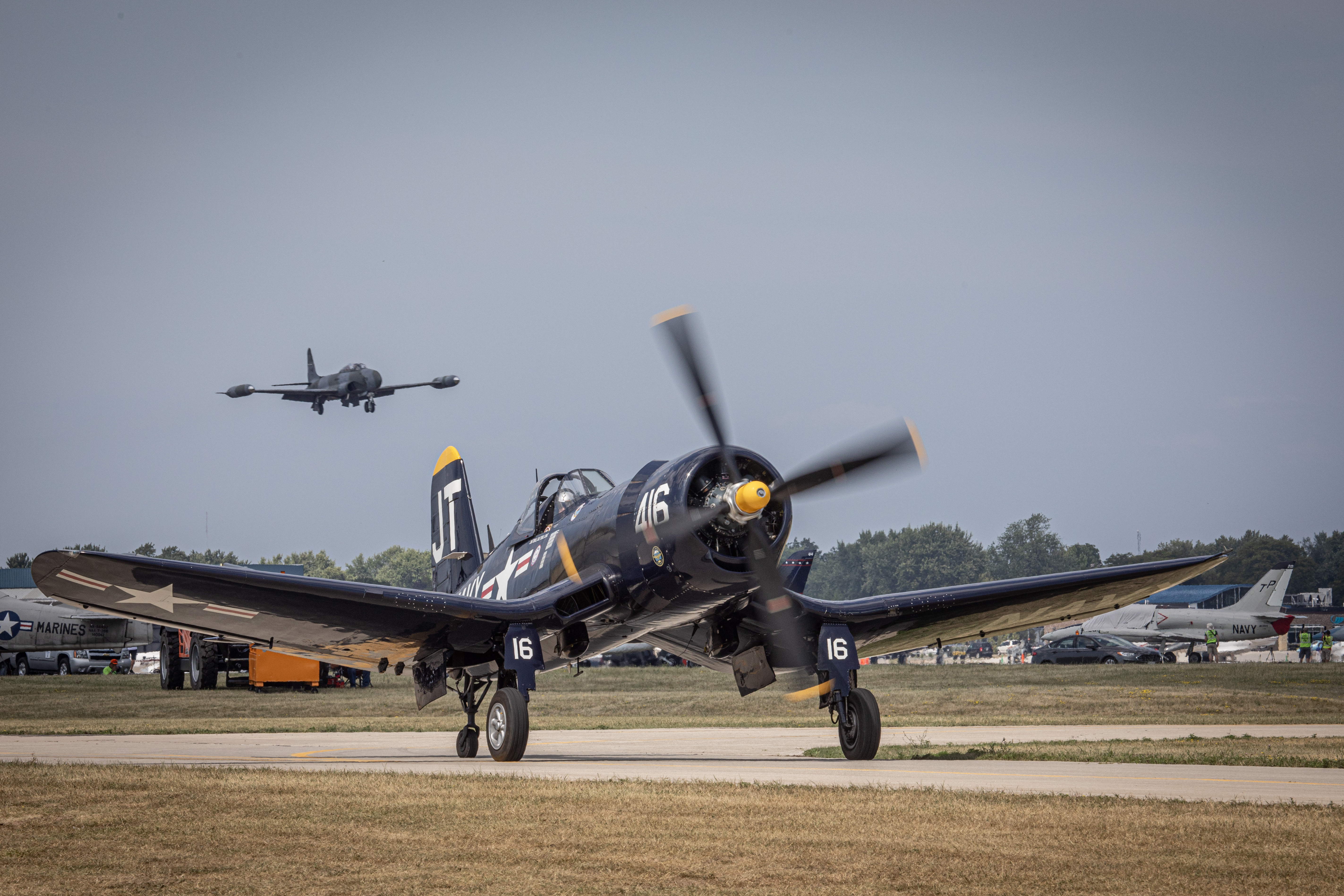
Physics of flight
Why can't a Corsair pilot apply full power when going around after a failed carrier landing?
Because at low speed and high power the Corsair would drop its left wing suddenly and with almost no warning, due to propeller torque. If the throttle was… more…
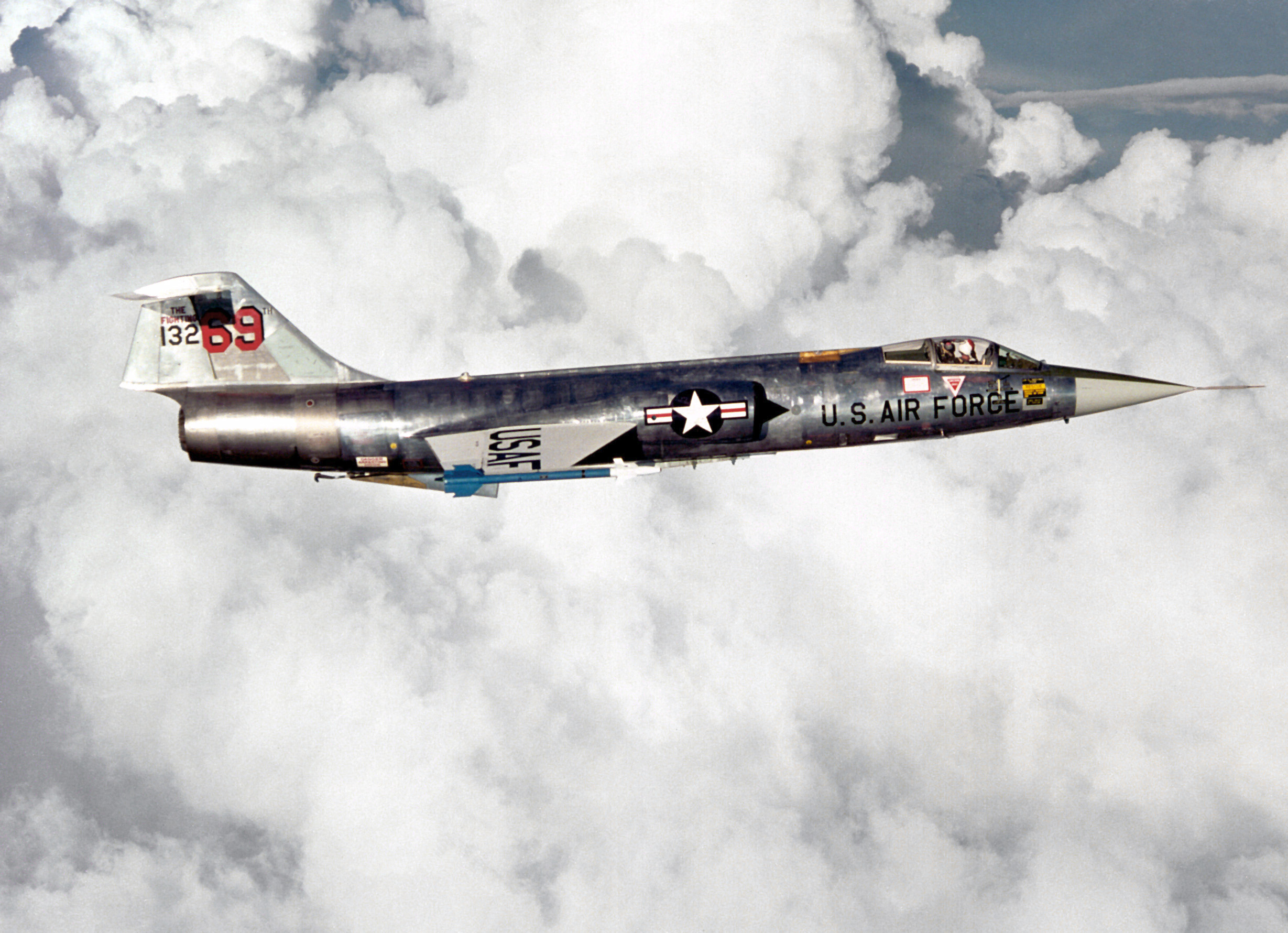
Physics of flight
What did the phrase "banking with intent to turn" mean among F-104 pilots?
It was a joke among Canadian F-104 pilots: banking the aircraft "with intent to turn" referred to its poor low-speed turning. Its sustained turn capability… more…
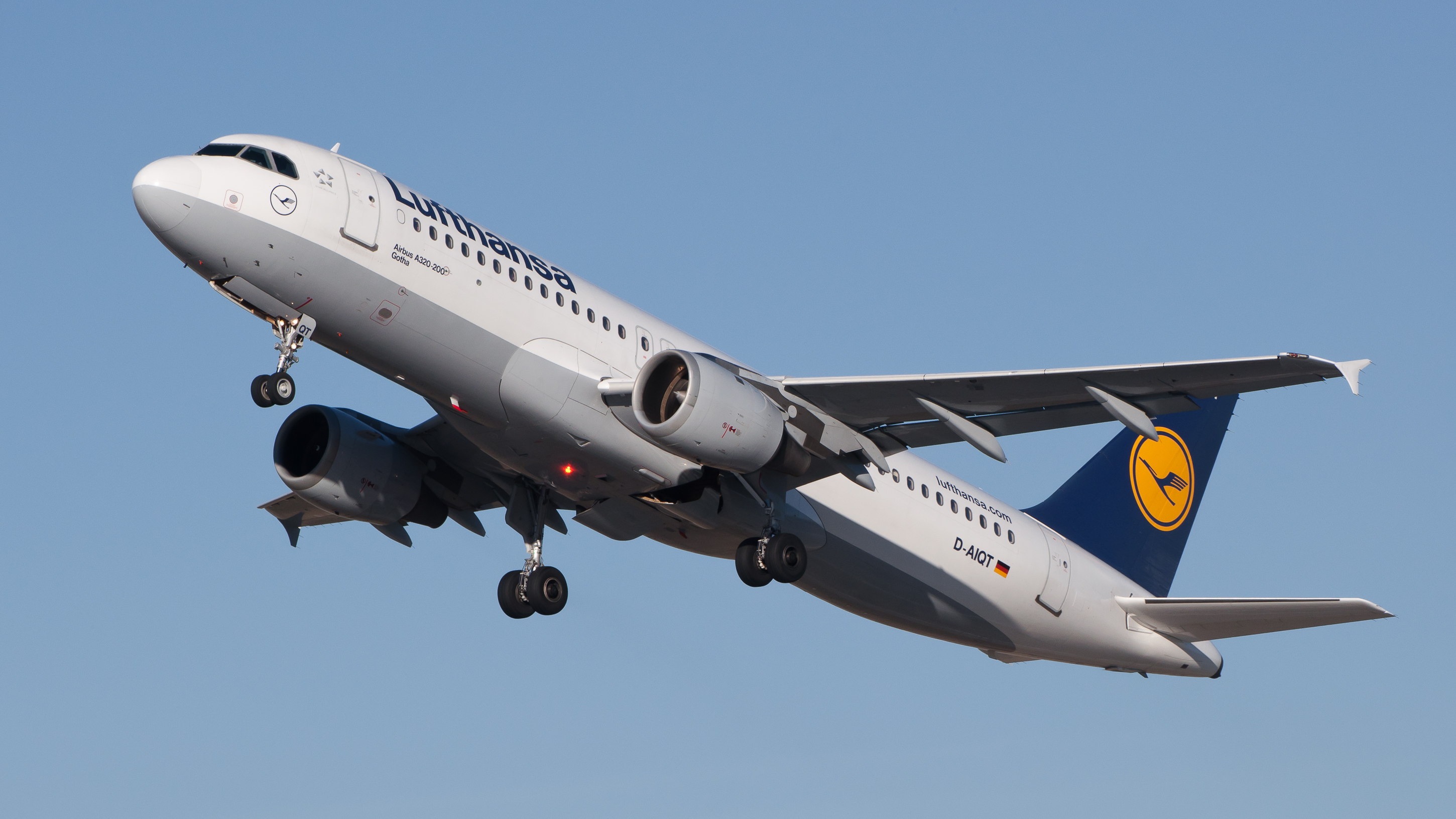
Julian Herzog (Website) (CC BY), vía commons Physics of flight
What is "flight envelope protection," which the A320 pioneered?
A set of limits embedded in the flight control software: it calculates the flight envelope, adds a safety margin, and blocks pilot inputs that would take the… more…
Julian Herzog (Website) (CC BY), vía commons Physics of flight
What is the A320's SHARP package for?
SHARP (SHort AiRfield Package) improves takeoff and landing performance on short runways and is designed to increase low-speed lift. It combines aerodynamic… more…
Physics of flight
What flaw sank Vought's all-metal V-141 fighter?
It wasn't a single flaw: tests showed the V-141 still flew poorly, was prone to spinning, and also suffered tail flutter, which is why it was rejected. It… more…
Physics of flight
What wind tunnel did NACA use to study the Corsair, and how big was it?
The full-scale 30- by 60-Foot Tunnel at the Langley Research Center, in Hampton, Virginia. NACA dedicated the facility on 27 May 1931 and used it to test the… more…


