Did you know…
Which British aircraft was mass-produced in the US?
Short answer
The Airco D.H.4: of the 6,295 built, 4,846 came from American factories. Most were built in the United States as general-purpose two-seaters for the American Expeditionary Forces in France, and it was the only American-built aircraft to see combat in the First World War.

A British design on American production lines
Most D.H.4s were built as general-purpose two-seaters in the United States, intended for the American Expeditionary Forces in France, and the type became the only American-built aircraft to see combat in the First World War. Total production reached 6,295 aircraft, of which 4,846 were built in the United States. In Britain, by the close of production 1,449 aircraft had been built, out of orders for 1,700, for the Royal Flying Corps and the Royal Naval Air Service.
The factories and the orders
Several different companies handled that Americanised variant of the D.H.4, among them the Boeing Airplane Corporation, the Dayton-Wright Company, the Fisher Body Corporation and the Standard Aircraft Corporation. American manufacturers were given orders for 9,500 D.H.4s, of which 1,885 actually reached France during the war.
Engines and limitations
The aircraft was designed for the newly developed 160 hp (120 kW) BHP (Beardmore Halford Pullinger) engine. The type was also fitted with the 375 hp (280 kW) Rolls-Royce Eagle, the 230 hp (170 kW) BHP, the Royal Aircraft Factory's 200 hp (150 kW) RAF3A, the 230 hp (170 kW) Siddeley Puma and the 260 hp (190 kW) Fiat. One drawback of the design was the distance between pilot and observer, separated by the large main fuel tank, which made communication between the two difficult, especially in combat against enemy fighters.
More questions
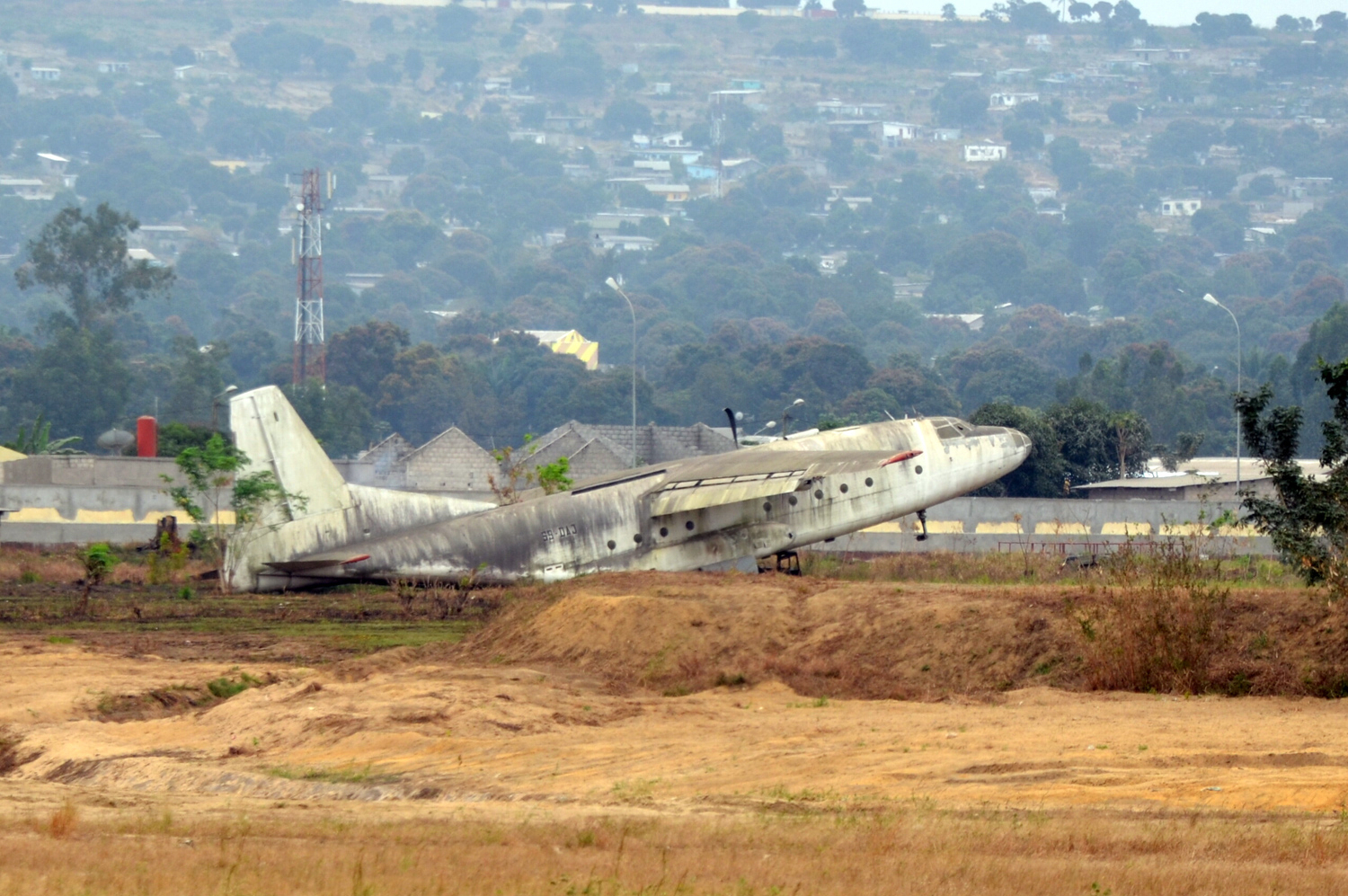
Vitaly Druchenok (CC BY SA), vía commons Aviation history
What "typically Russian" features did the An-8 have?
The An-8 was a Soviet light military transport with a high wing and two turboprops, featuring a glazed nose for the navigator, a chin radome for navigation… more…

RB7MRV (CC BY SA), vía commons Aviation history
Why is the E-25 called "Mirlo"?
Mirlo is the official nickname of the C-101 in Spain. The air force designated it the E.25 Mirlo, "Blackbird" in English, while CASA identified it as the… more…
RB7MRV (CC BY SA), vía commons Aviation history
What did CASA do with the C-101's first flight for safety?
CASA kept it deliberately simple: on 27 June 1977 the P1 only had to check the controls' response, and for extra safety its landing gear was not even… more…
RB7MRV (CC BY SA), vía commons Aviation history
What requirement made the C-101 fly inverted?
Among its requirements, the Aviojet had to be able to remain in inverted flight for 20 s and land at 100 knots (185 km/h). It also had to withstand load… more…

Aviation history
What was the An-2 called before it became an Antonov?
SKh-1. The letters stood for Sel'sko Khozyaystvennyi — pervoy, "agricultural, the first," and corresponded to the first design from Antonov's bureau, later… more…
Aviation history
At what altitude did the weather-research An-4 biplane fly?
Up to 10,000 m: the An-4 — the design-bureau designation for the meteorological An-2ZA, intended for high-altitude weather research — could maintain power up… more…


