Did you know…
When is the sound barrier broken?
Short answer
Mach 1 is reached when an aircraft matches the speed of sound, which isn't fixed: it depends only on air temperature. At sea level and 15°C it's about 1,225 km/h (340 m/s), while at 11,000 meters and −56°C it drops to about 1,062 km/h (295 m/s). Chuck Yeager first achieved it on October 14, 1947.

A speed that changes with temperature
The speed of sound in air depends only on temperature, not on pressure or altitude by themselves. The relationship is simple: it increases with the square root of the absolute temperature. In the standard atmosphere at sea level, at 15°C, sound travels at 340.3 m/s, that is, 1,225 km/h (661 kn). At the tropopause, at 11,000 meters and −56.5°C, it drops to 295 m/s, about 1,062 km/h (573 kn), and stays constant above that altitude as long as the temperature doesn't change.
That's why the operational reference isn't speed in km/h but the Mach number: the ratio between the aircraft's speed and the speed of sound in that particular air. A commercial jet cruising at Mach 0.85 is moving at about 900 km/h; the same figure at low altitude would be clearly faster in absolute terms.
Before and after Mach 1
There is no physical barrier at Mach 1, but there is an uncomfortable transition. Already in the transonic regime, from Mach 0.7 or 0.8 onward, zones of local supersonic flow appear over the most curved parts of the wing, and with them shock waves that cause a sharp rise in drag and flow separation. That phenomenon, called drag divergence, is what made several prototypes in the 1940s suffer violent vibrations, loss of control effectiveness, and even reversal of elevator control, feeding the idea of a "sound barrier."
The solution was a matter of design: swept wings, which delay the appearance of shock waves; thin airfoils; Whitcomb's area rule, which narrows the fuselage at the wing to smooth the distribution of cross-sections; and the all-moving horizontal stabilizer, precisely the modification that made the Bell X-1 controllable.
Above Mach 1 the aircraft flies ahead of its own disturbances, which pile up in a shock cone whose passage over the ground is perceived as a sonic boom. The boom is continuous for as long as the supersonic flight lasts: it trails along like a wake, it doesn't happen only at the instant of crossing Mach 1.
Milestones and current status
The first recorded supersonic flight was that of the Bell X-1 flown by Charles "Chuck" Yeager on October 14, 1947, over the Mojave Desert, at Mach 1.06 and about 13,000 meters of altitude, after being dropped from a B-29. In 1976, the Lockheed SR-71 Blackbird set the speed record for a crewed air-breathing aircraft: 3,529.6 km/h. The absolute surface record belongs to the ThrustSSC, which in 1997 exceeded Mach 1 on land.
In civil aviation, supersonic flight was a brief exception. The Concorde operated between 1976 and 2003 at Mach 2.02, and the Tupolev Tu-144 had an even shorter commercial career. The sonic boom led to the banning of civil supersonic flights over the territory of numerous countries, which confined these aircraft to oceanic routes and ruined their economics. Current research focuses precisely on dampening that boom through shapes that scatter the shock waves.
More questions
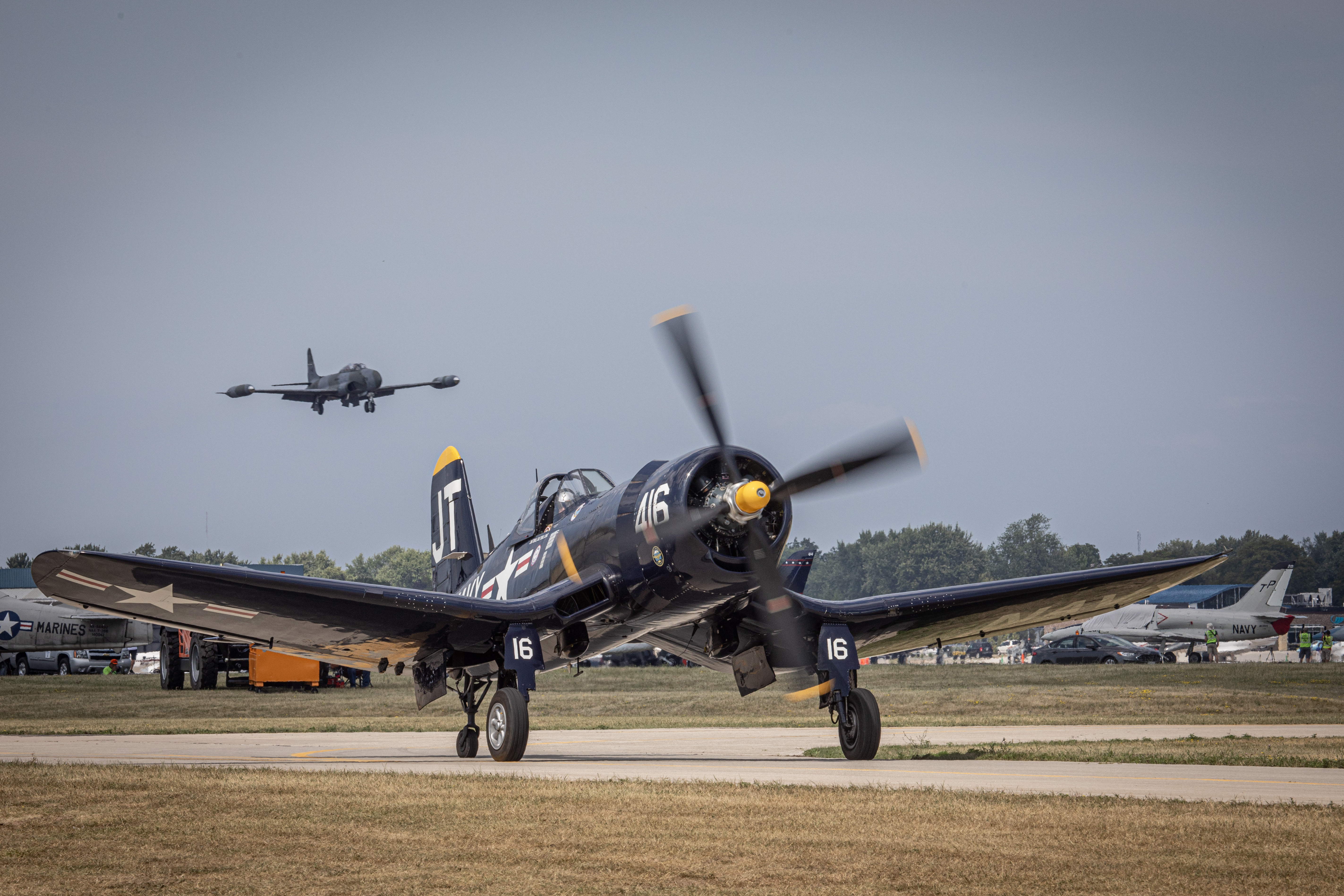
Physics of flight
Why can't a Corsair pilot apply full power when going around after a failed carrier landing?
Because at low speed and high power the Corsair would drop its left wing suddenly and with almost no warning, due to propeller torque. If the throttle was… more…
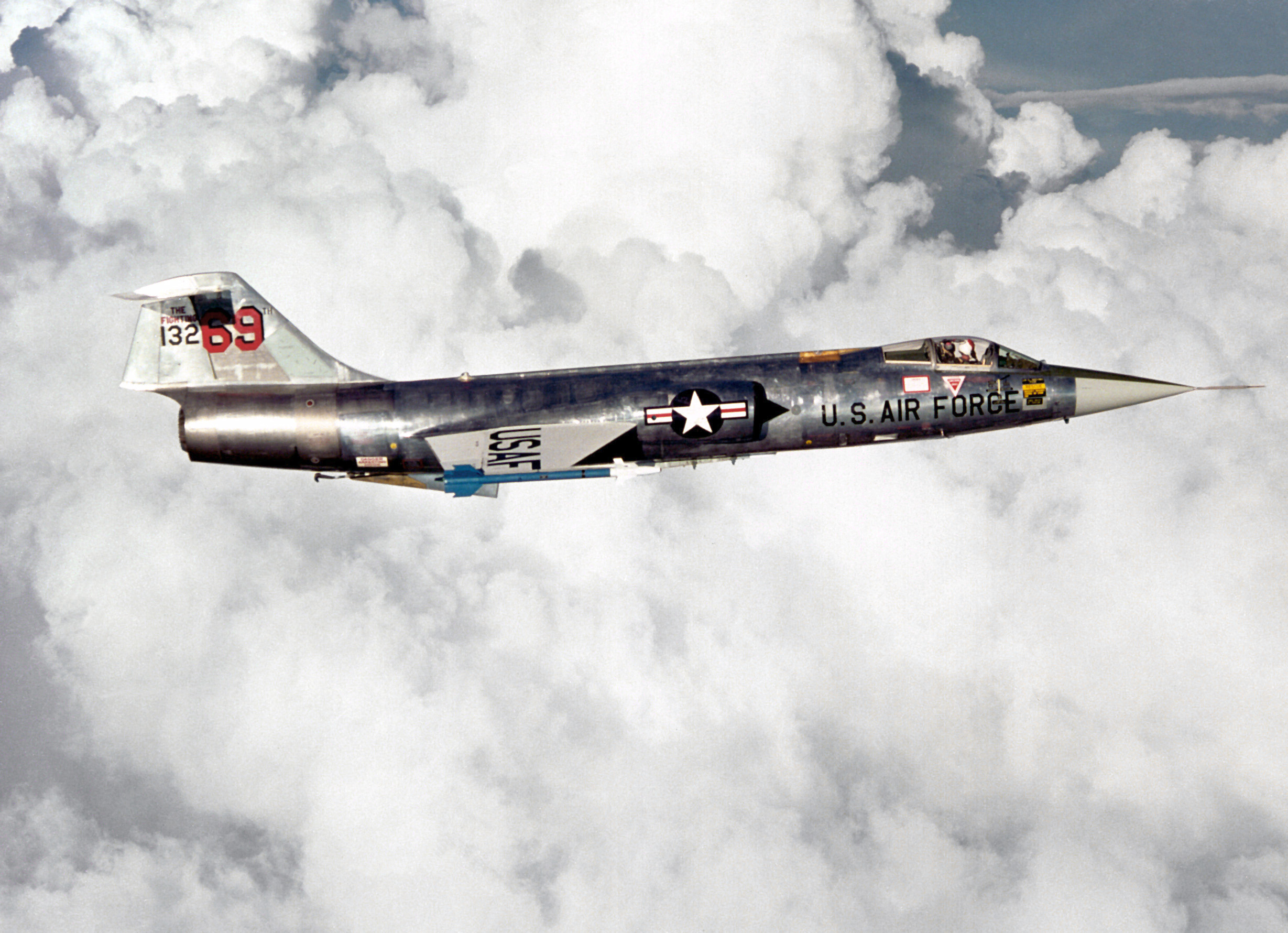
Physics of flight
What did the phrase "banking with intent to turn" mean among F-104 pilots?
It was a joke among Canadian F-104 pilots: banking the aircraft "with intent to turn" referred to its poor low-speed turning. Its sustained turn capability… more…
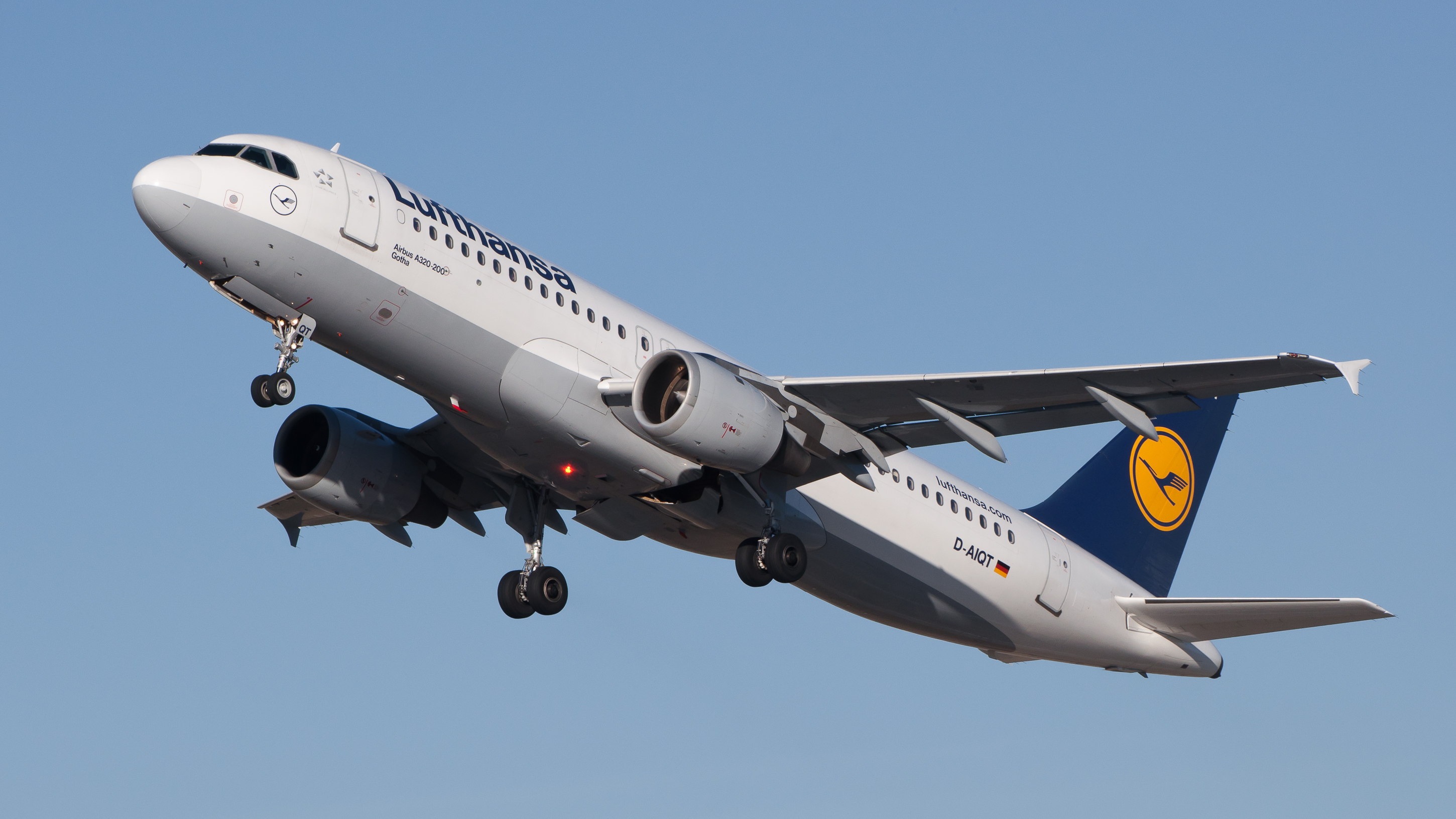
Julian Herzog (Website) (CC BY), vía commons Physics of flight
What is "flight envelope protection," which the A320 pioneered?
A set of limits embedded in the flight control software: it calculates the flight envelope, adds a safety margin, and blocks pilot inputs that would take the… more…
Julian Herzog (Website) (CC BY), vía commons Physics of flight
What is the A320's SHARP package for?
SHARP (SHort AiRfield Package) improves takeoff and landing performance on short runways and is designed to increase low-speed lift. It combines aerodynamic… more…
Physics of flight
What flaw sank Vought's all-metal V-141 fighter?
It wasn't a single flaw: tests showed the V-141 still flew poorly, was prone to spinning, and also suffered tail flutter, which is why it was rejected. It… more…
Physics of flight
What wind tunnel did NACA use to study the Corsair, and how big was it?
The full-scale 30- by 60-Foot Tunnel at the Langley Research Center, in Hampton, Virginia. NACA dedicated the facility on 27 May 1931 and used it to test the… more…


