Did you know…
How big is the Moon?
Short answer
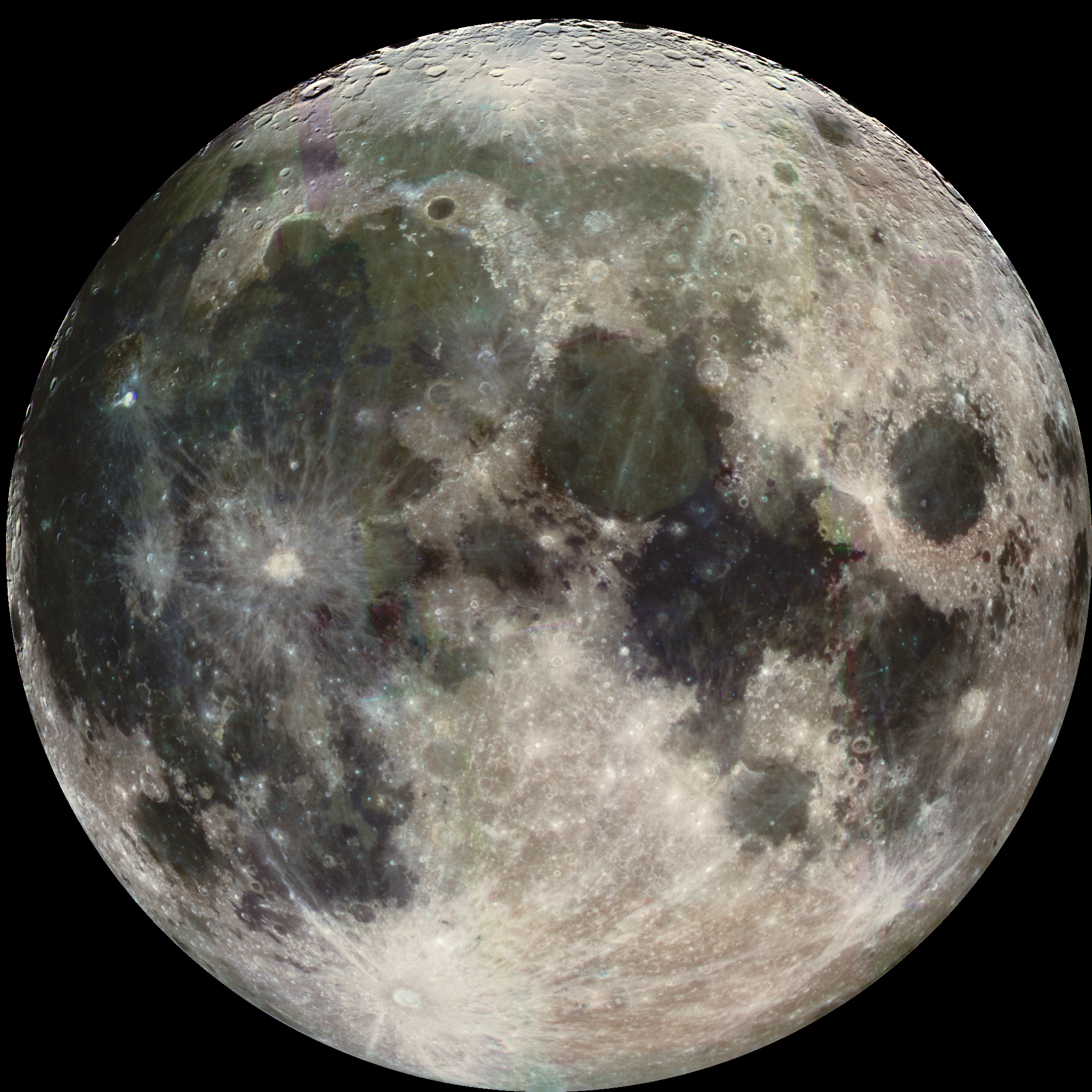
The Moon has an equatorial diameter of 3,476 km, less than a third of Earth's width, and a mean radius of 1,737.4 km. It orbits at an average distance of 384,400 km, ranging between 356,000 and 407,000 km. On its surface, gravity is 1.62 m/s², about a sixth of Earth's.
Diameter and radius
The Moon's equatorial diameter is 3,476 km and its mean radius is 1,737.4 km. By comparison, that is less than a third of Earth's width; NASA illustrates the difference by saying that if our planet were the size of a small coin, the Moon would be like a coffee bean. That scale, modest next to Earth, is unusually large for a satellite: most moons in the solar system are tiny relative to the world they orbit.
The distance, which isn't constant
The average separation between Earth and the Moon is 384,400 km, but the orbit is elliptical and the figure ranges between 356,000 and 407,000 km. That variation explains why the lunar disk looks somewhat larger during some full moons than others, the effect the press has popularized as a "supermoon," and also why the apparent size changes just enough for some solar eclipses to be total and others annular.
What that size means
With that mass and radius, surface gravity is 1.62 m/s², about a sixth of Earth's: hence the bounding walk of the Apollo astronauts and the fact that a rock sample weighs there a fraction of what it would on Earth. Escape velocity is 2.38 km/s, far lower than Earth's, which makes launching from the Moon dramatically cheaper and is one of the arguments for using it as a stepping stone to other destinations. The Moon also takes 27.3 days to orbit Earth once and another 27.3 days to rotate once on its own axis, a coupling that keeps the same face always turned toward us.
More questions
Moon and Mars
How does neil armstrong look like?
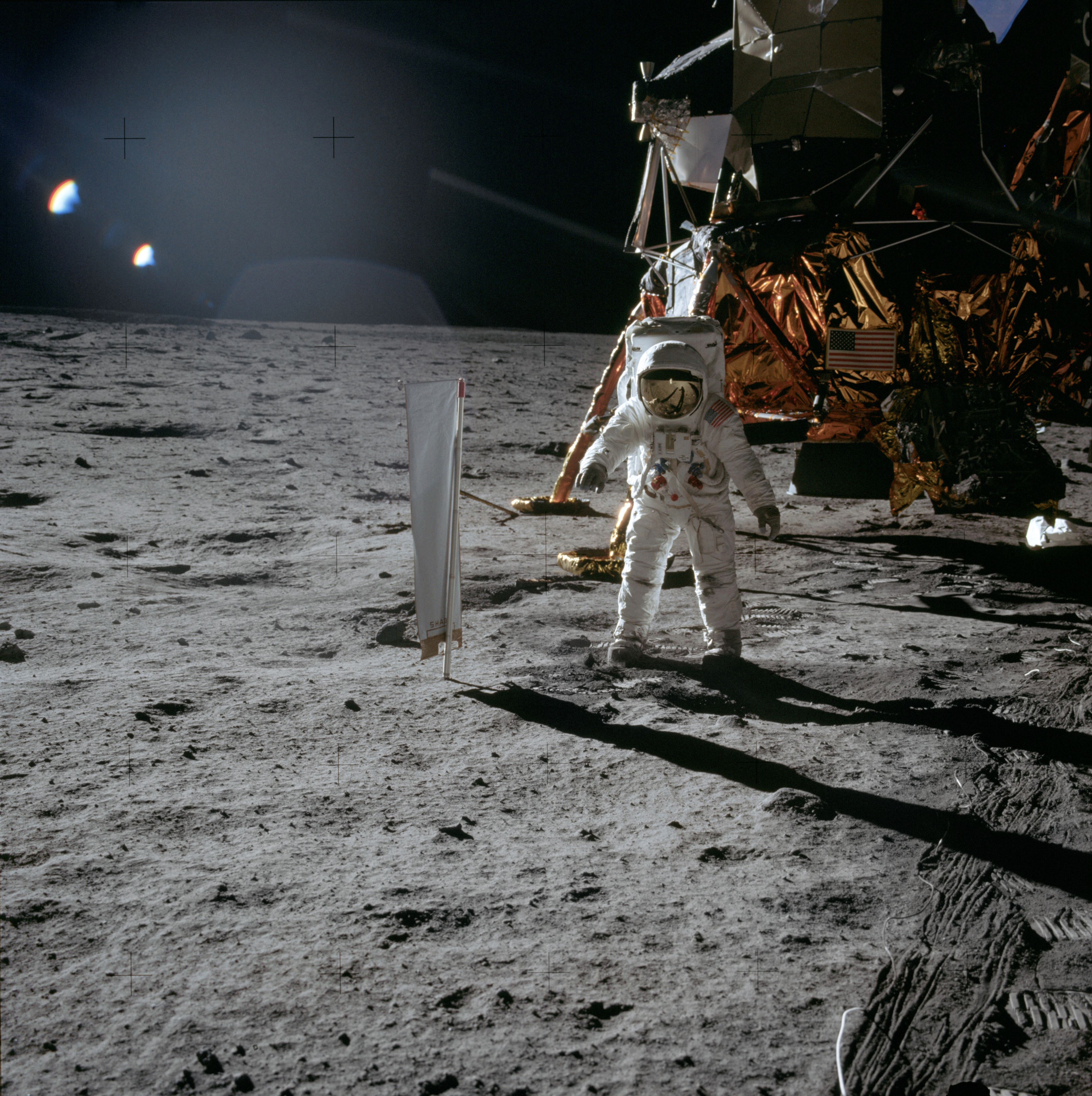
The face most people picture is not his: the gold-visored astronaut in the famous Apollo 11 photograph is Buzz Aldrin, shot by Armstrong. Armstrong himself is… more…

Richard Dorrell (CC BY SA), vía commons Moon and Mars
How does the moon affect the tides?
By pulling unevenly on it. Tidal forces vary inversely as the cube of the distance, so the near side of the Earth is tugged harder than the far side: one… more…
Moon and Mars
Why does neil armstrong have a hollywood star?
Strictly he does not have a star. Armstrong, Aldrin and Collins share four circular monuments resembling the Moon, one at each corner of Hollywood and Vine… more…
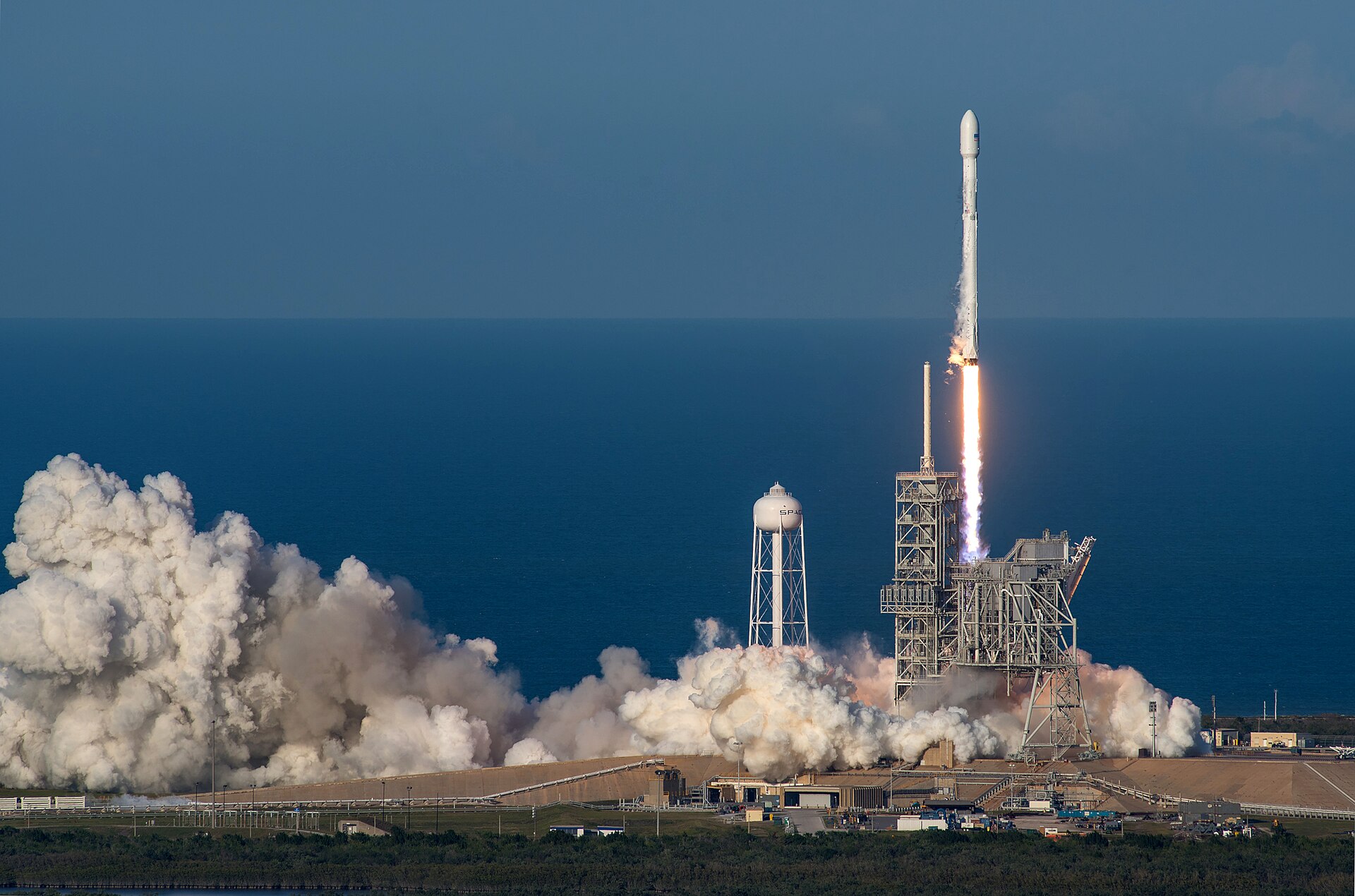
Foto: SpaceX (CC0) Moon and Mars
Why did falcon 9 hit the moon?
Because a spent upper stage on a lunar trajectory has no mission and no way to steer. A Falcon 9 upper stage from the January 2025 Firefly Blue Ghost 1 launch… more…
Moon and Mars
How much apollo 11 cost?
NASA never published a price for Apollo 11 on its own; what is documented is the program. The United States spent $25.8 billion on Project Apollo between 1960… more…
Moon and Mars
How much time neil armstrong spent on moon?
Armstrong and Aldrin spent 21 hours, 36 minutes on the Moon's surface, almost all of it inside the lunar module Eagle. Armstrong stepped onto the surface… more…

