Did you know…
Why do jet engines have a spiral?
Short answer
The spiral painted on a jet engine's spinner is a safety marking. When the fan is turning, the spiral blurs into a visible, pulsing pattern that warns ground crew from a distance that the engine is running, even over ramp noise. It also gives a quick check of rotation and, some operators argue, helps birds see the moving intake.
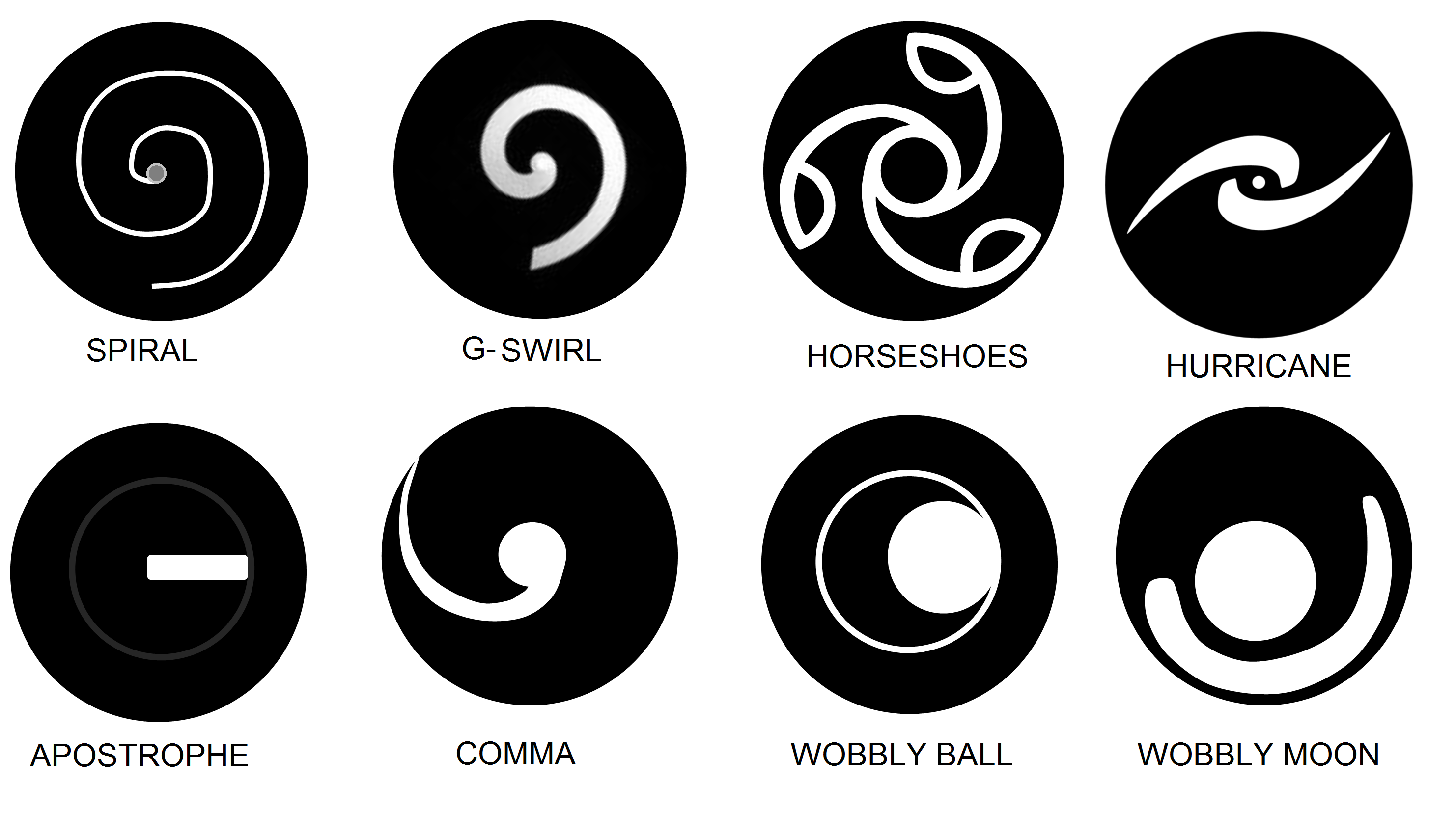
A marking that moves
Look at the centre of almost any turbofan and you will find a painted spiral, comma or hook on the nose cone, the spinner that fairs the hub of the fan. It is not decoration and it has no aerodynamic role. Its purpose is to make a rotating engine unmistakable to people standing near it. A fan idling at a few hundred revolutions per minute is hard to see moving: the blades blur into a grey disc and, on a busy ramp with hearing protection on, the sound of one engine is easily lost among others. The spiral changes that. As the spinner turns, the painted shape appears to pulse or flick, producing a hypnotic pattern that the eye picks up from tens of metres away.
Why the intake is dangerous
The hazard is real. A high-bypass engine at ground idle draws in a large volume of air, and the suction zone in front of the intake extends several metres forward and outward. Manufacturers publish inlet hazard areas in ground handling manuals; for a large engine at takeoff thrust the zone can reach more than four metres in front of the cowl. People, tools and debris inside that radius can be pulled in, with fatal consequences for the person and destruction of the engine. Ground crew are trained to approach only from the side, behind a marked line, and only when the engine is confirmed stopped. The spiral gives an instant visual confirmation at a glance, independent of radio calls or beacon lights.
Origins and variants
The practice began in the 1950s and was standardised by engine makers such as Rolls-Royce and General Electric, each with its own house shape: a tight white spiral, a comma, an apostrophe, a hooked stripe. Airlines sometimes adapt the shape to their livery. A secondary claim, often repeated but hard to prove, is that the flickering pattern helps birds recognise the intake as a moving object and steer clear. Engine manufacturers themselves do not usually make that claim; the documented purpose is ground safety. The pattern also offers a quick check that the fan is windmilling freely after shutdown, and it reveals whether a rotor has stopped completely before an inspection begins.
More questions

Physics of flight
Why can't a Corsair pilot apply full power when going around after a failed carrier landing?
Because at low speed and high power the Corsair would drop its left wing suddenly and with almost no warning, due to propeller torque. If the throttle was… more…

Physics of flight
What did the phrase "banking with intent to turn" mean among F-104 pilots?
It was a joke among Canadian F-104 pilots: banking the aircraft "with intent to turn" referred to its poor low-speed turning. Its sustained turn capability… more…

Julian Herzog (Website) (CC BY), vía commons Physics of flight
What is "flight envelope protection," which the A320 pioneered?
A set of limits embedded in the flight control software: it calculates the flight envelope, adds a safety margin, and blocks pilot inputs that would take the… more…
Julian Herzog (Website) (CC BY), vía commons Physics of flight
What is the A320's SHARP package for?
SHARP (SHort AiRfield Package) improves takeoff and landing performance on short runways and is designed to increase low-speed lift. It combines aerodynamic… more…
Physics of flight
What flaw sank Vought's all-metal V-141 fighter?
It wasn't a single flaw: tests showed the V-141 still flew poorly, was prone to spinning, and also suffered tail flutter, which is why it was rejected. It… more…
Physics of flight
What wind tunnel did NACA use to study the Corsair, and how big was it?
The full-scale 30- by 60-Foot Tunnel at the Langley Research Center, in Hampton, Virginia. NACA dedicated the facility on 27 May 1931 and used it to test the… more…


