Did you know…
Why did the Concorde stop flying?
Short answer
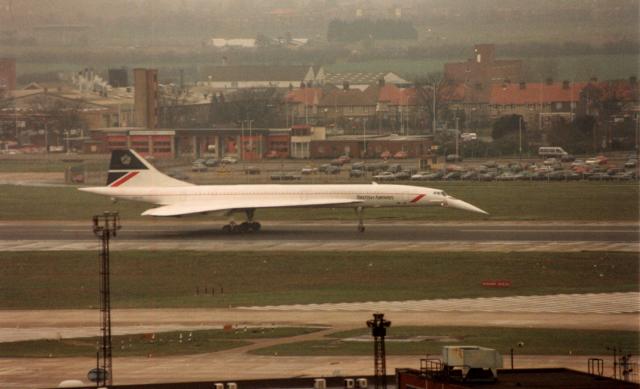
The Concorde stopped flying in 2003 due to a combination of factors: Air France's crash in Paris (July 2000), the collapse of premium transatlantic travel after 9/11, very high operating costs and Airbus's decision to withdraw technical support. Air France retired it in May 2003 and British Airways on October 24, 2003.
A fragile business from the start
The Concorde entered service in January 1976 with Air France and British Airways, and only twenty were built, fourteen of them for commercial use. It crossed the Atlantic at Mach 2 in about three and a half hours, but with barely a hundred seats and four afterburning Olympus engines that burned far more fuel per seat than any subsonic jet. Tickets were extremely expensive and profitability depended on a handful of routes, chiefly Paris and London to New York. Sonic booms banned supersonic flight over land, which limited its market from the outset.
The Gonesse crash and 9/11
On July 25, 2000, Air France flight 4590 crashed shortly after taking off from Paris-Charles de Gaulle when a tire burst after hitting a metal strip on the runway; 113 people died. The entire fleet was grounded for over a year while fuel tanks were reinforced with Kevlar liners and tires were redesigned. Flights resumed in November 2001, right after the September 11 attacks, when transatlantic business travel, its core customer base, had collapsed.
The end
With low occupancy, airframes already around 25 years old and increasingly costly maintenance, Airbus, heir to the program, announced in 2003 that it would stop supporting the type, which made keeping the certification unsustainable. Air France operated its last commercial flight on May 31, 2003, and British Airways closed the supersonic era on October 24, 2003, with three consecutive landings at Heathrow. The surviving aircraft are preserved in museums across Europe and the United States.
More questions

Foto: 4300streetcar (CC BY 4.0) Commercial aviation
Which 747 carried Enterprise "piggyback"?
The first Shuttle Carrier Aircraft was a Boeing 747-123 registered N905NA, originally built for American Airlines and acquired by NASA in 1974. Boeing… more…

Commercial aviation
Was there an amphibious DC-3?
Yes: the Douglas XC-47C was created by fitting Edo Model 78 floats onto a standard C-47. The single-step metal floats carried retractable wheels that also… more…

OTFW, Berlin (CC BY SA), vía commons Commercial aviation
Was a C-47 converted into a glider?
Yes: the Douglas XCG-17 was an assault glider created by converting a twin-engine C-47 Skytrain during World War II. Its engines were removed and the nacelles… more…
Commercial aviation
What did the USSR build from the DC-3?
The USSR built a version of the DC-3 under a licence granted to its government on 15 July 1936. It was designated PS-84 and, in 1942, renamed Lisunov Li-2… more…
Commercial aviation
What was "Puff, the Magic Dragon"?
It was the nickname of the Douglas AC-47 Spooky, the first in a series of fixed-wing gunships developed by the United States Air Force during the Vietnam War… more…
Commercial aviation
How did the RAF refer to the C-47?
The RAF called it Dakota: the Dakota I was the designation for 53 C-47s received under Lend-Lease. The Dakota III designated 962 C-47A Skytrains. The Dakota… more…


