Did you know…
How long astronauts stay on moon?
Short answer
So far, between about 21 hours and three days. Apollo 11 spent roughly 21 and a half hours on the lunar surface in July 1969; Apollo 17, the last landing, stayed about 75 hours in December 1972. NASA is planning surface stays of about a week for the first Artemis landings.

From one moonwalk to three days
Apollo 11 landed on 20 July 1969 and lifted off less than a day later, after a single moonwalk of about two and a half hours; the flight plan treated the surface as a place to prove that a landing could be survived. The later missions were designed for science. Apollo 15, 16 and 17 carried an extended Lunar Module with more propellant and consumables, plus a folded rover, and each stayed about three days. Apollo 17 set the record at roughly 75 hours, with three separate excursions away from the lander.
What set the limit
The constraint was never the astronauts but the lander. The Lunar Module carried its own oxygen, water, batteries and cooling supplies, and every extra hour on the surface meant more mass launched from Earth. Lighting mattered too: Apollo landed shortly after local sunrise, when long shadows gave the crew depth cues and the ground had not yet heated up, and since a full lunar day lasts about a month, waiting out the night was never an option. Dust was a third limit, abrasive and clinging, hard on seals and suit joints.
Artemis and the longer stays
NASA's plan for the first Artemis landings is a surface stay of about a week near the lunar south pole, with a crewed lander derived from a much larger vehicle and suits designed for repeated use. The south pole was chosen for ridges in near-permanent sunlight and shadowed craters holding water ice, and both point the same way: stays measured in weeks rather than days only become practical once power and consumables come from the Moon itself rather than from the lander.
More questions
- Image pending
Astronauts and life in space
Why does astronauts float in space?
Because they are in free fall, not because gravity is absent. At the International Space Station's altitude of about 400 km, Earth still pulls almost as hard… more…
- Image pending
Astronauts and life in space
Why did yuri gagarin die?
Gagarin died in an aircraft crash, not in a spacecraft. On 27 March 1968 the MiG-15UTI trainer he was flying with instructor Vladimir Seryogin went down in… more…
- Image pending
Astronauts and life in space
How much an astronaut is paid?
NASA's civilian astronauts are ordinary federal employees, paid on the General Schedule grade-and-step scale with no bonus per flight, per spacewalk or per… more…
.png)
Astronauts and life in space
Why is blue origin so slow?
Blue Origin was built on deliberate, owner-funded incrementalism: its motto is Gradatim Ferociter, step by step, and it spent its first two decades on… more…
Astronauts and life in space
When did astronauts last walk on the moon?
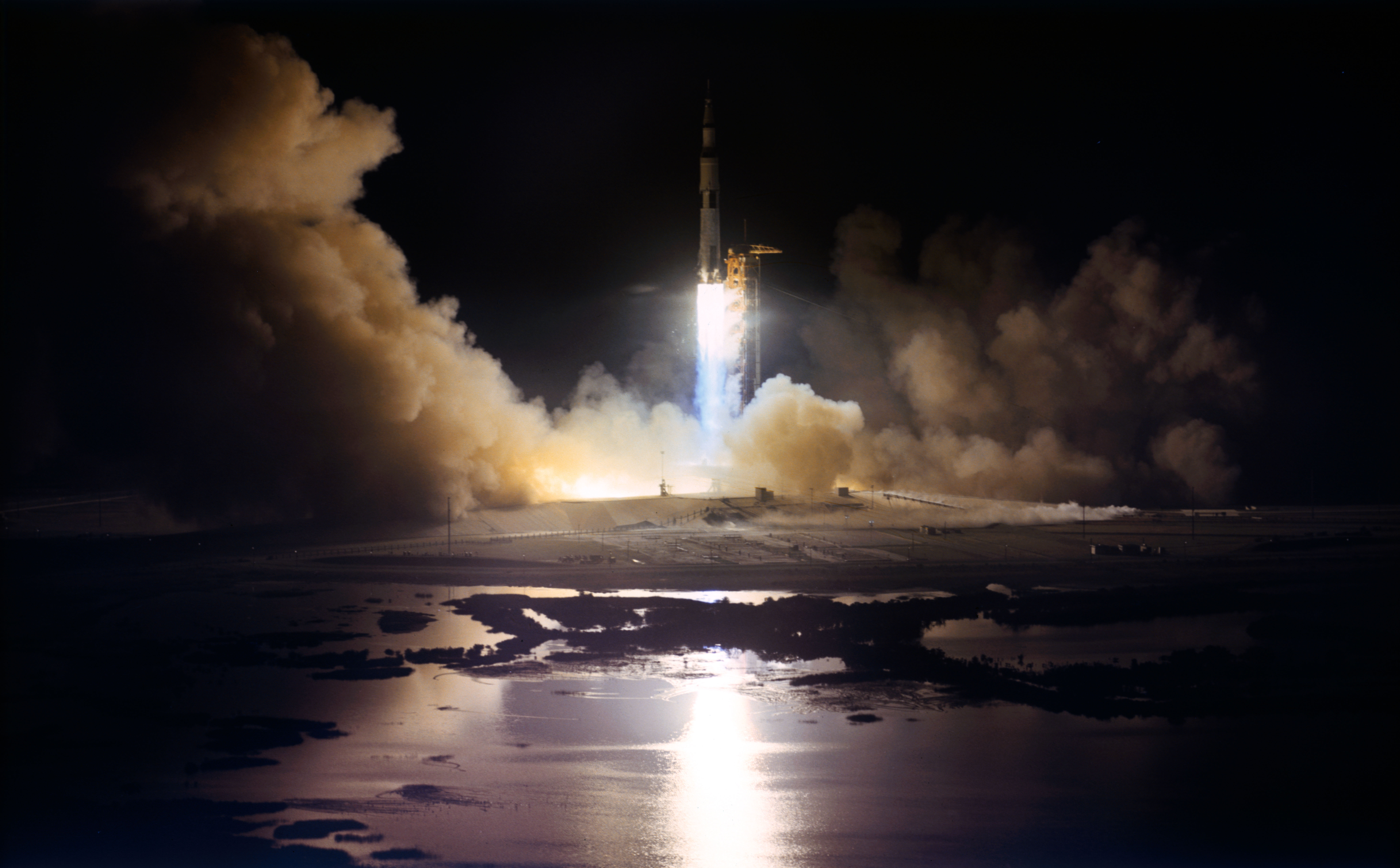
Apollo 17, in December 1972. Eugene Cernan and Harrison Schmitt landed in the Taurus-Littrow valley on 11 December 1972, worked on the surface for three days… more…
- Image pending
Astronauts and life in space
How high do astronauts orbit the earth?
Crewed spaceflight today happens a few hundred kilometres up. The International Space Station orbits at about 400 km, lapping the planet roughly every 90… more…
