Did you know…
How long astronauts stay in space?
Short answer
Most crew members fly a standard increment of about six months aboard the International Space Station. A few have stayed far longer: the endurance record for a single flight is Valery Polyakov's 437 days on Mir in 1994-95, close to 15 months, and it still stands (checked September 2026).
-1600.webp)
The six-month rhythm
The station runs on expeditions of roughly half a year, a compromise rather than a physiological limit. Six months is long enough to justify the cost of a seat and to run experiments that need months of continuous exposure, and short enough to keep radiation dose, bone loss and crew fatigue inside margins flight surgeons are comfortable with. Rotations also have to fit the launch cadence of the vehicles that carry crews up and down, so an increment can stretch or contract by weeks for reasons that have nothing to do with the human body.
The long-duration records
The Mir programme pushed much further. Valery Polyakov spent 437 days in orbit between 1994 and 1995 and walked away from the landing capsule under his own power, deliberately, to demonstrate that a Mars-length transit was survivable. No single flight has exceeded it since. One NASA astronaut passed a year aboard the ISS in 2022-23 after the spacecraft meant to bring him home was disabled by a coolant leak, and the highest career totals, all Russian, now run to years of accumulated time off the planet.
What sets the ceiling
Three constraints bind. Radiation dose accumulates and cannot be undone. Bone and muscle waste steadily, a process that exercise and diet slow without stopping. And fluid shifts towards the head produce changes in the eye that remain the least understood of the three, and the most worrying for any mission that cannot turn back. On top of the medicine sit hard engineering limits: consumables, and the certified on-orbit lifetime of the docked spacecraft that serves as the crew's ride home.
More questions
- Image pending
Astronauts and life in space
Why does astronauts float in space?
Because they are in free fall, not because gravity is absent. At the International Space Station's altitude of about 400 km, Earth still pulls almost as hard… more…
- Image pending
Astronauts and life in space
Why did yuri gagarin die?
Gagarin died in an aircraft crash, not in a spacecraft. On 27 March 1968 the MiG-15UTI trainer he was flying with instructor Vladimir Seryogin went down in… more…
- Image pending
Astronauts and life in space
How much an astronaut is paid?
NASA's civilian astronauts are ordinary federal employees, paid on the General Schedule grade-and-step scale with no bonus per flight, per spacewalk or per… more…
.png)
Astronauts and life in space
Why is blue origin so slow?
Blue Origin was built on deliberate, owner-funded incrementalism: its motto is Gradatim Ferociter, step by step, and it spent its first two decades on… more…
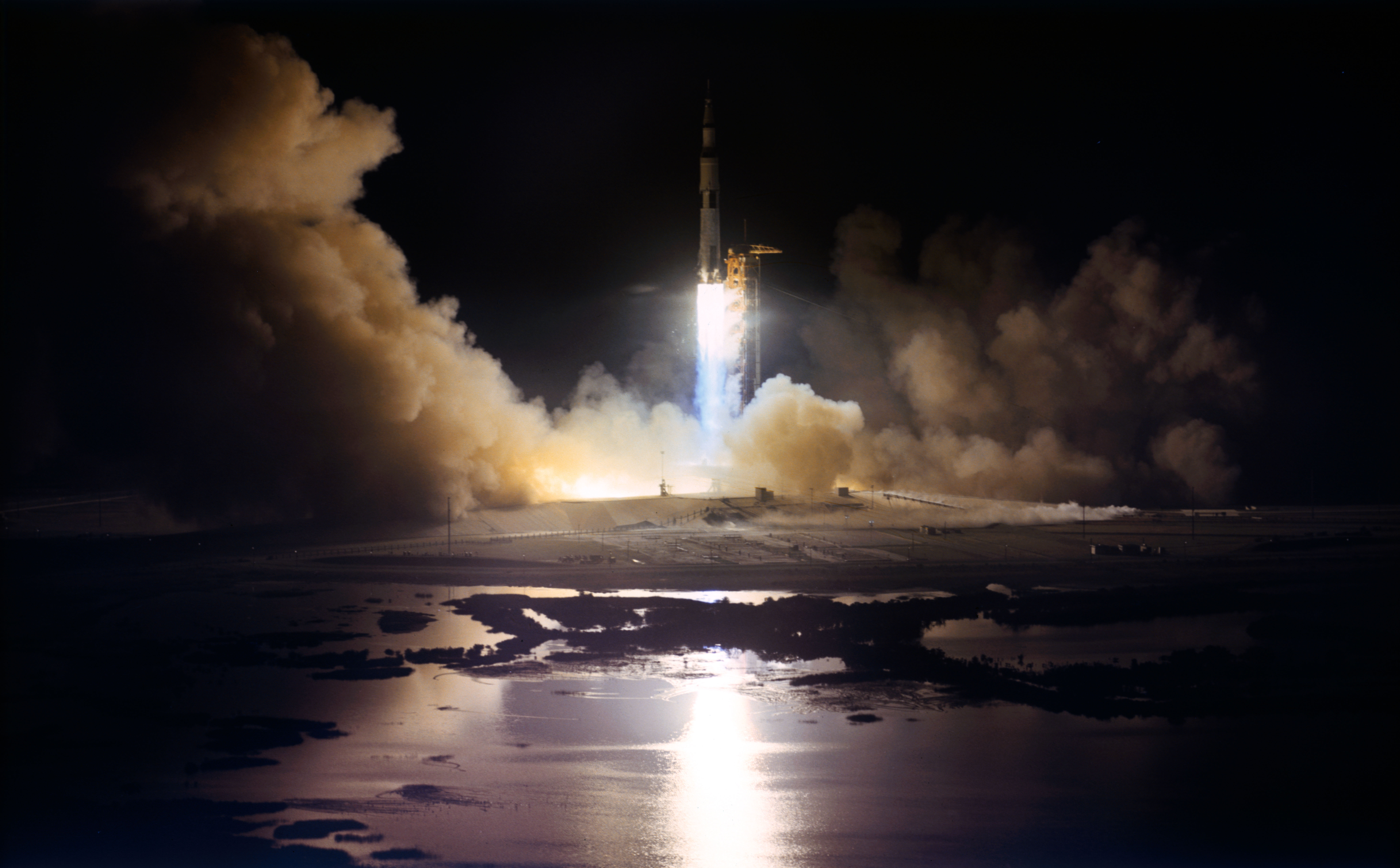
Astronauts and life in space
When did astronauts last walk on the moon?
Apollo 17, in December 1972. Eugene Cernan and Harrison Schmitt landed in the Taurus-Littrow valley on 11 December 1972, worked on the surface for three days… more…
- Image pending
Astronauts and life in space
How high do astronauts orbit the earth?
Crewed spaceflight today happens a few hundred kilometres up. The International Space Station orbits at about 400 km, lapping the planet roughly every 90… more…
