Did you know…
How long a rocket takes to reach the moon?
Short answer
Roughly three days on a crewed Apollo-type trajectory: Apollo 11 lifted off on 16 July 1969, entered lunar orbit on 19 July and landed on 20 July. Robotic probes vary enormously with the route chosen — ESA's ion-propelled SMART-1 launched in September 2003 and reached lunar orbit only in November 2004.

The three-day standard
The Moon sits about 384,400 km away, but travel time depends almost entirely on how much energy the launcher pours into the departure. Apollo used a near-escape trajectory: the Saturn V's third stage restarted in low Earth orbit, the stack coasted outward losing speed the whole way, and some three days later arrived slow enough to be captured by lunar gravity. Apollo 11 left Florida on 16 July 1969, braked into lunar orbit on 19 July and set Eagle down on 20 July. Every later crewed mission ran to much the same clock.
Faster, and far slower
A probe with no crew to keep alive can be thrown much harder. Flung straight onto an escape trajectory, a spacecraft crosses the Moon's distance in well under a day — though it is then moving far too fast to stop, which only suits a flyby. The opposite extreme is propulsive economy. SMART-1 rode to a transfer orbit as a secondary payload in September 2003 and then spiralled outward on a xenon ion thruster whose push is comparable to the weight of a postcard, reaching lunar orbit in November 2004, more than 13 months later.
Why the trade exists
Every hour saved on the outbound leg is paid for twice: once to accelerate, once to brake at the far end, and propellant for both has to be lifted off Earth. Crewed flights accept that bill because consumables, radiation exposure and crew endurance are expensive in a different currency. Robotic missions, which can afford patience, increasingly buy a cheap ride to a high orbit and make up the difference with efficient engines and long spirals through the radiation belts.
More questions
- Image pending
Astronauts and life in space
Why does astronauts float in space?
Because they are in free fall, not because gravity is absent. At the International Space Station's altitude of about 400 km, Earth still pulls almost as hard… more…
- Image pending
Astronauts and life in space
Why did yuri gagarin die?
Gagarin died in an aircraft crash, not in a spacecraft. On 27 March 1968 the MiG-15UTI trainer he was flying with instructor Vladimir Seryogin went down in… more…
- Image pending
Astronauts and life in space
How much an astronaut is paid?
NASA's civilian astronauts are ordinary federal employees, paid on the General Schedule grade-and-step scale with no bonus per flight, per spacewalk or per… more…
.png)
Astronauts and life in space
Why is blue origin so slow?
Blue Origin was built on deliberate, owner-funded incrementalism: its motto is Gradatim Ferociter, step by step, and it spent its first two decades on… more…
Astronauts and life in space
When did astronauts last walk on the moon?
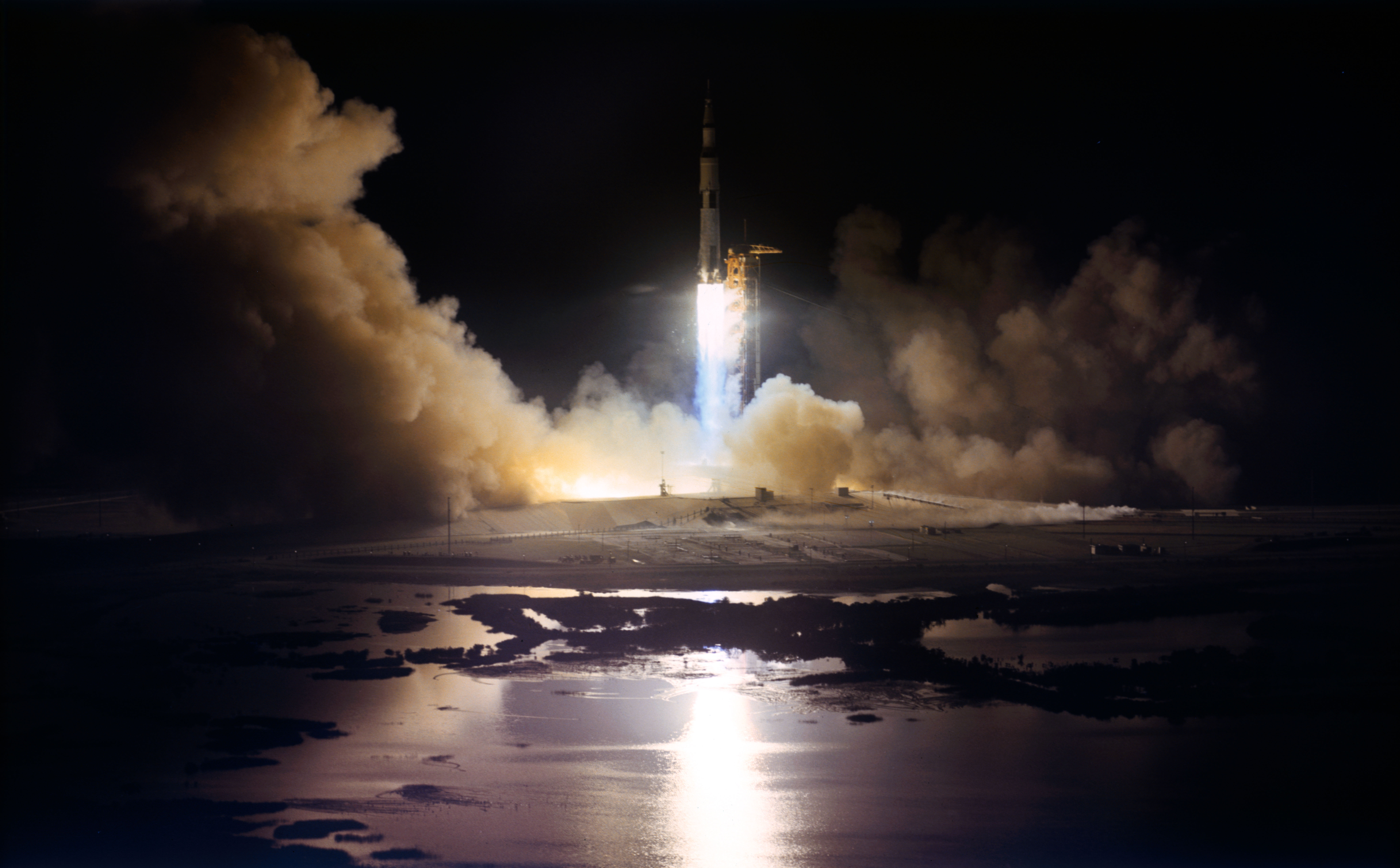
Apollo 17, in December 1972. Eugene Cernan and Harrison Schmitt landed in the Taurus-Littrow valley on 11 December 1972, worked on the surface for three days… more…
- Image pending
Astronauts and life in space
How high do astronauts orbit the earth?
Crewed spaceflight today happens a few hundred kilometres up. The International Space Station orbits at about 400 km, lapping the planet roughly every 90… more…
