Did you know…
How does the Moon block the Sun?
Short answer
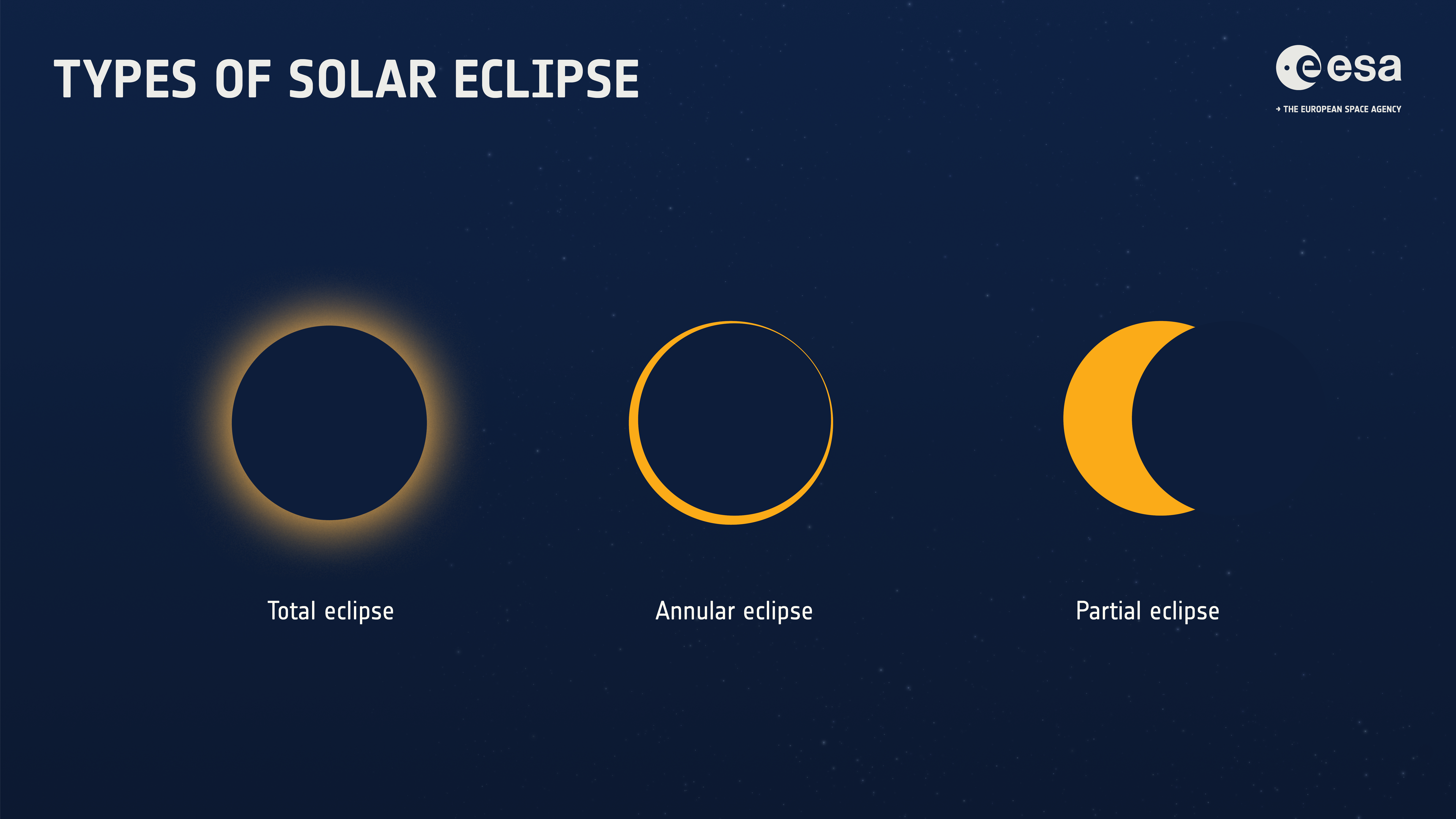
It's a coincidence of scale: the Moon is about 400 times smaller than the Sun, but it's also about 400 times closer to Earth, so both disks appear almost the same size. When it passes in front at new moon, its silhouette covers the Sun's light and a total eclipse occurs.
The coincidence of 400
That such a modest body can block our star is a geometric coincidence. The Moon is about 400 times smaller than the Sun, but it is also about 400 times closer to Earth. Since nearby objects look larger than distant ones, the two end up appearing almost the same size in the sky. When the Moon sits between Earth and the Sun during a total eclipse, it appears to completely cover the sunlight, leaving only the star's outer atmosphere visible.
Why it doesn't happen every month
The Moon passes through its new phase once a month, but it almost always does so above or below the line connecting Earth and the Sun, because its orbit is not in the same plane. Precise alignment only occurs during eclipse seasons: two periods a year, about 35 days each, when the Sun, Moon and Earth can line up. Solar eclipses happen at new moon and lunar eclipses at full moon. And since the area from which totality is visible is limited, for any given place these are infrequent events: the next total eclipse visible from the contiguous United States will be on August 23, 2044.
A show with an expiration date
The Moon is drifting away: its orbit grows by about 1.5 inches (3.8 cm) each year. Its apparent disk will therefore keep shrinking until it stops fully covering the Sun. According to NASA, at that rate it will take more than 600 million years for total eclipses to disappear completely. Alignments will still occur, but the near-perfect fit that today reveals the solar corona is a temporary feature.
More questions
Moon and Mars
How does neil armstrong look like?
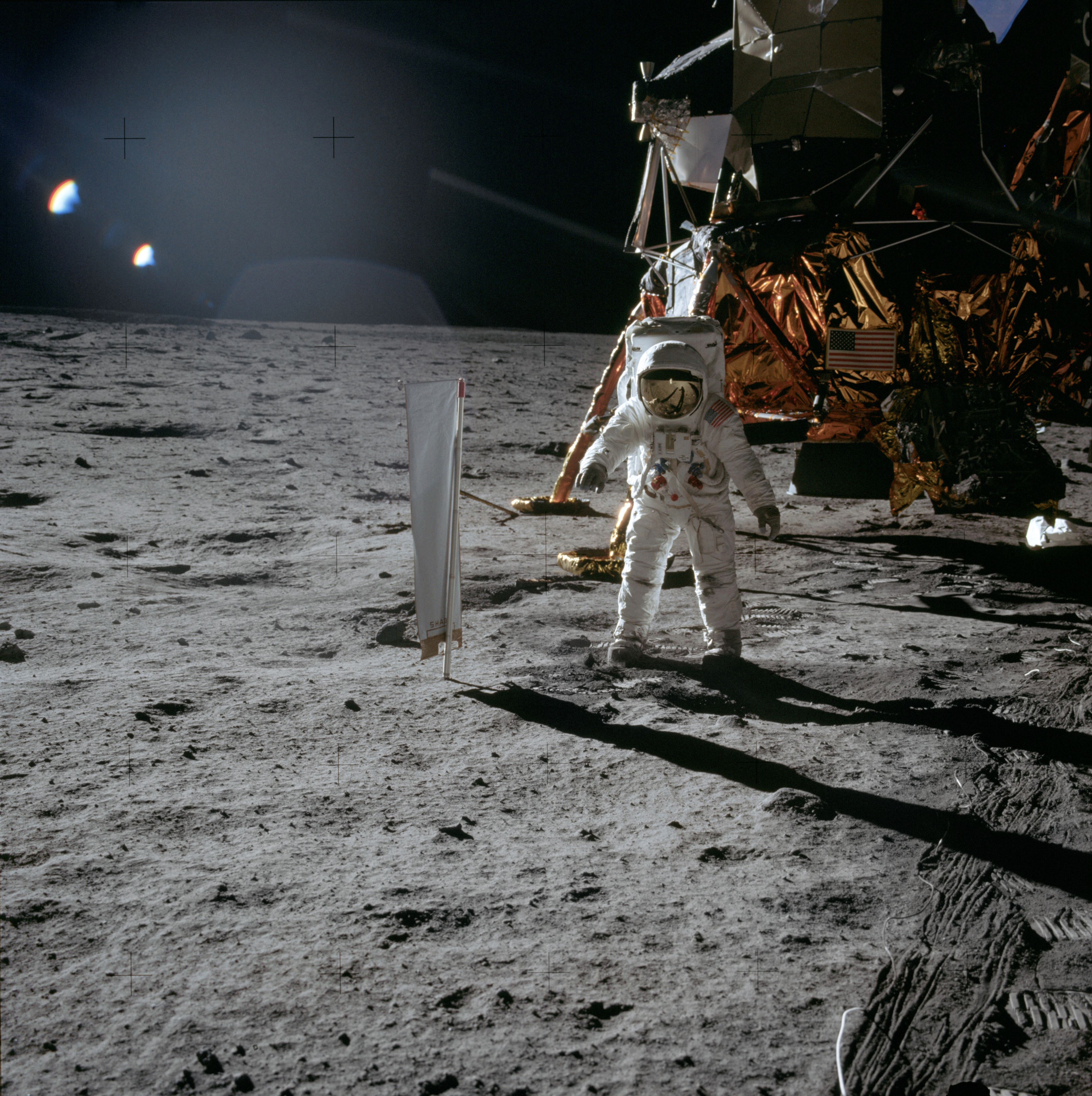
The face most people picture is not his: the gold-visored astronaut in the famous Apollo 11 photograph is Buzz Aldrin, shot by Armstrong. Armstrong himself is… more…

Richard Dorrell (CC BY SA), vía commons Moon and Mars
How does the moon affect the tides?
By pulling unevenly on it. Tidal forces vary inversely as the cube of the distance, so the near side of the Earth is tugged harder than the far side: one… more…
Moon and Mars
Why does neil armstrong have a hollywood star?
Strictly he does not have a star. Armstrong, Aldrin and Collins share four circular monuments resembling the Moon, one at each corner of Hollywood and Vine… more…

Foto: SpaceX (CC0) Moon and Mars
Why did falcon 9 hit the moon?
Because a spent upper stage on a lunar trajectory has no mission and no way to steer. A Falcon 9 upper stage from the January 2025 Firefly Blue Ghost 1 launch… more…
Moon and Mars
How much apollo 11 cost?
NASA never published a price for Apollo 11 on its own; what is documented is the program. The United States spent $25.8 billion on Project Apollo between 1960… more…
Moon and Mars
How much time neil armstrong spent on moon?
Armstrong and Aldrin spent 21 hours, 36 minutes on the Moon's surface, almost all of it inside the lunar module Eagle. Armstrong stepped onto the surface… more…

