Did you know…
Can Mars be seen from Earth?
Short answer
Yes, with the naked eye and no instrument needed: Mars is recognizable as an orange-ish point that barely twinkles. Its brightness varies because the distance between the two planets changes; the best time is during oppositions, when it sits opposite the Sun as seen from Earth, which recur roughly every two years.

An orange point, not a disk
Mars can be seen with the naked eye from anywhere with a clear sky, and it's easy to recognize: among the stars it stands out for its color, an unmistakable orange that the Romans associated with blood and that eventually gave the planet of war its name. The hue is no accident. Iron minerals in the Martian dust oxidize — literally rust, like the iron of a nail — staining the entire surface red.
Unlike stars, planets barely twinkle and drift slowly against the starry background from one night to the next, which helps identify them. Mars orbits at an average distance from the Sun of 228 million kilometers (142 million miles), 1.5 astronomical units, outside Earth's orbit.
Oppositions call the shots
Its brightness isn't constant, because the distance between the two planets varies widely. The best time is opposition: Mars sits directly opposite the Sun as seen from Earth, the three bodies form a line, and the planet rises at dusk, shines all night, and sets at dawn. It's also when it's closest, and therefore appears largest and brightest. Mars oppositions recur roughly every two years.
In the January 2025 opposition, for example, the planet appeared in the east at nightfall and in the southwest at dawn. Between one opposition and the next it moves away, loses brightness, and can end up too close to the Sun in the sky to observe, until it separates again and reappears in the pre-dawn hours.
With a telescope
A modest instrument turns the point into a tiny orange disk. It doesn't resemble probe images: the apparent size remains small even at opposition, and what can be made out are dark markings and the polar cap on nights of good atmospheric stability.
More questions
Moon and Mars
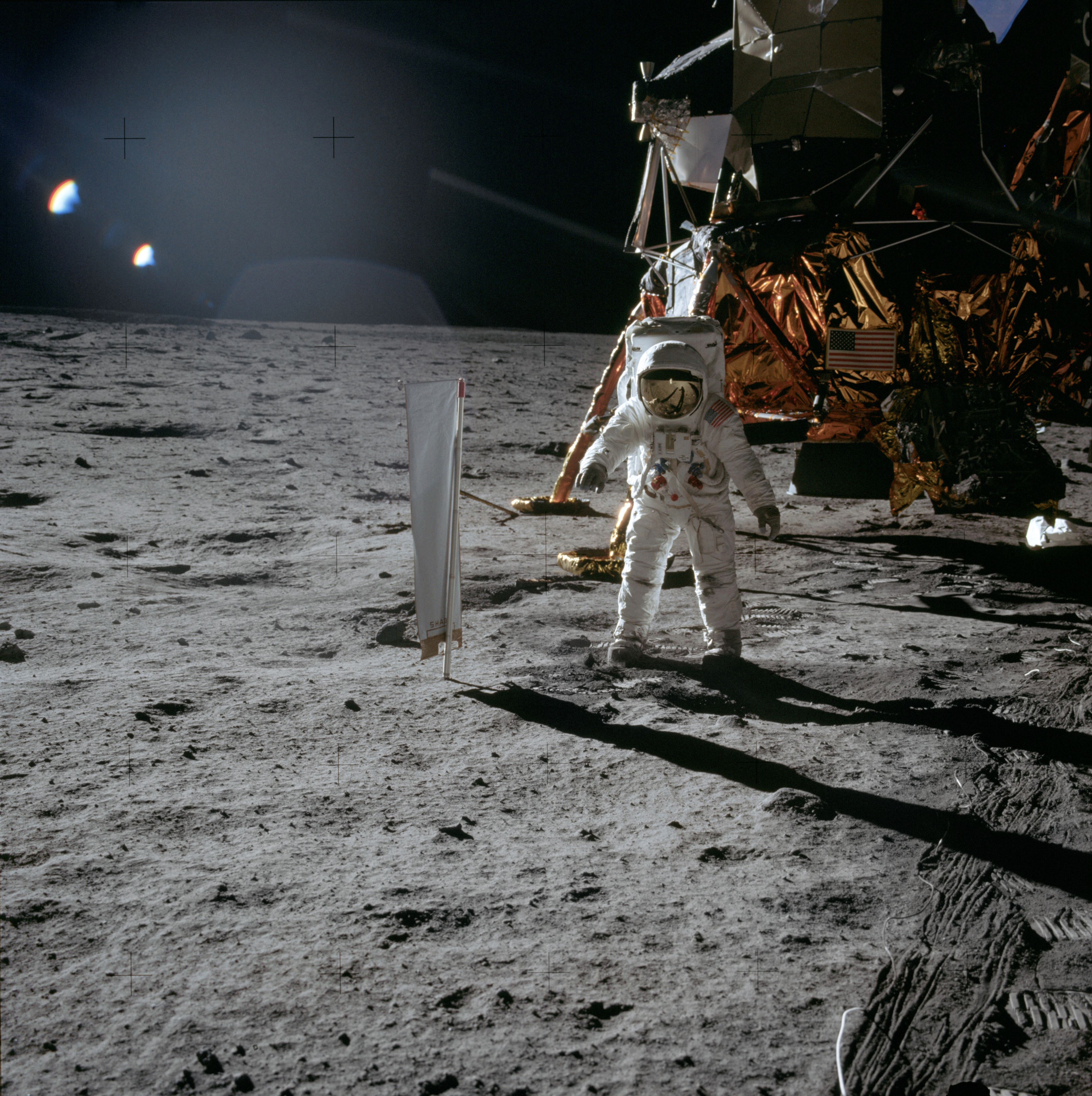
How does neil armstrong look like?
The face most people picture is not his: the gold-visored astronaut in the famous Apollo 11 photograph is Buzz Aldrin, shot by Armstrong. Armstrong himself is… more…

Richard Dorrell (CC BY SA), vía commons Moon and Mars
How does the moon affect the tides?
By pulling unevenly on it. Tidal forces vary inversely as the cube of the distance, so the near side of the Earth is tugged harder than the far side: one… more…
Moon and Mars
Why does neil armstrong have a hollywood star?
Strictly he does not have a star. Armstrong, Aldrin and Collins share four circular monuments resembling the Moon, one at each corner of Hollywood and Vine… more…
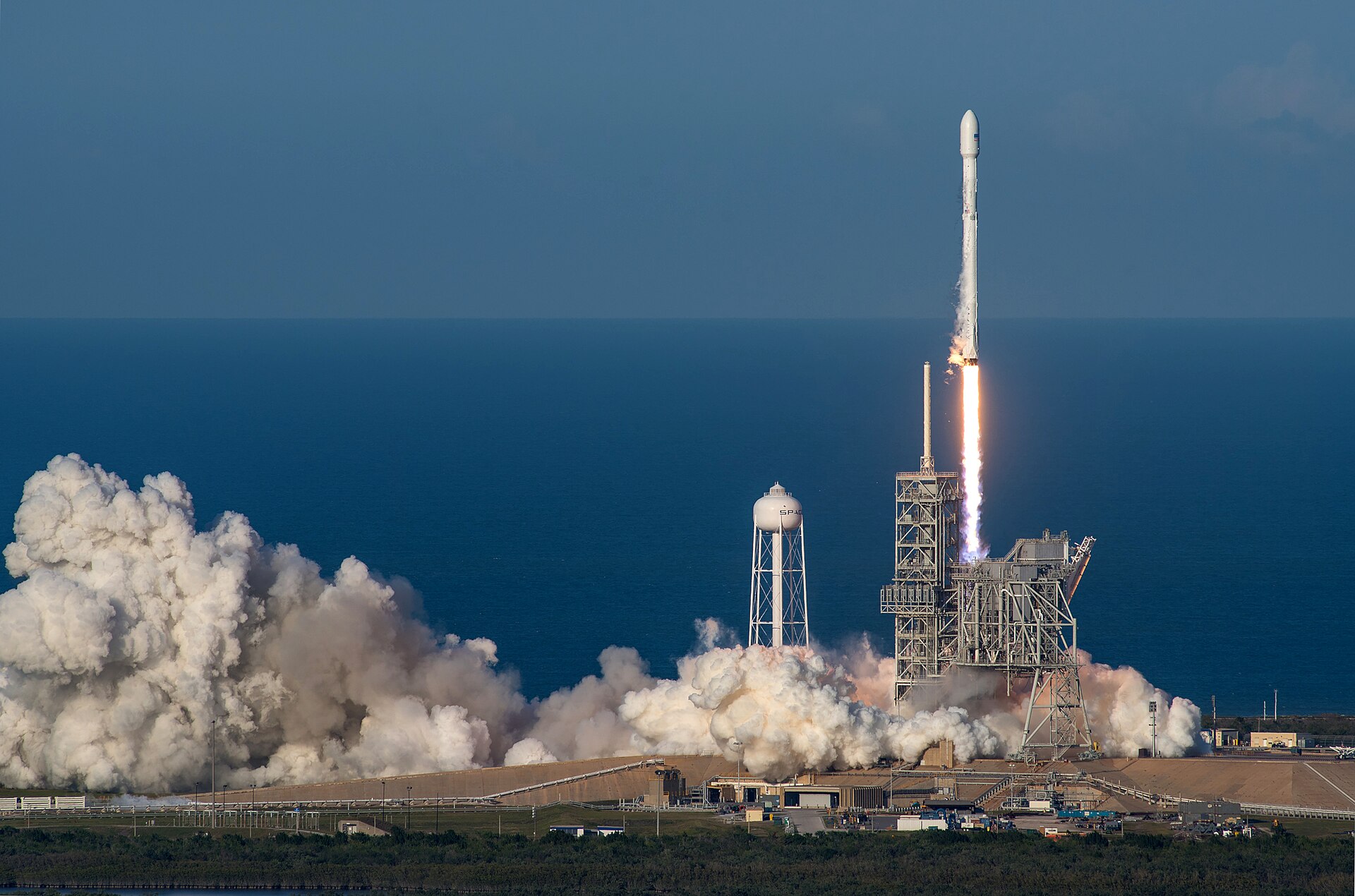
Foto: SpaceX (CC0) Moon and Mars
Why did falcon 9 hit the moon?
Because a spent upper stage on a lunar trajectory has no mission and no way to steer. A Falcon 9 upper stage from the January 2025 Firefly Blue Ghost 1 launch… more…
Moon and Mars
How much apollo 11 cost?
NASA never published a price for Apollo 11 on its own; what is documented is the program. The United States spent $25.8 billion on Project Apollo between 1960… more…
Moon and Mars
How much time neil armstrong spent on moon?
Armstrong and Aldrin spent 21 hours, 36 minutes on the Moon's surface, almost all of it inside the lunar module Eagle. Armstrong stepped onto the surface… more…

