Did you know…
How does apollo 11 work?
Short answer
By splitting the task between vehicles. A Saturn V sent the stack moonward with a translunar injection burn of 5 minutes, 48 seconds; Columbia waited in lunar orbit while Eagle landed and returned; only the conical command module came home, splashing down on 24 July 1969.

Three stages to leave, one capsule to return
Apollo 11 lifted off on Saturn V SA-504 from pad 39A at 13:32 UT on 16 July 1969. Two stages placed the stack in parking orbit; there the S-IVB third stage was re-ignited at 16:16:16 UT for a translunar injection burn of 5 minutes, 48 seconds. The command and service module separated from the S-IVB 33 minutes later, turned around and docked at 16:56:03 UT with the lunar module riding behind it, pulling Eagle free before the empty stage was discarded. Every element existed to be thrown away at a planned moment.
Lunar orbit rendezvous
The architecture's central idea is that only what must land should land. Lunar orbit insertion came on 19 July at 17:21:50 UT, a retrograde firing of the service module engine for 357.5 seconds. Eagle then descended with two of the three astronauts while Columbia stayed in orbit with the heat shield, the propellant for the trip home and the third. Eagle landed at 20:17:40 UT on 20 July, lifted off at 17:54:01 UT the next day after 21 hours and 36 minutes on the surface, docked with Columbia at 21:34:00 UT and was jettisoned into lunar orbit. Carrying the whole spacecraft down and back would have demanded a far larger rocket.
The way home
Transearth injection began at 04:54:42 UT on 22 July with a two-and-a-half-minute firing of the main engine, and from there the spacecraft coasted. Before re-entry the service module was cast off: of a vehicle 11.0 metres long and 3.9 metres across at most, only the conical command module came through the atmosphere, splashing down in the Pacific on 24 July 1969 at 16:50:35 UT. What returned was the cabin and the three men inside it.
More questions
Moon and Mars
How does neil armstrong look like?
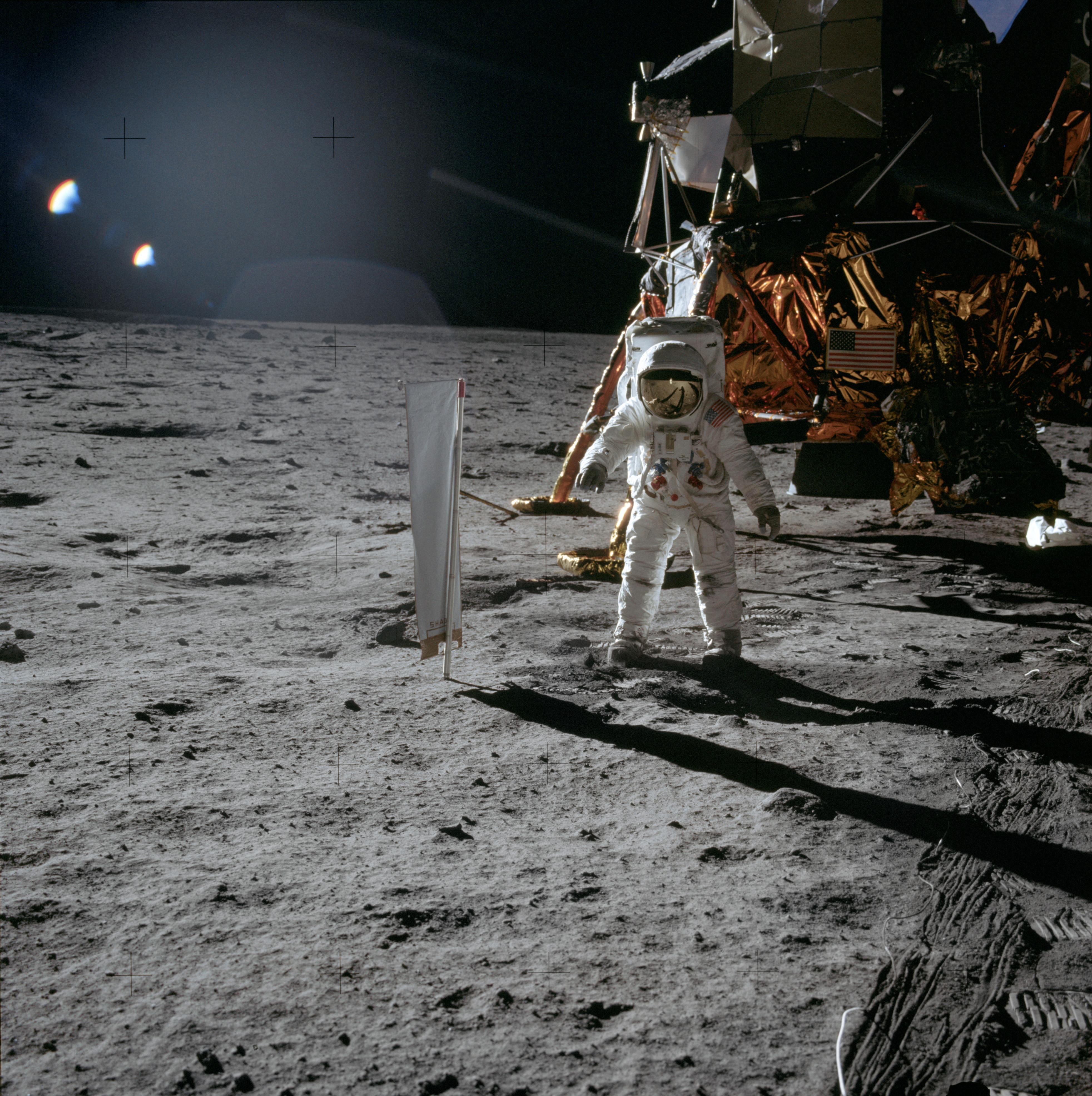
The face most people picture is not his: the gold-visored astronaut in the famous Apollo 11 photograph is Buzz Aldrin, shot by Armstrong. Armstrong himself is… more…

Richard Dorrell (CC BY SA), vía commons Moon and Mars
How does the moon affect the tides?
By pulling unevenly on it. Tidal forces vary inversely as the cube of the distance, so the near side of the Earth is tugged harder than the far side: one… more…
Moon and Mars
Why does neil armstrong have a hollywood star?
Strictly he does not have a star. Armstrong, Aldrin and Collins share four circular monuments resembling the Moon, one at each corner of Hollywood and Vine… more…
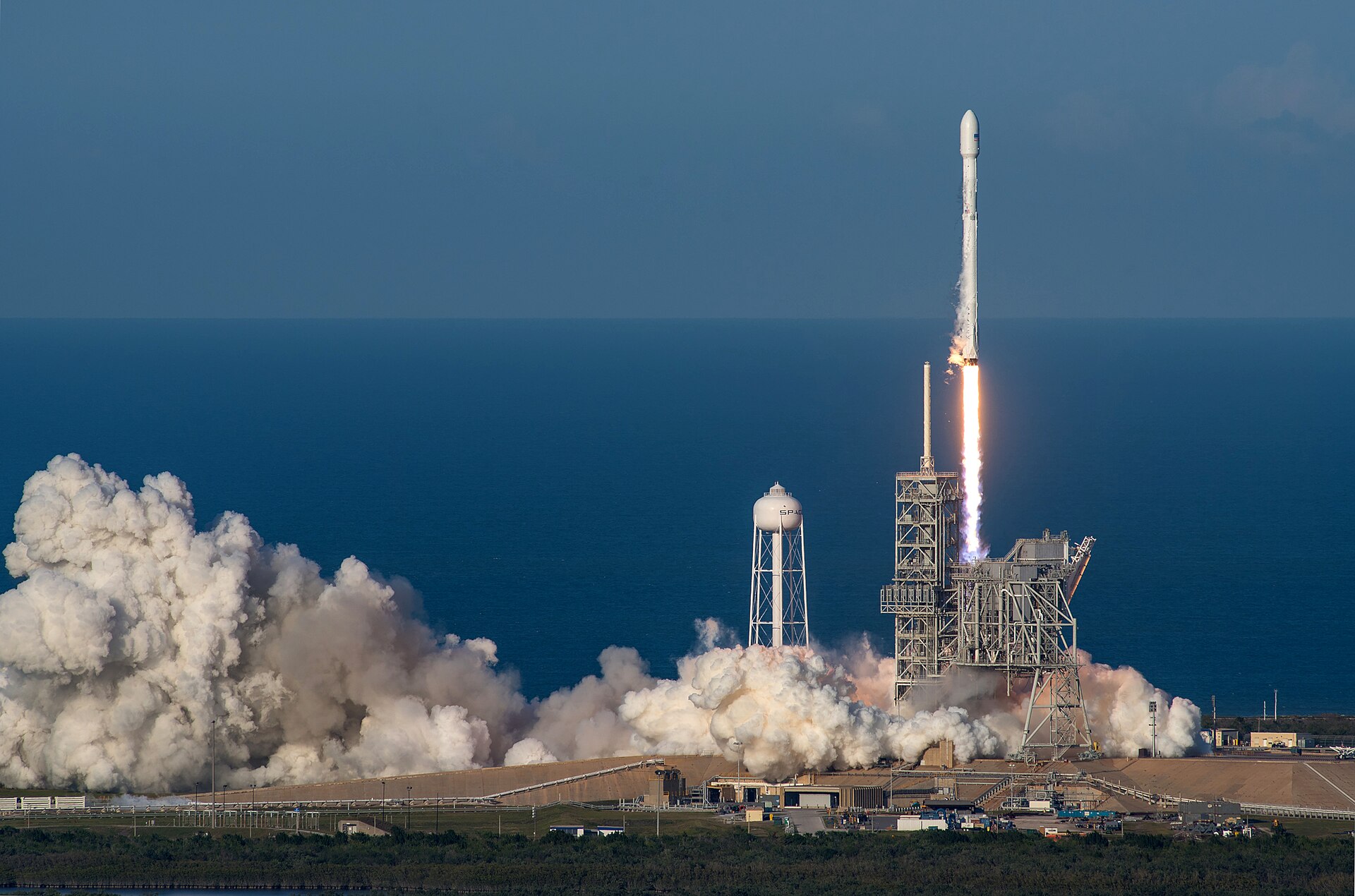
Foto: SpaceX (CC0) Moon and Mars
Why did falcon 9 hit the moon?
Because a spent upper stage on a lunar trajectory has no mission and no way to steer. A Falcon 9 upper stage from the January 2025 Firefly Blue Ghost 1 launch… more…
Moon and Mars
How much apollo 11 cost?
NASA never published a price for Apollo 11 on its own; what is documented is the program. The United States spent $25.8 billion on Project Apollo between 1960… more…
Moon and Mars
How much time neil armstrong spent on moon?
Armstrong and Aldrin spent 21 hours, 36 minutes on the Moon's surface, almost all of it inside the lunar module Eagle. Armstrong stepped onto the surface… more…
