Did you know…
How many D.V and D.Va aircraft were there in May 1918?
Short answer
In May 1918, 131 D.V and 928 D.Va remained in service on the Western Front. Total production had been much higher: around 900 D.V and 1,612 D.Va built at Johannisthal and Schneidemühl before manufacturing ended in April 1918. The D.V had entered service in May 1917.

The numbers in May 1918
In May 1918 there were 131 D.V and 928 D.Va in service on the Western Front. Cumulative production had been considerably higher: approximately 900 D.V and 1,612 D.Va left the Johannisthal and Schneidemühl factories before manufacturing was wound down in April 1918, despite the type's well-known shortcomings and general obsolescence.
A fighter derived from the D.III
The D.V entered service with the German Air Force in May 1917. It closely resembled the D.III and used the same 127 kW (170 hp) Mercedes D.IIIa engine, with a larger propeller spinner and a ventral fin. Compared with the D.III, the upper wing sat 121 mm (4.75 in) closer to the fuselage. Early examples carried a large headrest that was usually removed in service, because it obstructed the pilot's field of view.
The D.Va's reinforcement
Albatros responded with the D.Va, which incorporated stronger wing spars, heavier wing ribs, and a reinforced fuselage. The D.Va also reverted to the D.III's aileron cable routing, which ran outward along the lower wing before rising to the ailerons.
More questions
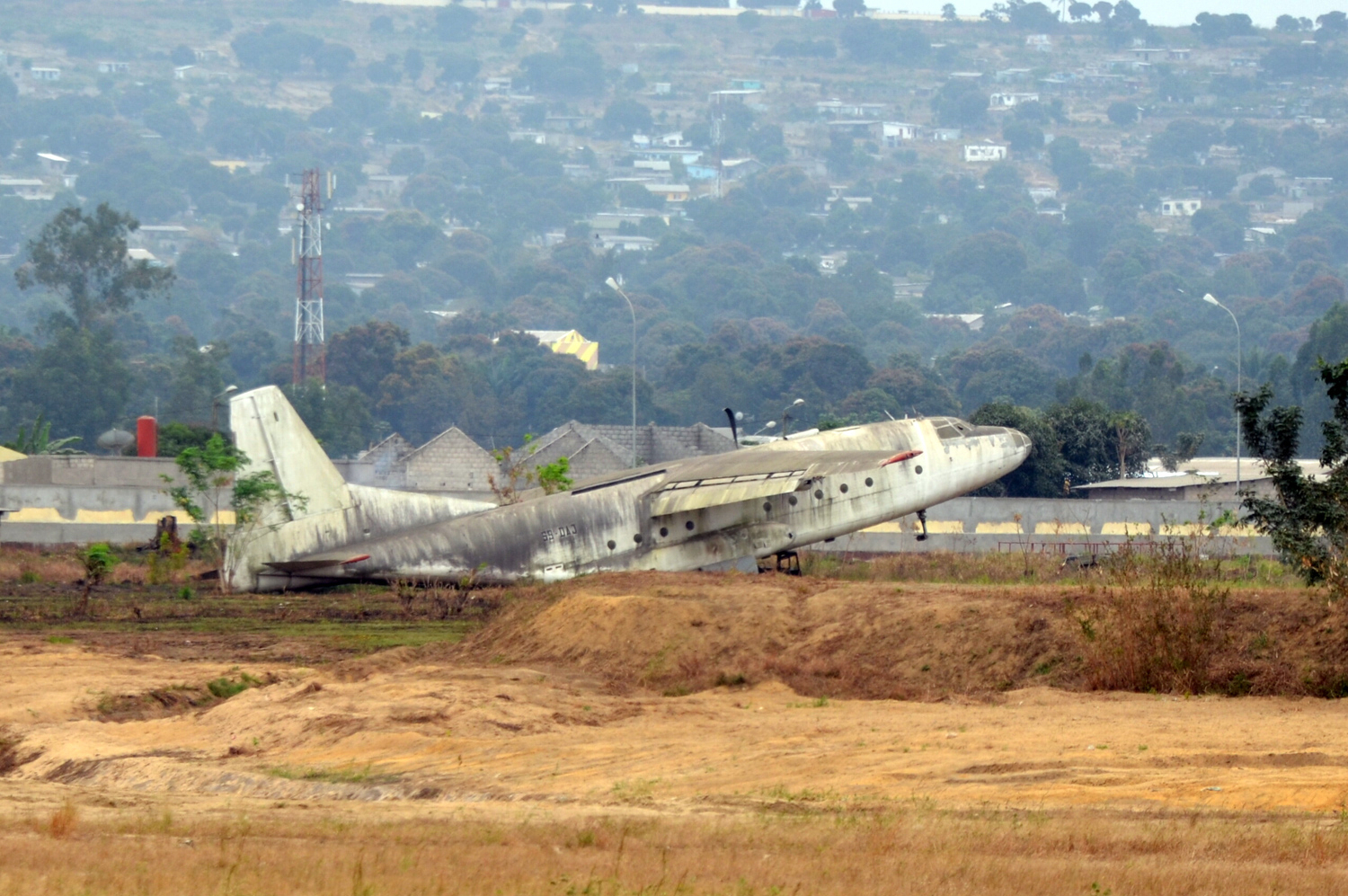
Vitaly Druchenok (CC BY SA), vía commons Aviation history
What "typically Russian" features did the An-8 have?
The An-8 was a Soviet light military transport with a high wing and two turboprops, featuring a glazed nose for the navigator, a chin radome for navigation… more…

RB7MRV (CC BY SA), vía commons Aviation history
Why is the E-25 called "Mirlo"?
Mirlo is the official nickname of the C-101 in Spain. The air force designated it the E.25 Mirlo, "Blackbird" in English, while CASA identified it as the… more…
RB7MRV (CC BY SA), vía commons Aviation history
What did CASA do with the C-101's first flight for safety?
CASA kept it deliberately simple: on 27 June 1977 the P1 only had to check the controls' response, and for extra safety its landing gear was not even… more…
RB7MRV (CC BY SA), vía commons Aviation history
What requirement made the C-101 fly inverted?
Among its requirements, the Aviojet had to be able to remain in inverted flight for 20 s and land at 100 knots (185 km/h). It also had to withstand load… more…

Aviation history
What was the An-2 called before it became an Antonov?
SKh-1. The letters stood for Sel'sko Khozyaystvennyi — pervoy, "agricultural, the first," and corresponded to the first design from Antonov's bureau, later… more…
Aviation history
At what altitude did the weather-research An-4 biplane fly?
Up to 10,000 m: the An-4 — the design-bureau designation for the meteorological An-2ZA, intended for high-altitude weather research — could maintain power up… more…


