El Saab 2000 Funcionaba Perfectamente… Entonces, ¿Por Qué Caía
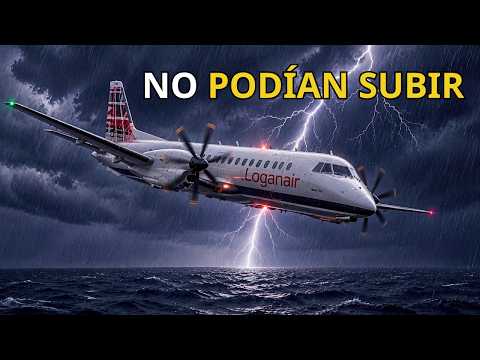
Video from the channel Caja Negra Documental about Saab 2000, linked on its Above Ten Thousand entry. Duration: 46:27. Language: Spanish. Video type: Documentary.
What it's about
Documentary narrated in Spanish about the incident involving a Loganair Saab 2000 that, after being struck by lightning during approach to Sumburgh, in the Shetland Islands, came close to crashing into the North Sea. It reconstructs how the crew, convinced that the autopilot had disconnected on impact, fought for minutes against a system that remained engaged and was trimming pitch in the opposite direction to their inputs.
Historical context
The flight departed Aberdeen at around 18:40 on 15 December with 30 passengers and three crew members. With storms, rain, snow and gusts of up to 47 knots at the destination, the captain abandoned the approach to runway 27 to avoid a convective cell, and at that moment lightning entered through the nose and exited near the auxiliary power unit exhaust. The video explains that both pilots had little experience on the Saab 2000 and that the captain came from years on the Saab 340, where training associated lightning strikes with autopilot disconnections. On the Saab 2000, however, pulling on the controls did not disconnect the system, and the automatic trim could override the control column's authority at high speed, a design accepted in its certification in the 1990s. The British AAIB published its report in September 2016 with five recommendations on how automation responds to manual intervention; Saab informed operators and Loganair added the scenario to its training.
Key facts
The autopilot, which was holding 2,000 feet, ran the trim to about 9 degrees nose-down while the pilots forced the aircraft up to 4,000 feet. Then the dive began: speed reached 330 knots, the descent rate nearly 9,500 feet per minute and the pitch about 19 degrees negative. A 99-millisecond fault in an air data computer finally disconnected the autopilot, which returned trim control to the pilots and allowed them to pull out of the dive as the terrain proximity warning sounded. The aircraft returned to Aberdeen and landed without injuries. The cockpit voice recorder had overwritten the critical segment, but the flight data recorder made it possible to reconstruct it.