Mitsubishi A6M Zero | El caza japonés de la Segunda Guerra Mundial que se convirtió en LEYENDA
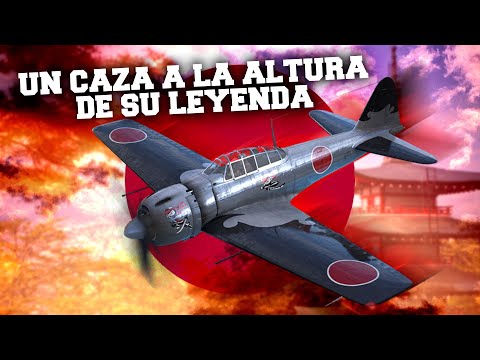
Video from the channel Mundo Bélico about Mitsubishi A6M Zero, linked on its Above Ten Thousand entry. Duration: 10:30. Language: Spanish. Video type: Documentary.
What it's about
A Spanish-language review of the history, strengths and weaknesses of the Mitsubishi A6M Zero, the Japanese carrier-based fighter that earned a reputation for invincibility in the early years of the Pacific war.
Historical context
Jiro Horikoshi, Mitsubishi's chief designer, formed a team in 1937 to create a new carrier-based fighter for the Imperial Navy, which had to be highly maneuverable, have the range to escort bombers and climb quickly. The A6M1 prototype flew on April 1, 1939. Its baptism of fire came in September 1940, in the Second Sino-Japanese War, escorting G3M2 bombers. Claire Lee Chennault reported on the aircraft and recommended not engaging it in close combat. The A6M2 Model 21 took part in the attack on Pearl Harbor on December 7, 1941, and in July 1942 the United States captured a lightly damaged example on Akutan Island, which revealed its strengths and weaknesses.
Highlights
The A6M2 was a single-seater a little over 9 m long with a 12 m wingspan. It used Sumitomo's 1935 alloy and weighed 2,520 kg, a third less than the F4F-4 Wildcat, at the cost of forgoing self-sealing tanks and armor. It was the first aircraft designed from the outset to carry a droppable external tank; with 870 liters it reached a range of 7 to 8 hours. The 980 hp Nakajima Sakae 12 engine gave it 533 km/h and a range of 3,105 km. It was armed with two 7.7 mm machine guns and two 20 mm cannons. The video concludes that its main flaw was relying entirely on maneuverability, lacking the power that let American fighters be better protected and armed.