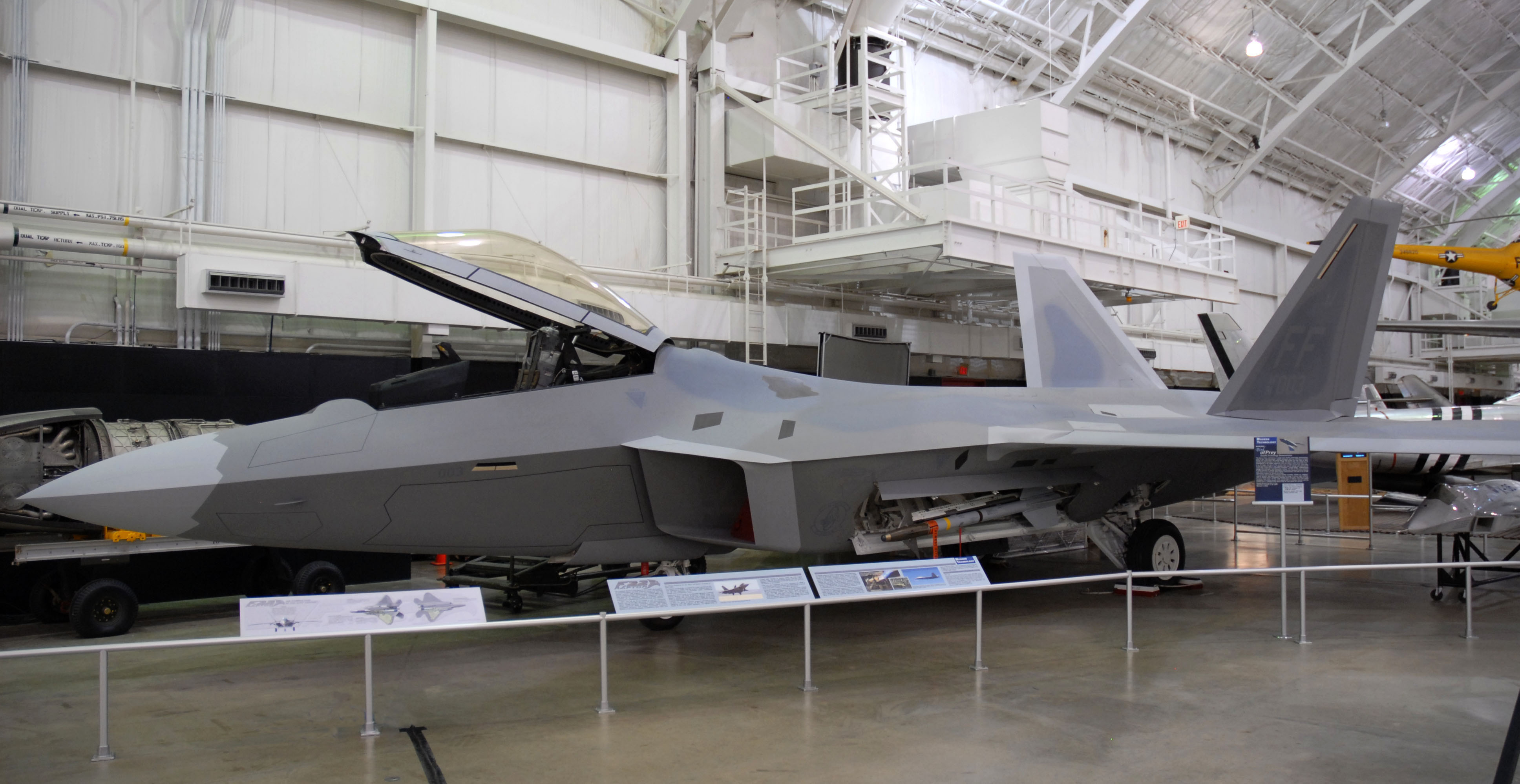
Lockheed Martin F-22 Raptor variant
Lockheed Martin F-22 Raptor F-22A Block 10 (EMD)
Six further EMD airframes built in the Block 10 configuration for development and upgrade testing; the last two were considered essentially production-quality jets.
Lockheed Martin F-22 Raptor sheet

- 6
- Units built
History
The six development aircraft in Block 10 configuration
The F-22 engineering and manufacturing development (EMD) contract, approved in 1991, called for nine development aircraft, two non-flying structural test articles and four preproduction aircraft under the fiscal year 1997 budget. Of the nine flyable jets, the first two, Raptor 4001 and 4002, were built in the Block 1.0 configuration for initial flight testing and envelope expansion, and the third, 4003, was a Block 2.0 aircraft built to represent the internal structure of production airframes so it could carry full flight loads. The remaining six were built in the Block 10 configuration for development and upgrade testing, and the last two of that group were considered essentially production-quality jets. These six Block 10 aircraft are therefore the mature phase of the test programme: while the first three proved the aircraft could fly and withstand its loads, the Block 10 jets had to show that the avionics, weapons and observables worked together as a combat system.
A programme restructured before they flew
The first EMD aircraft, tail number 91-4001, was unveiled at Air Force Plant 6 in Dobbins, Marietta, on 9 April 1997, when the aircraft was officially named Raptor, and first flew on 7 September 1997 with chief test pilot Alfred "Paul" Metz at the controls, more than three months late because of technical problems. It was delivered to the Air Force Flight Test Center at Edwards on 5 February 1998 in the cargo hold of a C-5. The Block 10 jets followed into a programme that had already been reordered: a Joint Estimate Team (JET) chartered in June 1996 to review cost and schedule estimated in January 1997 that costs would rise by about 1.5 billion dollars and that more time was needed to finish EMD. In February 1997 the Under Secretary of Defense for Acquisition approved the restructuring: twelve more months of development to accommodate a nine-month flight test extension, deletion of the preproduction aircraft, and dedicated initial operational test and evaluation with two refurbished development aircraft and the first two production aircraft. The National Defense Authorization Act for fiscal year 1998, enacted in November 1997, also placed a legislated limit on the total cost of the EMD phase. According to the GAO, late deliveries of wings and aft fuselages delayed the first flights of the third through sixth flight test aircraft by between two weeks and more than five months, and cut the flight test hours planned for fiscal years 1998 and 1999.
What the Block 10 jets proved
The subsequent EMD aircraft, together with the Boeing 757 flying test bed, tested avionics, environmental qualification and observables. In 2001 the first F-22 fitted with combat-capable Block 3.0 avionics software flew, and the exit criteria agreed with Congress, among them the critical design review of the Block 3.1 avionics software, the mating of fuselage, wing and empennage of aircraft 4008, the first flight of Raptor 4006 and the start of radar cross-section flight testing, were completed on 5 February 2001, clearing the way for the production decision. Raptor 4001 was retired from flight testing in 2000 and sent to Wright-Patterson for survivability testing, live fire and battle damage repair training; 91-4002 is preserved at the Hill Aerospace Museum in Ogden and 91-4003 at the National Museum of the United States Air Force in Dayton. These six EMD Block 10 jets should not be confused with the 74 production F-22A Block 10/20 training aircraft: the final count of 195 aircraft consists of 8 test and 187 operational jets, and the two EMD aircraft funded with research and development money appear in the budgets alongside the fifteen Production Representative Test Vehicles (PRTV).
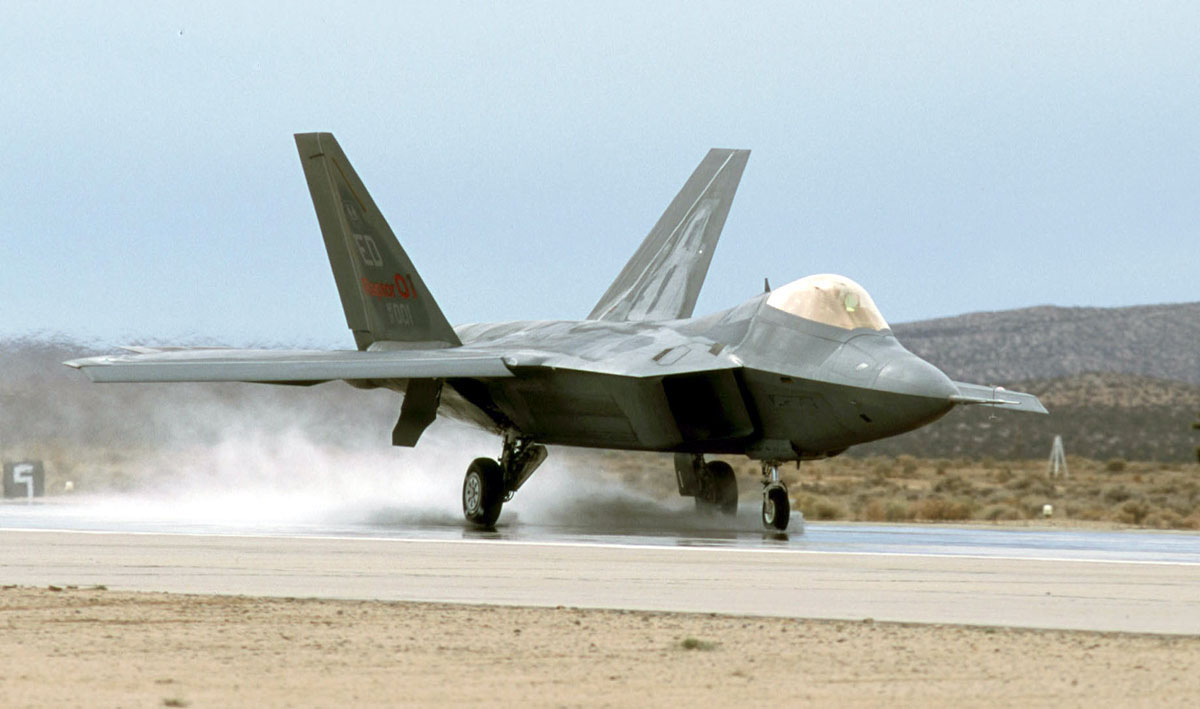
Multimedia




%2C_in_March_2005-1600.webp)


_(5-19-2022)-1600.webp)