Fighter · Military · Germany
Focke-Wulf Fw 190
- June 1, 1939
- First flight
- 1941
- Introduced
- 1949
- Retired
- 20,051
- Units built
)_1989-06-01_Andre_Gerwing_Collection_ID_008255-1600.webp)
-800.webp)
-190_Nose_Art_(2569760720)-800.webp)
-1600.webp)


-800.webp)


-800.webp)


-1600.webp)
-1600.webp)


-1600.webp)

-1600.webp)

_abgeplant_im_Winter_(Datum%2C_Standort%2C_Staffel_unbekannt)-1600.webp)
-1600.webp)
-1600.webp)

-1600.webp)
.jpg)
-800.webp)
-1600.webp)

-800.webp)
_-_Flugzeugabsturz_03_ies-1600.webp)

-800.webp)
-1600.webp)
-1600.webp)
-1600.webp)

.jpg)
-1600.webp)
-800.webp)

-1600.webp)

-1600.webp)


-1600.webp)
-1600.webp)
-1600.webp)
-800.webp)
.jpg)
-800.webp)
-1600.webp)
-800.webp)
-1600.webp)
%2C_13_July_1943_(342-FH-3A27199-B79527AC)-1600.webp)
-1600.webp)

-800.webp)

-1600.webp)
-1600.webp)
The Focke-Wulf Fw 190 Würger — "shrike", the bird that impales its prey — was the Luftwaffe's second great single-seat fighter and, in the judgement of many who flew it, the finest German combat aircraft of the Second World War. It was born of bureaucratic caution: in the autumn of 1937, with the Messerschmitt Bf 109 barely in squadron service, the German Air Ministry asked for a companion fighter in case some foreign design should eventually outclass the 109. Kurt Tank, technical director of the small Focke-Wulf works at Bremen, answered with several configurations; the one that prospered was the air-cooled radial, precisely because it did not compete for the scarce Daimler-Benz inline engines the Bf 109 was consuming. That industrial argument ended up defining the most recognisable silhouette in German fighter design: a short, broad nose, a cockpit set well aft under a glazed canopy of exceptional visibility, and a wide-track undercarriage retracting inwards. Tank did not want a racehorse. His own comparison, repeated after the war, was to a cavalry horse: an aircraft able to operate from ill-prepared front-line fields, to be maintained by men with only short training, and to absorb battle damage and come home. On that idea the project team led by Blaser built an all-metal, stressed-skin low-wing monoplane with solutions that were unconventional for 1939: rigid pushrods and bearings instead of control cables, aileron loads capped at what an average wrist can exert, trim so well resolved that only the horizontal tailplane — its incidence varied by an electric motor — needed adjusting in flight, and electrical rather than hydraulic actuation of undercarriage, flaps and guns. The V1 prototype, registered D-OPZE and powered by a BMW 139, flew at Bremen on 1 June 1939 with Hans Sander at the controls. Replacing the 139 with the longer, heavier BMW 801 forced a substantial redesign, but it gave the aircraft the annular cowling with integral oil cooler and the forced cooling fan that became its technical signature. When the Fw 190 A-1 appeared over the English Channel in August 1941, the RAF got the shock of the war. The new fighter beat the Spitfire Mk V in everything but turning radius: faster at low and medium altitude, far faster in the roll, better in the dive and markedly better armed. For nearly a year air superiority over north-west Europe changed hands, and it did not fully return until the two-stage Merlin Spitfire Mk IX restored parity. An involuntary gift helped: in June 1942 Oberleutnant Armin Faber, of JG 2, put an intact A-3 down by mistake on a British airfield. The Fw 190 also flew the fighter cover for Operation Cerberus — the Channel dash of the Scharnhorst, Gneisenau and Prinz Eugen in February 1942 — and the great air battle over Dieppe that August. The design's virtue was its elasticity. The same airframe served as air-superiority fighter, low-level fighter-bomber, reconnaissance aircraft, improvised night fighter and, above all, ground-attack machine: the F and G series were built to carry bombs, drop tanks and even torpedoes, and from October 1943 they replaced the Ju 87 in the Schlachtgeschwader on the Eastern Front. Against American heavy bomber formations the Sturmböcke — A-6, A-7 and A-8 with extra armour and 30 mm MK 108 cannon — became formation-killers as effective as they were vulnerable to the fighter escort. The aircraft's Achilles heel was always altitude: above about 6,000 m the BMW 801 ran out of breath. Attempts to fix this with turbochargers in the B and C series failed, and only the D with its inline Junkers Jumo 213 — the "long-nosed Dora", in service from September 1944 — restored parity at height, opening the way to the high-altitude Focke-Wulf Ta 152. Some twenty thousand were built, of which about 13,291 belonged to the A series; it arrived too late, and amid too severe a shortage of fuel and trained pilots, to alter the outcome of the war. Aces such as Otto Kittel, Walter Nowotny and Erich Rudorffer flew it, and captured examples were tested by the British, the Americans and the Soviets, who agreed in praising its cockpit, its rate of roll and its steadiness as a gun platform, and in flagging its abrupt, unannounced stall. After 1945 examples flew in Turkey, France, Czechoslovakia and Yugoslavia. Some two dozen original airframes survive today in museums and private collections — one of them returned to flight in 2010 with its original BMW 801 — along with a score of modern Flug Werk reproductions that keep the silhouette of Kurt Tank's cavalry horse in the air.
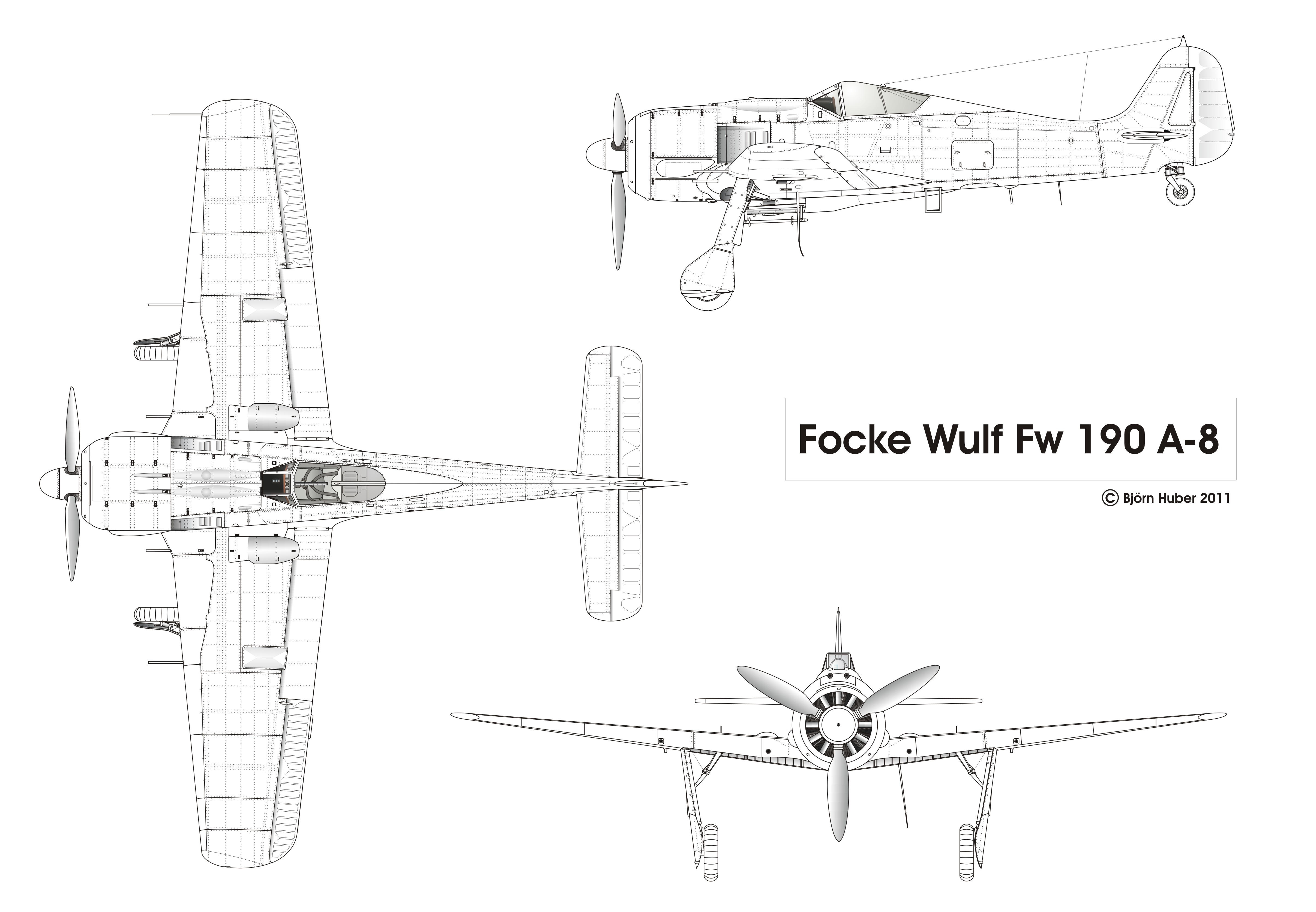
Three-view drawing
History
Genesis: a second fighter for the Luftwaffe
The Fw 190's story begins with a defeat. Between 1934 and 1935 the German Air Ministry (RLM) ran the contest that was to give the emerging Luftwaffe a modern fighter, and Focke-Wulf entered the Fw 159, a parasol-winged monoplane eliminated early alongside the Arado Ar 80. On 12 March 1936 the Messerschmitt Bf 109 was declared the winner over the Heinkel He 112, which it beat thanks to a deliberately lightweight structure.
The second chance arrived by an unexpected route. In the autumn of 1937, before the Bf 109 was even fully bedded into the squadrons, the RLM issued a new tender: it wanted a fighter to fly *alongside* the 109 rather than replace it, in case some foreign design eventually outclassed it. Kurt Tank submitted several configurations, most of them with liquid-cooled inline engines. The ministry showed no interest until a proposal appeared on the table built around the fourteen-cylinder, twin-row BMW 139 radial.
The decisive argument was not aerodynamic but logistical. A radial-engined fighter did not compete for the scarce Daimler-Benz DB 601s that Bf 109 production was already consuming, whereas rivals such as the Heinkel He 100 or the twin-engined Focke-Wulf Fw 187 would have. After the war Tank denied the rumour that he had had to "fight a battle" with the ministry to defend the radial: the shortage of inline engines argued his case for him.
Kurt Tank's philosophy: a cavalry horse, not a racehorse
Kurt Tank was a rarity among the great designers of his day: a test pilot as capable as he was an engineer, and in time managing director of the whole company. He had begun his aviation career at Rohrbach Metall-Flugzeugbau working on metal flying boats, and joined Focke-Wulf at the end of 1931, aged thirty-three, as head of both the design department and flight testing. The firm was then small and obscure; under his drive it rose to the front rank of German industry, with the Fw 200 Condor — the world's first modern all-metal four-engined airliner, first flown by Tank himself on 27 July 1937 — as its international calling card.
His quarrel with the Messerschmitt school was explicit. Tank held that the Bf 109 and the Spitfire could both be summed up as a very large engine in front of the smallest possible airframe, with armament added almost as an afterthought: racehorses that could outrun anything given pampering and an easy course, but liable to falter the moment the going got hard. Having served in the cavalry and the infantry in the First World War, he wanted something else: an aircraft that could operate from ill-prepared front-line fields, that could be flown and maintained by men with only short training, and that could take a fair amount of battle damage and still bring its pilot home. Not a racehorse but a *Dienstpferd*, a cavalry horse.
The aircraft's name owes something to the same sober cast of mind. Focke-Wulf had a tradition of naming its designs after birds — Falcon, Owl, Albatross, Condor — and the 190 got *Würger*, shrike. The popular English rendering "butcher bird" comes from the fact that some shrikes carry that nickname, but the direct attribution to the company is doubtful.
Engineering the Würger: cowling, undercarriage and electricity
The central problem of a radial-engined fighter was drag. In late-1930s Europe it was almost taken for granted that a radial's frontal area penalised a small aeroplane too heavily; Tank, who had seen radials used successfully by the U.S. Navy, did not believe it. The solution started from the NACA cowling — an airfoil-shaped ring that accelerates the incoming air and allows the frontal opening to be narrowed — and added an idea of his own: an oversized propeller spinner, the same diameter as the engine, to compress the flow and let the opening shrink further still.
With the switch to the BMW 801, the engine maker supplied its own cowling system, integrating the oil cooler as an annular core behind the forced cooling fan. A C-section metal ring formed an S-shaped duct with the cowling skin; airflow past the outer gap created a suction that drew cooling air forward across the core, and sliding the ring regulated the flow. The arrangement all but eliminated the oil radiator's drag, pre-warmed the oil on starting and kept cooling the engine while parked — but it left the radiator in an extremely vulnerable place, and as the war went on the ring received progressively thicker armour.
The undercarriage was the other great difference from the Bf 109. Wide-track and inward-retracting, stressed for a sink rate of 4.5 m/s — twice the usual strength factor — and fitted with hydraulic brakes, it gave the Fw 190 far better ground handling and many fewer taxiing accidents than the Messerschmitt's narrow gear, hinged at the wing root to save weight. The tailwheel retracted by means of a cable anchored to the starboard main gear's retraction arm and guided by pulleys up into the fin.
In the control system, the team replaced the usual cables and pulleys with rigid pushrods and bearings, eliminating the stretch and play that demanded constant maintenance. Maximum aileron resistance was capped at 3.5 kg, the force an average man's wrist can exert, and trim was so well resolved that no in-flight-adjustable tabs were needed for ailerons and rudder: small fixed tabs set during initial testing sufficed. Only the horizontal tailplane, its incidence varied between −3° and +5° by an electric motor, was adjusted in flight. Electricity in fact replaced hydraulics almost everywhere — undercarriage from the third prototype onwards, flaps, gun loading and firing — because Tank thought wiring less vulnerable to enemy fire than fluid lines. The wing, initially 15 m² with a NACA 23015.3 root and 23009 tip section, was small and highly loaded; in exchange for speed and range that meant a higher stalling speed and poorer performance in thin air. The canopy, by contrast, was ahead of its time: vacuum-formed, with a perimeter frame and a single centreline seam, it gave an all-round view that Allied pilots who tested it rated better than the Spitfire's, the Mustang's or the Bf 109's.
From prototypes to production (1939–1941)
The first prototype, the Fw 190 V1 with civil registration D-OPZE, flew at Bremen on 1 June 1939 with Hans Sander at the controls, powered by the BMW 139. The V2 followed on 31 October, already fitted with the definitive spinner and cooling fan and armed with machine guns in the wing roots. Both early machines overheated with their large ducted spinners and had to fall back on a NACA cowling. The V3 and V4 prototypes were abandoned.
In the meantime the decision that would reshape the aircraft had been taken: to replace the BMW 139 with the longer, heavier BMW 801. The change forced a strengthened airframe and moved the cockpit aft, which incidentally solved a centre-of-gravity problem and, more importantly, took the pilot away from the engine's fumes and heat. The V5, the first with the new powerplant, was completed in early 1940 and introduced BMW's *Kommandogerät*: an electro-mechanical governor that simultaneously set mixture, propeller pitch, boost and ignition timing — a practical ancestor of automatic engine management.
The added weight — some 635 kg — pushed up wing loading and spoiled the handling. A collision with a ground vehicle in August 1940 gave the chance to rebuild the V5 with a new, less tapered wing of 18.30 m² and 10.506 m span. The resulting machine, called V5g (*große Fläche*, large surface) against the original V5k, lost about 10 km/h but gained manoeuvrability and rate of climb; that wing went on to all production versions.
In November 1940 the A-0 pre-production batch was ordered, of which twenty-eight were completed; the first nine still had the small wing. In February 1941 the first aircraft reached Erprobungskommando 190 at Rechlin-Rogenthin for service trials, and in March Jagdgeschwader 26 began preparing to receive them. The production A-1, with a BMW 801 C-1 of some 1,560 PS, entered production in June 1941 armed only with four 7.92 mm machine guns and two outer-wing MG FF/M cannon; its first clash with Spitfires, on 27 September 1941, made clear that such light armament would not do.
The Channel crisis, 1941–1942
The Fw 190 went operational over France in August 1941, and for the first months the Allies did not even know what it was: pilot reports of a new radial-engined fighter were put down to Curtiss P-36 Mohawks captured from the French. The reality was worse. The new machine beat the Spitfire Mk V in firepower, rate of roll and straight-line speed at low altitude; only in turning radius did it lose. As Allied fighter losses rose and local air superiority over the Channel passed to the Luftwaffe, Britain went so far as to consider a commando raid on a Luftwaffe airfield to steal an example.
It proved unnecessary. In June 1942 Oberleutnant Armin Faber of JG 2 became disoriented and landed an intact A-3 on a British airfield. Testing confirmed what the pilots had been saying and accelerated development of the Spitfire Mk IX with the two-stage supercharged Merlin 61; the Fw 190's radial cooling installation also directly influenced the Hawker Tempest II. Allied pilots who flew it found it pleasant and very responsive, its cockpit small but well laid out, though most distrusted the *Kommandogerät*, which they saw as more hindrance than help.
Before that, the Fw 190 had already flown its first major operation. On 12 February 1942, during Operation Cerberus, the A-models of JG 26 covered the daylight dash of the Scharnhorst, Gneisenau and Prinz Eugen through the Channel and the Dover Strait, at the insistence of Adolf Galland, who took personal responsibility for the plan and would later call that day the greatest hour of his career. JG 26 ended the day with seven confirmed kills and six probables, at a cost of four Fw 190s and their pilots; among the victims were the six Fairey Swordfish led by Lt Cdr Eugene Esmonde, posthumously awarded the Victoria Cross.
The first mass engagement came on 19 August 1942 over Dieppe, during Operation Jubilee. JG 2 and JG 26, freshly converted from the Bf 109, fielded 115 fighters against more than 300 RAF aircraft, mostly Spitfire VBs with only six squadrons of Mk IXs and some of the new Typhoons. The two Geschwader lost twenty-five Fw 190s to all causes and claimed sixty-one of the 106 Allied aircraft lost that day; fighting over occupied territory, the RAF lost 81 aircrew killed or captured against twenty German fighter pilots killed.
From the end of June 1942 the A-3/U3 gave rise to the *Jabo* (*Jagdbomber*, fighter-bomber) flights 10.(Jabo)/JG 2 and 10.(Jabo)/JG 26, which attacked shipping and port towns along England's south-eastern coast with considerable success. They came in below effective radar cover and were often gone before RAF fighters could intercept. The most notorious raid hit Canterbury on 31 October 1942: around seventy Fw 190s dropped thirty bombs on the city in the largest daylight operation the Luftwaffe had mounted since the Battle of Britain, killing 32 people and injuring 116, for the loss of a single Fw 190 over England. The most effective interceptors against these attacks were the Hawker Typhoon and the Griffon-engined Spitfire Mk XII, both fast at low level. In April 1943 the two Jabo units were merged into Schnellkampfgeschwader 10 and moved to night work over southern England — a role in which the Fw 190 failed and took heavy losses to de Havilland Mosquito night fighters.
The A series: one airframe, many guns
The A series is the trunk from which everything else grows, and its evolution reads almost as a diary of the war. The A-1 of June 1941 carried only machine guns and outboard MG FF/M cannon. The A-2, from October 1941 with the BMW 801 C-2, replaced the wing-root MG 17s with MG 151/20E cannon. The A-3, with the roughly 1,700 PS BMW 801 D-2, kept that armament and opened the floodgates of sub-variants: the /U1 introduced the engine mount extended by 15 cm that would be standardised on the A-5; the /U3 was the first *Jabo*, with a ventral ETC 501 rack for 500 kg of bombs or a 300-litre drop tank; the /U4 was the first reconnaissance version, with two RB 12.5 cameras in the rear fuselage.
The A-4 arrived in July 1942 and multiplied the conversions: the /U8 *Jabo-Rei* (*Jagdbomber Reichweite*, long-range fighter-bomber) added two 300-litre underwing tanks and was the direct forerunner of the G-1; the high-altitude /U7, recognisable by the compressor intakes on either side of the cowling, was flown by Adolf Galland in the spring of 1943; the /R1 carried the FuG 16ZY radio with a Morane whip aerial for the *Leitjäger*, formation leaders directed from the ground under the Y-Control procedure. The A-5, of which 1,752 were built between November 1942 and June 1943, moved the engine forward the full 15 cm so that more weight could be carried aft; its conversions included night fighter-bombers with flame dampers, reconnaissance machines, one example able to carry a torpedo, and the /R11 with FuG 217 Neptun radar.
From the A-6 of 1943 the logic changed: the wing was redesigned lighter and with larger ammunition boxes so it could mount four 20 mm cannon, and the aircraft began to specialise in hunting heavy bombers. The A-7 entered production in November 1943, replacing the cowl-mounted 7.92 mm MG 17s with two 13 mm MG 131s. The A-8, in production from February 1944, was the most numerous version: BMW 801 D-2 or the 801Q/TU variant with the annular cowl armour thickened from 6 to 10 mm, the *Erhöhte Notleistung* emergency system with C3 fuel injection raising output to some 1,980 PS for ten minutes, and a large family of R kits. The A-9 of September 1944 fitted the 2,000 PS BMW 801S while awaiting an 801F that never came, and the A-10, with a larger wing, remained a project. In total 13,291 A-series aircraft were produced. There was also a small family of two-seat trainers, the S-5 and S-8 converted from A-5s and A-8s: some 58 examples.
Defence of the Reich: Wilde Sau and Sturmböcke
From mid-1943 the Fw 190 was drafted into night fighting against Bomber Command's growing offensive. The Nachtjagdkommando Fw 190, run by IV. Gruppe of JG 3, was among the earliest experiments in ground-controlled single-engined night interception, and NJG 1 and NJG 3 kept pairs of Fw 190s on standby to supplement their Bf 110s and Ju 88s, too slow against the Mosquito. The performance advantage did not offset the difficulties of night operations, and few if any successes can be credited to these trials.
The turn came with Stab/Versuchskommando Herrmann, set up in April 1943 by Major Hajo Herrmann with A-4s and A-5s borrowed from day-fighter units. When the RAF's first use of "Window" during the Battle of Hamburg in July 1943 rendered the standard Himmelbett interception procedures useless, Herrmann's technique — *Wilde Sau*, "wild boar": overflying the bombed city freely and picking out bombers silhouetted against the fires — became doctrine until May 1944. The unit grew into JG 300, JG 301 and JG 302. All three began by borrowing aircraft from day-fighter units, which protested at the numbers written off in night landings, especially once winter set in; in time they received their own machines, fitted with exhaust dampers and blind-flying equipment. Nachtjagdgruppe 10 went on to operate A-4/R11s through A-8/R11s carrying FuG 217 and FuG 218 radar.
The other answer was the *Sturmbock*, the "battering ram". The combat boxes of American B-17s concentrated the fire of a hundred or more 12.7 mm Browning machine guns, and the Bf 110G destroyers were being cut to pieces by the escort from late 1943. Focke-Wulf redesigned part of the wing structure to take heavier armament: the A-6/R1 carried four extra MG 151/20s in underwing pods; the A-6/R2 replaced the outer-wing cannon with 30 mm MK 108s, a cheap weapon largely made of pressed sheet-metal stampings and devastating in effect; the A-6/R4 added GM-1 nitrous oxide boost and 30 mm of armoured glass in the canopy; the A-6/R6 hung two Werfer-Granate 21 rocket tubes. The A-8/R2 was the most numerous Sturmbock, with some 900 built by Fieseler at Kassel. Two of the former *Wilde Sau* wings, JG 300 and JG 301, were reconstituted for the role, and JG 3 kept a specialised Gruppe.
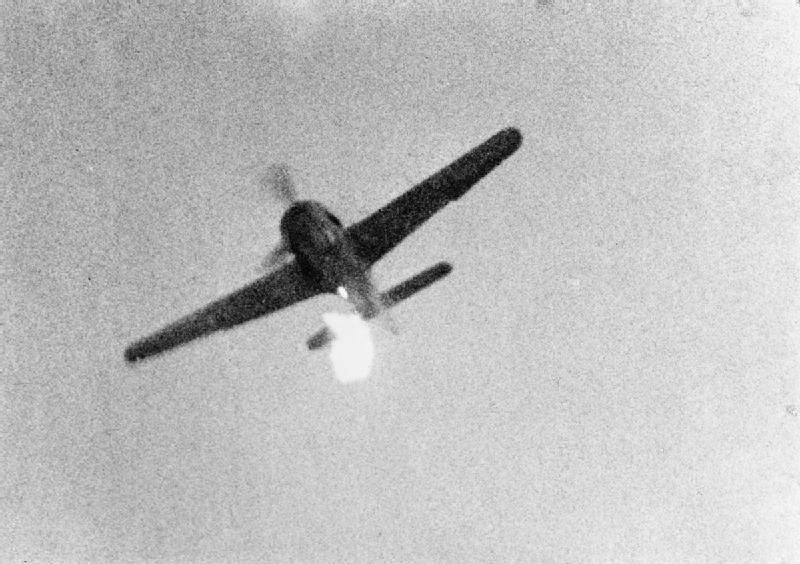
The price was manoeuvrability: loaded with armour and heavy cannon, the Sturmböcke were easy prey for Allied fighters and needed Bf 109 escort. When they got into a formation the effect was devastating — attacking from astern with engine and cockpit armoured, gun camera film shows firing passes pressed to within ninety metres — but the American response was swift. In January 1944 Major General Jimmy Doolittle took command of the Eighth Air Force and "freed the fighters": instead of staying glued to the bombers, P-38s, P-47s and increasingly P-51s ranged ahead to sweep the sky. The Luftwaffe replied with the *Gefechtsverband*, a battle formation joining a Sturmgruppe of Fw 190s to two Begleitgruppen of light escort fighters — excellent in theory but slow to assemble and hard to manoeuvre; Mustangs often broke it up before it reached the bombers. From late February 1944 American fighters added systematic strafing of German airfields, and through that year they swept the skies of the Reich clear first of the Bf 110Gs and then of their replacements, the assault Fw 190 As.
The Eastern Front
The Fw 190 appeared in the East in September 1942, while Stalingrad was being fought, and its air-combat debut is dated to November or December of that year. The first unit to receive it was JG 51; its I. Gruppe went first to the northern sector, at the siege of Leningrad, so the aircraft could acclimatise, then to Lake Ilmen to cover the Demyansk pocket, and in October moved down to the Rzhev-Vyazma salient, where it began to make its mark. In December 1942 JG 54 also started converting. There were never more than a few hundred Fw 190s on the Eastern Front at any one time.
Its virtues suited the theatre. The wide undercarriage tolerated improvised airfields; the radial engine absorbed hits that would have killed an inline — one machine returned to base in 1943 with two cylinder heads shot away — and combat in the East was fought low down, exactly where the BMW 801 performed best. Pilots whose scores had stalled on the Bf 109 saw them jump on changing mounts: Günther Schack claimed a large share of his 174 victories on the Fw 190, including 88 Il-2 Sturmoviks; Josef Jennewein reached 86. The two great names were Otto Kittel, who ended with 267 victories, and Walter Nowotny, with 258, both of I./JG 54; Erich Rudorffer, with 222, scored the bulk of his kills on the Focke-Wulf, thirteen of them in seventeen minutes on 11 October 1943.
The type's first great battle was Operation Citadel, in July 1943. The I., III. and IV. Gruppe of JG 51 plus I./JG 54 mustered 186 Fw 190s, of which 88 were serviceable, assigned to the northern sector of the Kursk salient in support of the Ninth Army. On 5 July, the opening day, 1. Fliegerdivision made an all-out effort while Soviet aviation was fed in piecemeal: within a few hours some fifty Soviet aircraft had fallen and the division filed 165 claims for 29 casualties of its own, 18 of them destroyed. On 6 July the Fw 190s of JG 51 and JG 54 claimed 121 aircraft for two of their own shot down. The German figures are inflated — an estimated 25 to 33 per cent of July's claims were exaggerated — but the overall sense is not in doubt: in the air, the battle over the northern salient was won by the Fw 190. On the ground, the Soviets won it.
That double result set the pattern for the rest of the campaign. With the German armies exhausted, the fighter units were used increasingly as *Jabos*, and in October 1943 the Luftwaffe reorganised its dive-bomber wings: Sturzkampfgeschwader 1, 3 and 5 were renamed Schlachtgeschwader 1, 3 and 5, and SG 9 and SG 10 were formed to meet the growth of Soviet armour. The Ju 87 was taking unsustainable losses and the Henschel Hs 129 had lost 495 aircraft out of a total production of 664; the replacement would be the Fw 190, though the exchange was not completed until March 1944. By the spring of that year the German fighter arm's victory-to-loss ratio in the East had fallen from 4:1 at Kursk to 1.5:1, with the Lavochkin La-7 and the Yakovlev Yak-3 and Yak-9U now a match for the Luftwaffe's best.
During Operation Bagration, launched on 22 June 1944, the Schlachtgeschwader became Germany's first line of defence. Fw 190s went out at dawn in small patrols to spot enemy movement, then attacked the Soviet armoured spearheads: 250 or 500 kg bombs and SD-2, SD-4 and SD-10 submunitions against the soft-skinned support vehicles when the tanks were advancing unopposed, and against the tanks themselves when they were engaged with German armour. The approach was made at about 1,600 m, above light flak, before dropping to four or ten metres and releasing just as the target disappeared under the nose; the delay fuse gave the pilot roughly a second to get clear, enough at 485 km/h. Seven or eight sorties a day were not unusual. By late August fuel shortages meant oxen were used to tow fighters from dispersal to the take-off point, and pilots were ordered to shut down the engine the moment they landed.
Losses were severe — SG 10 alone lost 59 Fw 190s in July 1944 — but so was the damage inflicted: the Jabos claimed 200 Soviet vehicles on 11 July and 400 in Estonia on the 28th of the same month. In East Prussia JG 54 claimed 57 kills in a single day, 27 October, and 600 victories between 14 September and 24 November; on 28 October Erich Rudorffer claimed eleven victories in one day. Hungary received Fw 190 F-8s from 8 November 1944 — 72 aircraft in all — and used them with 102. Vadászbombázó, later 102. Csatarepülő Osztály, defending Hungarian soil to the last days of the war; they were nicknamed *Fóka*, "seal", a play on the German name Focke.
The end was the Luftwaffe's end. In the Soviet Silesian and Vistula-Oder offensives of January and February 1945, German concrete runways and Soviet mud gave the Schlachtgeschwader a few weeks' advantage: the Germans claimed 800 vehicles, 14 tanks and 40 guns on 26 January, and 2,000 vehicles and 51 tanks in the first three days of February, at a cost of 107 aircraft in nearly 3,000 attacks. Otto Kittel, the highest-scoring Luftwaffe ace to be killed in action, died on 14 or 16 February 1945. In March and April Fw 190s served as the guiding element of the *Mistel*, the composite in which a cockpitless Ju 88 loaded with 1,700 kg of explosive was flown from the fighter mounted above it and released against the Soviet bridgeheads on the Oder; the maximum effort of 16 April damaged the Küstrin crossings without destroying them, and of seven Mistel sent on 26 April only two Fw 190s returned. On 1 May 1945 IV./JG 3 flew its last combat over Berlin and lost three of four aircraft.
From desert to mud: the F and G versions
Before the Fw 190 became the East's assault aircraft it had already served in North Africa. Its debut there was late: 16 November 1942, with A-4/Trop and A-5/Trop machines of Erprobungskommando 19 flying from Benghazi during the El Alamein campaign. Over the following six months it was operated by III./ZG 2 — renamed III./SKG 10 in December 1942 — by II./JG 2 and by II./Sch.G 2 from Tunisian bases. The fighter-bombers proved their worth against airfields, harbours, tanks, vehicle columns, troop concentrations, flak sites and, on one occasion, a British submarine; II./JG 2’s fighter pilots shot down scores of British, American and French aircraft, and Kurt Bühligen and Erich Rudorffer were among the top scorers of the Tunisian campaign. After North Africa fell the type went on operating from Sicily.
The F series grew out of that experience. It was first tested in May 1942 on an A-0/U4 with centreline and underwing bomb racks, and the early versions were simple redesignations: the F-1 was the A-4/U3 — eighteen built — and the F-2 the A-5/U3, with 270 built according to Focke-Wulf production logs and ministry acceptance reports. The F-3, developed as the A-5/U17, carried a centreline ETC 501 rack and, in R1 form, two additional ETC 50 racks under each wing; 432 were built. The family was defined by extra armour around cockpit and engine and by the deletion of the outer-wing cannon.
The F-8, derived from the A-8, was the most important: two MG 151/20 cannon in the wing roots, two MG 131 machine guns over the engine, a ventral ETC 501 and four underwing ETC 50 racks, plus a modified compressor injector that boosted low-altitude performance for several minutes. Its conversions explored every imaginable use: the long-range /U1 with two 300-litre tanks and three SC 250 bombs; the /U2, a prototype torpedo bomber with the TSA 2 A sight for attacking shipping with a 700 kg BT 700; the /U3, a heavy torpedo bomber carrying a 1,400 kg BT-1400 that required a lengthened tailwheel leg and adopted the 2,000 PS BMW 801S and the Ta 152's tail; and the /U4, a night bomber with flame dampers, FuG 101 radio altimeter, PKS 12 autopilot and TSA 2 A sight. The F-9, based on the A-9 and with the bulged canopy of late A-8s and F-8s, closed the series: 147 built in January 1945 and probably several hundred more between February and May, the production data for those months being lost.
The G series answered the range problem: *Jagdbomber mit vergrösserter Reichweite*, the extended-range fighter-bomber. Around 1,300 were newly built across all its variants. The G-1 came from the A-4/U8: with all armament removed but the two wing-root MG 151s, and with a reduced ammunition load, it could carry a 250 or 500 kg bomb on the centreline and a 250 kg bomb under each wing. The G-2 was the equivalent conversion of the A-5/U8 with simpler V.Mtt-Schloß fittings; the G-3, based on the A-6, introduced V.Fw. Trg racks that allowed fuel tanks and bombs to be carried at the same time, and its R1 sub-variant swapped them for conformal WB 151/20 pods raising the armament to six 20 mm cannon. The G-8, last of the line, derived from the A-8 with the F-8's bulged canopy and ETC 503 racks able to take bombs or tanks interchangeably.
Long nose: the Dora-9 and the road to the Ta 152
The Fw 190's structural flaw was thin air. Above about 6,000 or 7,000 metres the BMW 801 lost power rapidly, and since the Defence of the Reich was fought mostly above that height, the problem went from inconvenient to strategic. Tank had been thinking about it since 1941, when he proposed a family of versions with new powerplants and suggested replacing superchargers with turbochargers.
The first two attempts failed. The B series, with a turbocharged BMW 801, pressurised cockpit and GM-1 injection, never got beyond a handful of aircraft. The C fitted the Daimler-Benz DB 603 inverted-V12 with Hirth turbochargers in large ventral fairings that earned it the nickname *Kanguruh*; testing showed the turbochargers were unreliable and the programme was dropped. In both cases the lengthened nose forced a lengthened tail to preserve the centre of gravity, a feature that survived the change of engine.
The solution came by way of the Junkers Jumo 213, a liquid-cooled inverted inline twelve hidden behind an annular radiator just aft of the spinner that made it look, at a glance, like a radial. The first D-0s were obtained by modifying A-7 airframes in late 1943; the nose grew by some 60 cm and a half-metre plug had to be inserted in the rear fuselage, with the fin increased in area. The result was the D-9, the "long-nosed Dora", with two wing MG 151/20s, two MG 131s over the engine and MW 50 water-methanol injection for brief power boosts. It entered service in September–October 1944 with III./JG 54 and later reached JG 26, JG 2 and JG 301.
Pilots welcomed it enthusiastically. It was clearly superior to the A-8 in climb, dive and level speed, and many considered it the finest piston fighter to serve in the Luftwaffe; it was reckoned more than a match for the P-51D Mustang. Its career, though, was short and unhappy: it took part in Operation Bodenplatte on 1 January 1945, in which the Luftwaffe lost some fifty D-9s over Allied lines alongside dozens of A-8s and F-8s, and its deployment ran head-on into the Allied campaign against the refineries. When JG 6 received 150 D-9s in April 1945, fuel shortages allowed only four aircraft in the air at a time. Between 650 and 700 examples of all D versions were completed before production ceased.
The line continued on paper and, in part, in the air. The D-11 fitted the Jumo 213F and added two 30 mm MK 108s in the outer wings; the D-12 carried an MK 108 firing through the propeller hub and the D-13 an MG 151/20 in the same position. From that base grew the Focke-Wulf Ta 152 — a separate entry — whose long-span H version, with water-methanol and nitrous oxide injection, reached some 755 km/h at 13,500 m; the highest documented Ta 152H flight reached 44,375 feet, and it was the pilot who quit rather than the aircraft: cabin pressurisation failed and he lost the use of his right arm. Those machines finally gave the Luftwaffe parity at altitude, but they came too late and in numbers too small to change anything.
The verdict of those who flew it
Few aircraft of the war were evaluated by so many sides. Among the Germans, Leutnant Fritz Seyffardt, a thirty-victory ace, singled out the roomier cockpit compared with the Bf 109, the simpler controls — electric flaps and trim — and above all the stability given by the through-wing spars and wide undercarriage when landing on rough fields; engine performance at height, on the other hand, he found inadequate, and firepower very good. Hauptmann Heinz Lange, with seventy victories, thought it structurally superior to the Messerschmitt, especially in dives, and more resistant to enemy fire thanks to the radial engine; he conceded the Bf 109 could turn tighter in the horizontal, but held that a pilot who mastered the Focke-Wulf could get almost as much out of it. Lange also flagged a dangerous trait: in very tight high-G turns the Fw 190 could suddenly, without warning, whip into a turn the other way. His order of preference was the D-9, then the A, with the Bf 109 third.
Adolf Galland, General der Jagdflieger, offered the most balanced summary: the Fw 190 was superior to the contemporary Bf 109 in handling, performance and armament, but that ceased to be true above 8,000 metres; against bombers it was far superior because of its heavy armament, lower vulnerability and better protection for the pilot. The general German conclusion was that the Bf 109 ruled "at altitude" and the Fw 190 below 6,000 metres, with the caveat that the D did so at all heights. Pilots converting to the type were also warned that below about 204 km/h it would stall, drop its port wing and could flip onto its back.
On the British side, test pilot Eric "Winkle" Brown flew an A-4/U8 and found the view from the cockpit better than in the Spitfire, the Mustang or the Bf 109 thanks to the nose-down attitude in flight. He praised the protection — 50 mm of armoured windscreen, 8 mm in the seat and 13 mm around head and shoulders — the easy take-off, the almost total absence of any need to trim, and an excellent rate of roll up to about 400 mph, where the ailerons went heavy. His reservations were the elevators, heavy at all speeds and tactically restrictive above 350 mph when pulling out of a low dive, and the stall: abrupt, unannounced and with a violent drop of the port wing. In the landing configuration, by contrast, heavy buffeting gave clear warning and the wing dropped gently to starboard.
The direct comparisons with the Spitfire trace the arc of the war. Against the Mk V, the Fw 190 was better in everything but the turn, with advantages of 20 to 35 mph depending on altitude and superiority in the climb as well. With the Mk IX parity was restored: the Spitfire was slightly faster at 8,000, 15,000 and 25,000 feet, the German kept small edges at 2,000 and 18,000, they climbed almost alike until beyond 22,000 feet the Spitfire kept climbing while the Fw 190 fell away, and the German held its superiority in the dive and in manoeuvrability except in the turning circle. With the Griffon-engined Mk XII acceleration and low-level speed passed to the British, and with the Mk XIV the Spitfire was faster at all heights and climbed far better, though the Fw 190 remained much superior in roll and gained slightly in the initial stage of a dive. After the war, at Flensburg, an Fw 190 D — logged by the British as a D-13 — flown by Heinz Lange was matched in mock combat against a Hawker Tempest: the two proved evenly matched, and Lange concluded the outcome depended above all on the pilot.
The Soviets disagreed among themselves. One report rated it superior to the Bf 109; the pilot Nikolai Golodnikov thought the opposite and noted that it accelerated worse than almost every Soviet fighter, while acknowledging its "extremely powerful" armament and explaining that German pilots used the radial engine as a shield in head-on attacks — a habit they dropped on meeting the 37 mm cannon of the Soviet-flown P-39 Airacobra. A post-war Soviet evaluation of a captured D-9 concluded that the Lavochkin La-5 beat it in mock combat, but praised the quality of its windscreen, gunsights, electrical equipment and steadiness as a gun platform.
Legacy, operators and survivors
Fw 190 production figures have never been exact: published estimates run from a little over 19,500 to around 20,000 or somewhat more, and some sources push the count above 23,000 if all variants and derivatives are added in. It was built at Focke-Wulf plants in Tutow, Marienburg, Cottbus, Sorau, Neubrandenburg and Schwerin, and by subcontractors including AGO at Oschersleben, Arado at Brandenburg and Warnemünde, Fieseler at Kassel, Dornier at Wismar and Weserflugzeugbau. That industrial dispersal was both a strength and a target list: the Marienburg plant was bombed by the Eighth Air Force on 9 October 1944 and AGO's works at Oschersleben were attacked at least five times from 1943 onwards.
Outside the Luftwaffe, the most significant wartime operator was Turkey, which received 72 Fw 190 A-3a machines — the "a" for *ausländisch*, foreign — delivered between October 1942 and March 1943 in a German attempt to keep the country well disposed towards the Axis. They stayed in service until the late 1940s, when a lack of spare parts forced their retirement. Hungary used its F-8s in combat; Spain operated A-2s, A-3s, A-4s, A-8s and Gs with the volunteers of the Escuadrilla Azul attached to JG 51 on the Eastern Front and later in the Defence of the Reich; Romania captured 22 aircraft after King Michael's coup in August 1944 without using them operationally; the Imperial Japanese Army received a single A-5 for evaluation. After 1945 France reassembled some 70 A-5s and A-6s at a repair shop the Germans had abandoned, under the designation SNCAC NC.900, and withdrew them early because of trouble with the BMW 801; Czechoslovakia and Yugoslavia — the latter with a single aircraft — also held the type, and Soviet Naval Aviation flew D-9s captured in East Prussia with the Baltic Fleet.
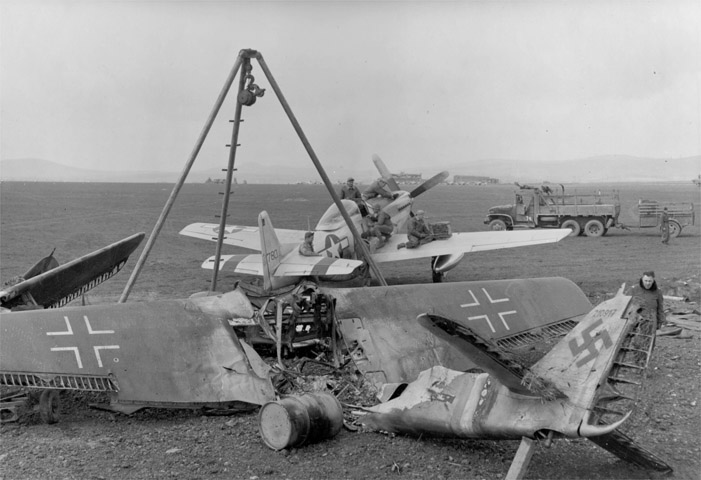
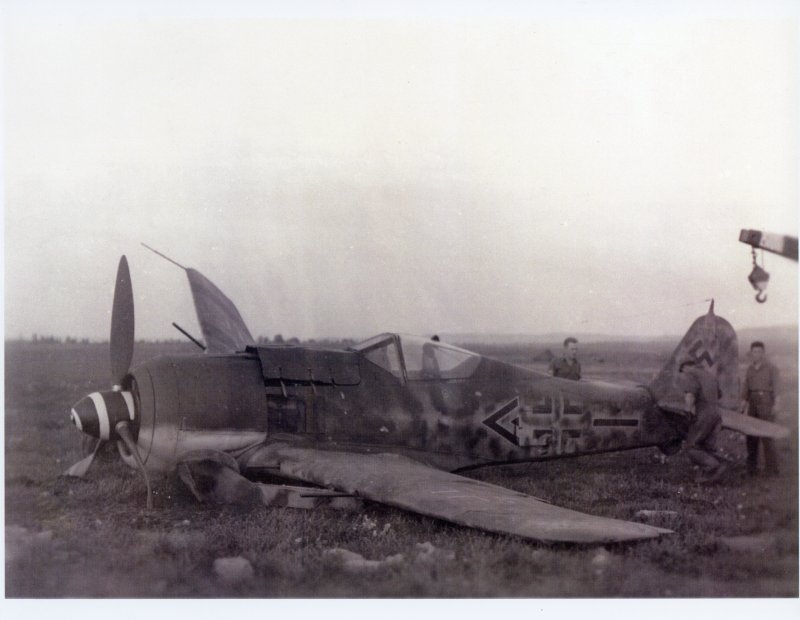
Of the aircraft that flew on every front, a couple of dozen original airframes survive today in museums and private collections, though the count varies with the source and with what is counted as original. At least five of the surviving radial-engined A-series machines came from JG 5 at Herdla, Norway, making that unit the most heavily represented in the world's museums of any Axis military aviation formation. The most spectacular case is an A-5/U3 (Werknummer 151 227) found in 1989 almost intact in a wooded marsh near Leningrad, where it had crashed in 1943: restored in the United States, it flew again on 1 December 2010 with its original BMW 801 and went on display at the Flying Heritage & Combat Armor Museum in Everett, Washington. The National Air and Space Museum holds the D-9 with Werknummer 601088, probably built at Bernburg and flown by a staff officer of IV.(Sturm)/JG 3 "Udet"; it was one of twenty-one German aircraft gathered in June 1945 and flown out of Flensburg to Cherbourg for shipment to the United States, where it was tested at Wright Field under the registration FE+120.
The Military Aviation Museum at Virginia Beach keeps another survivor with a name of its own, "Blauen 4" (Blue 4), built at Oschersleben in the summer of 1944 and recovered in 1984 from the Norwegian mountainside where it fell on 9 February 1945: it was flown by Leutnant Rudi Linz of JG 5, who had just claimed his seventieth victory when he was shot down and killed by RAF Mustangs and Beaufighters attacking German shipping anchored in the Vevringefjord. Alongside it fly two modern replicas, an A-8 and a D-9, the latter painted as "Schwarz 12" of Leutnant Theo Nibel, whose original aircraft was brought down by a bird strike during Operation Bodenplatte and, captured intact by the British, became the first complete D-9 to fall into Allied hands. Since 1997 the German firm Flug Werk has manufactured new reproductions of the type; by 2012 it had built around twenty, most of them flyable, usually powered by Chinese-built Shvetsov ASh-82 engines — a fourteen-cylinder radial of 41.2 litres, close in architecture and displacement to the BMW 801's 41.8.
Kurt Tank long outlived his aeroplane. Recruited after the war by Perón's Argentina, he travelled to Buenos Aires on a forged passport in the name of Pedro Matties, taking some sixty former colleagues with him; there he developed the IAe-33 Pulqui II jet fighter, which in 1950 briefly gave Argentina one of the most advanced fighters in the world. He then worked in India, designing for Hindustan Aeronautics the HAL HF-24 Marut, the first Indian-designed jet fighter, first flown in 1961 and built in 147 examples. He died in Munich on 5 June 1983, aged eighty-five. His cavalry horse — rugged, wide-tracked, heavily armed and able to come home with its engine shot to pieces — remains, four decades after his death, one of the most admired combat aircraft in history.
Variants
| Fw 190 V1 | Fw 190 V2 | Fw 190 A-0 | Fw 190 A-1 | Fw 190 A-10 | Fw 190 A-2 | Fw 190 A-3 | Fw 190 A-3a | Fw 190 A-4 | Fw 190 A-5 | Fw 190 A-6 | Fw 190 A-7 | Fw 190 A-8 | Fw 190 A-9 | Fw 190 B-0 | Fw 190 B-1 | Fw 190 C | Fw 190 D-0 | Fw 190 D-11 | Fw 190 D-12 | Fw 190 D-13 | Fw 190 D-9 | Fw 190 F-1 | Fw 190 F-2 | Fw 190 F-3 | Fw 190 F-8 | Fw 190 F-9 | Fw 190 G-1 | Fw 190 G-2 | Fw 190 G-3 | Fw 190 G-8 | Fw 190 S-5 | Fw 190 S-8 | Fw 190 V5g | |
|---|---|---|---|---|---|---|---|---|---|---|---|---|---|---|---|---|---|---|---|---|---|---|---|---|---|---|---|---|---|---|---|---|---|---|
| First flight | June 1, 1939 | October 31, 1939 | — | — | — | — | — | — | — | — | — | — | — | — | — | — | — | — | — | — | — | — | — | — | — | — | — | — | — | — | — | — | — | — |
| Aircraft type | Single-seat fighter prototype | — | — | Single-seat production fighter | — | — | Single-seat fighter | — | — | Single-seat fighter and fighter-bomber | — | — | Single-seat fighter and bomber interceptor | — | — | — | — | — | — | — | — | Single-seat high-altitude fighter and fighter-bomber | — | — | — | Single-seat ground-attack aircraft (Schlachtflugzeug) | — | — | — | Single-seat long-range fighter-bomber (Jabo Rei) | — | Two-seat conversion trainer | — | — |
| Powerplant | One BMW 139 fourteen-cylinder two-row radial engine rated at 1,550 PS (1,140 kW). | — | — | One BMW 801 C-1 fourteen-cylinder radial rated at 1,560 PS (1,147 kW) for take-off. | — | — | One BMW 801 D-2 fourteen-cylinder radial, raising take-off power to 1,700 PS (1,300 kW). | — | — | One BMW 801 D-2 radial, moved fifteen centimetres forward from the A-4 position to shift the centre of gravity ahead. | — | — | One BMW 801 D-2 or BMW 801Q/TU fourteen-cylinder radial, rated at 1,700 PS (1,250 kW) for take-off, with the Erhöhte Notleistung emergency system using C3 fuel injection, which raised power to 1,980 PS for ten minutes. | — | — | — | — | — | — | — | — | One Junkers Jumo 213A twelve-cylinder inverted-vee engine of 1,776 hp, with MW 50 water-methanol injection that temporarily raised output to 2,240 hp. | — | — | — | One BMW 801 D-2 radial with a slightly modified injector on the compressor, giving increased performance at low altitude for several minutes. | — | — | — | One BMW 801 D-2 fourteen-cylinder radial. | — | One BMW 801 D-2 fourteen-cylinder radial. | — | — |
| Powerplant | 1 × BMW 139 | 1 × BMW 139 | 1 × BMW 801 | 1 × BMW 801 C-1 | 1 × BMW 801S | 1 × BMW 801 C-2 | 1 × BMW 801 D-2 | 1 × BMW 801 D-2 | 1 × BMW 801 D-2 | 1 × BMW 801 D-2 | 1 × BMW 801 D-2 | 1 × BMW 801 D-2 | 1 × BMW 801 D-2 | 1 × BMW 801S | 1 × BMW 801 | 1 × BMW 801 | 1 × Daimler-Benz DB 603 | 1 × Junkers Jumo 213A | 1 × Junkers Jumo 213F | 1 × Junkers Jumo 213F | 1 × Junkers Jumo 213F | 1 × Junkers Jumo 213A | 1 × BMW 801 D-2 | 1 × BMW 801 D-2 | 1 × BMW 801 D-2 | 1 × BMW 801 D-2 | 1 × BMW 801S | 1 × BMW 801 D-2 | 1 × BMW 801 D-2 | 1 × BMW 801 D-2 | 1 × BMW 801 D-2 | 1 × BMW 801 D-2 | 1 × BMW 801 D-2 | 1 × BMW 801 |
| Power per engine | 1,529 hp | — | — | 1,538 hp | — | — | 1,743 hp | — | — | — | — | 1,743 hp | 1,676 hp | 1,973 hp Best value in this row | — | — | — | — | — | — | — | — | — | — | — | — | — | — | — | — | — | — | — | — |
| Length | — | — | — | — | — | — | — | — | — | — | — | — | 9 m | — | — | — | — | — | — | — | — | 10 m Best value in this row | — | — | — | — | — | — | — | — | — | — | — | — |
| Wingspan | — | — | — | 10.5 m Best value in this row | — | 10.5 m Best value in this row | 10.5 m Best value in this row | 10.5 m Best value in this row | 10.5 m Best value in this row | 10.5 m Best value in this row | 10.5 m Best value in this row | 10.5 m Best value in this row | 10.5 m Best value in this row | 10.5 m Best value in this row | — | — | — | — | — | — | — | 10.5 m | — | — | — | 10.5 m Best value in this row | — | — | — | 10.5 m Best value in this row | — | 10.5 m Best value in this row | 10.5 m Best value in this row | 10.5 m Best value in this row |
| Height | — | — | — | — | — | — | — | — | — | — | — | — | 3.2 m | — | — | — | — | — | — | — | — | 3.4 m Best value in this row | — | — | — | — | — | — | — | — | — | — | — | — |
| Wing area | — | — | — | 18.3 m² Best value in this row | — | 18.3 m² Best value in this row | 18.3 m² Best value in this row | 18.3 m² Best value in this row | 18.3 m² Best value in this row | 18.3 m² Best value in this row | 18.3 m² Best value in this row | 18.3 m² Best value in this row | 18.3 m² Best value in this row | 18.3 m² Best value in this row | — | — | — | — | — | — | — | 18.3 m² Best value in this row | — | — | — | 18.3 m² Best value in this row | — | — | — | 18.3 m² Best value in this row | — | 18.3 m² Best value in this row | 18.3 m² Best value in this row | 18.3 m² Best value in this row |
| Empty weight | — | — | — | — | — | — | — | — | — | — | — | — | 3,200 kg Best value in this row | — | — | — | — | — | — | — | — | 3,490 kg | — | — | — | — | — | — | — | — | — | — | — | — |
| MTOW | — | — | — | — | — | — | — | — | — | — | — | — | 4,900 kg Best value in this row | — | — | — | — | — | — | — | — | 4,840 kg | — | — | — | — | — | — | — | — | — | — | — | — |
| Top speed | — | — | — | — | — | — | — | — | — | — | — | — | 652 km/h | — | — | — | — | — | — | — | — | 685 km/h Best value in this row | — | — | — | — | — | — | — | — | — | — | — | — |
| Max speed altitude | — | — | — | — | — | — | — | — | — | — | — | — | 5,920 m | — | — | — | — | — | — | — | — | 6,600 m | — | — | — | — | — | — | — | — | — | — | — | — |
| Service ceiling | — | — | — | — | — | — | — | — | — | — | — | — | 10,350 m | — | — | — | — | — | — | — | — | 12,000 m Best value in this row | — | — | — | — | — | — | — | — | — | — | — | — |
| Initial climb rate | — | — | — | — | — | — | — | — | — | — | — | — | 15 m/s | — | — | — | — | — | — | — | — | — | — | — | — | — | — | — | — | — | — | — | — | — |
| Range | — | — | — | — | — | — | — | — | — | — | — | — | 1,000 km Best value in this row | — | — | — | — | — | — | — | — | 835 km | — | — | — | — | — | — | — | — | — | — | — | — |
| Ferry range | — | — | — | — | — | — | — | — | — | — | — | — | 1,000 km | — | — | — | — | — | — | — | — | — | — | — | — | — | — | — | — | — | — | — | — | — |
| Combat radius | — | — | — | — | — | — | — | — | — | — | — | — | 500 km | — | — | — | — | — | — | — | — | — | — | — | — | — | — | — | — | — | — | — | — | — |
| Range conditions | — | — | — | — | — | — | — | — | — | — | — | — | Range of 900 to 1,000 km, close to double that with a drop tank. Combat range of 400 to 500 km. | — | — | — | — | — | — | — | — | Maximum range of 835 km; aircraft could carry a 300-litre drop tank under each wing. | — | — | — | — | — | — | — | Conceived as a Jagdbomber mit vergrösserter Reichweite: a fighter-bomber with range extended by underwing drop tanks. | — | — | — | — |
| Armament | None: the V1 flew unarmed as an aerodynamic testbed. | — | — | Two 7.92 mm MG 17 machine guns in the fuselage and two more in the wing roots, all four synchronised to fire through the propeller arc, plus two 20 mm MG FF/M cannon in the outer wing. | — | — | Two 7.92 mm MG 17 machine guns in the fuselage, two 20 mm MG 151/20E cannon in the wing roots and two 20 mm MG FF/M cannon in the outer wing. | — | — | Basic battery of two 7.92 mm MG 17 machine guns and four 20 mm cannon; several sub-variants cut the armament to two MG 151 to gain load-carrying capacity. | — | — | Two synchronised 13 mm MG 131 machine guns, two synchronised 20 mm MG 151/20 E cannon in the wing roots and two more MG 151/20 E in mid-wing mounts. One bomb under the fuselage or four under the wings. | — | — | — | — | — | — | — | — | Two 13 mm MG 131 machine guns above the engine and two 20 mm MG 151/20 cannon in the wings, plus one 500 kg SC 500 bomb. | — | — | — | Two 20 mm MG 151/20 cannon in the wing roots and two 13 mm MG 131 machine guns above the engine. ETC 501 centreline rack and four ETC 50 underwing racks. | — | — | — | Two 20 mm MG 151/20 cannon in the wing roots; the R1 kit added two conformal WB 151/20 pods with two cannon each, for six in total. | — | None: the S-5 trainers flew unarmed. | — | — |
| Max weapons load | — | — | — | — | — | — | — | — | — | — | — | — | 500 kg Best value in this row | — | — | — | — | — | — | — | — | 500 kg Best value in this row | — | — | — | — | — | — | — | — | — | 0 kg | 0 kg | — |
| Payload | 0 kg Best value in this row | 0 kg Best value in this row | 0 kg Best value in this row | 0 kg Best value in this row | 0 kg Best value in this row | 0 kg Best value in this row | 0 kg Best value in this row | 0 kg Best value in this row | 0 kg Best value in this row | 0 kg Best value in this row | 0 kg Best value in this row | 0 kg Best value in this row | 0 kg Best value in this row | 0 kg Best value in this row | 0 kg Best value in this row | 0 kg Best value in this row | 0 kg Best value in this row | 0 kg Best value in this row | 0 kg Best value in this row | 0 kg Best value in this row | 0 kg Best value in this row | 0 kg Best value in this row | 0 kg Best value in this row | 0 kg Best value in this row | 0 kg Best value in this row | 0 kg Best value in this row | 0 kg Best value in this row | 0 kg Best value in this row | 0 kg Best value in this row | 0 kg Best value in this row | 0 kg Best value in this row | 0 kg Best value in this row | 0 kg Best value in this row | 0 kg Best value in this row |
| Cargo capacity | — | — | — | — | — | — | — | — | — | — | — | — | None: a single-seat fighter with no hold or cargo capacity; the racks take only ordnance or drop tanks. | — | — | — | — | — | — | — | — | — | — | — | — | — | — | — | — | — | — | — | — | — |
| Crew | 1 Best value in this row | 1 Best value in this row | 1 Best value in this row | 1 Best value in this row | 1 Best value in this row | 1 Best value in this row | 1 Best value in this row | 1 Best value in this row | 1 Best value in this row | 1 Best value in this row | 1 Best value in this row | 1 Best value in this row | 1 Best value in this row | 1 Best value in this row | 1 Best value in this row | 1 Best value in this row | 1 Best value in this row | 1 Best value in this row | 1 Best value in this row | 1 Best value in this row | 1 Best value in this row | 1 Best value in this row | 1 Best value in this row | 1 Best value in this row | 1 Best value in this row | 1 Best value in this row | 1 Best value in this row | 1 Best value in this row | 1 Best value in this row | 1 Best value in this row | 1 Best value in this row | 2 | 2 | 1 Best value in this row |
| Passengers | — | — | — | — | — | — | — | — | — | — | — | — | 0 | — | — | — | — | — | — | — | — | — | — | — | — | — | — | — | — | — | — | — | — | — |
| Units built | — | — | 28 | — | — | — | — | 72 | — | 1,752 Best value in this row | — | — | — | — | — | — | — | — | — | — | — | — | 18 | 270 | 432 | — | 147 | — | — | — | — | — | — | — |
Images