Embraer EMB 110 Bandeirante variant
Embraer EMB 110 Bandeirante EMB 110P1
Quick-change cargo/passenger version derived from the K1, certified in 1978: the mass-produced Bandeirante, with more than 220 sold worldwide.
Embraer EMB 110 Bandeirante sheet

- 19
- Passengers
History
The EMB 110P1 is the most-produced and best-known version of the Bandeirante, the aircraft that carried Embraer's name to the United States, Europe and Australia. The English Wikipedia defines it as a quick-change civil cargo/passenger transport derived from the military EMB 110K1, with the same large cargo door on the rear left side; EASA type certificate data sheet EASA.IM.A.229 states that the model derives from the basic EMB 110 through fuselage modifications, a change of powerplant, a strengthened floor and a cargo door, per Embraer drawing 110P1-0000. The certification application was filed on 14 February 1977 and the Brazilian type certificate (data sheet EA-7202) was issued on 9 May 1978, a date EASA recognises as its own for the grandfathered product.
The World Airline Historical Society article explains that the P1 corrected the original Bandeirante's main shortcoming by introducing an eighteen-seat cabin, arranged in six rows of three with an offset aisle, and 750 shp PT6A-34 engines, optimising the aircraft for third-level operations; Belém-based TABA was its launch customer. The EASA sheet sets the maximum at 21 seats in two layouts: eighteen passengers and three crew, or nineteen passengers using lateral seats and two crew, the latter approved only for private transport. Aeropedia, which documents the Australian fleet, quotes up to 21 passengers or 1,522 kg of freight in the cargo role and describes the lengthened fuselage and the crew door in the forward fuselage as distinguishing features. The same TCDS allows 320 kg in the baggage compartment, extendable to 420 kg with an Embraer modification, a maximum total floor load of 1,804 kg and, for cargo service, a class E compartment with a 9 g net, anti-smoke curtain, smoke detection and protective breathing equipment for the crew. Power comes from two PT6A-34s rated at 750 shp for take-off and continuous operation at 2,200 propeller rpm, driving three-blade Hartzell HC-B3TN-3C propellers.
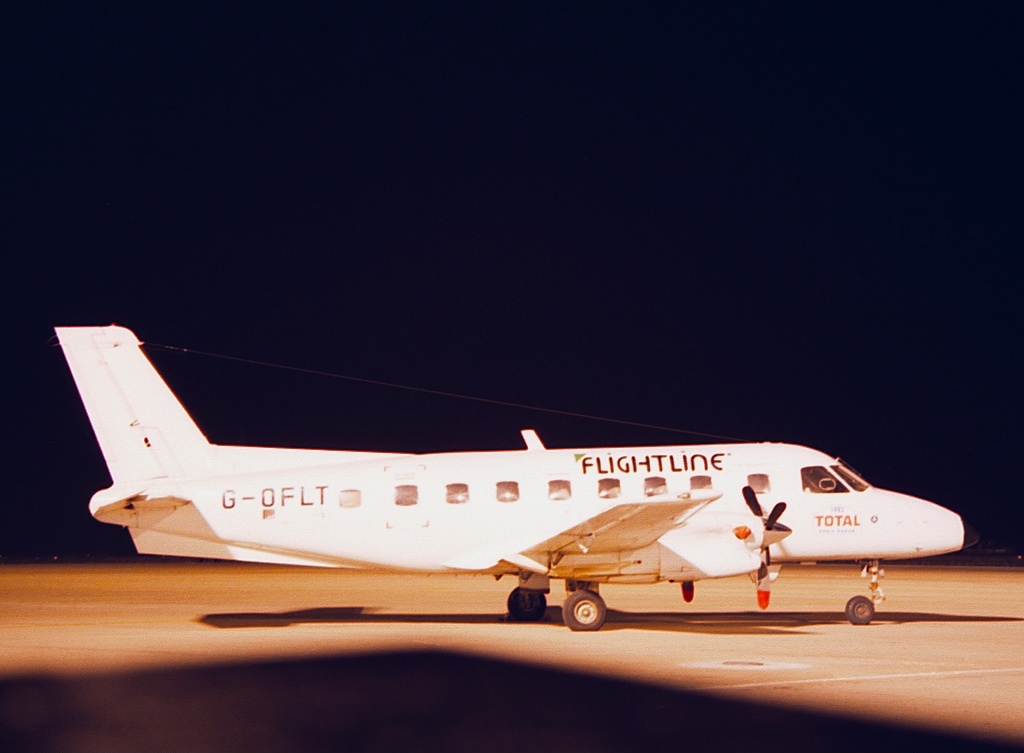
The WAHS notes that both P1 and P2 were offered with a 12,500 lb gross weight or, alternatively, 5,900 kg. The first figure is no accident: 12,500 lb is the ceiling of the commuter category under FAR 23 in the United States, and the EASA sheet requires a cockpit placard stating that the aircraft, certified under RBHA 1348/01 (equivalent to SFAR 41A), does not fully comply with ICAO Annex 8 above 5,670 kg. That dual weight is the root of the P1/41 sub-variant, covered in its own entry.
Commercially the P1 was a success. Cunha puts it at more than 220 aircraft sold, mostly on the international market, and the list of eligible serial numbers in the European TCDS spans most of the production run, from c/n 110192 to 110498. The WAHS recounts how Bob Terry, founder of Mountain West Airlines, ordered three P1s and set up Aero Industries as the sales agent in the United States, where the type flew with Provincetown-Boston Airlines, Atlantic Southeast, Tennessee Airways, Wiggins Airways and Air LA; in Europe it was operated by Air Ecosse, Air UK, Jersey European, Genair and the Dutch F'Airlines, and in Australia and New Zealand it was the dominant version alongside the P2. The FAB derived the EMB 110P1K (C-95B) from it, and Provincetown-Boston's P1s received a modified horizontal stabiliser after one aircraft lost its tailplane in flight.
That episode was the crash of PBA Flight 1039 at Jacksonville in December 1984, in which a malfunction in the elevator control or trim system overstressed the control rod and caused the separation of the stabiliser, elevators, tail cone and ventral fin, killing thirteen. Other accidents marked the model's history: Knight Air Flight 816, G-OEAA, broke up in flight near Leeds in May 1995 because of a faulty artificial horizon with no standby instrument; Alas Chiricanas Flight 901 was destroyed by a bomb in July 1994 with 21 dead; a Manaus Aerotáxi P1 went down in the Manacapuru River in February 2009 with 24 victims; and in November 2020 a Cubana de Aviación P1 built in 1976 suffered a landing gear collapse in Havana without injuries. Even so, the P1 keeps flying as a freighter and air taxi decades after production ended in 1990.
Multimedia


