Concorde: Up in Flames 🔥✈️ Air Disasters: Full Episode | Smithsonian Channel
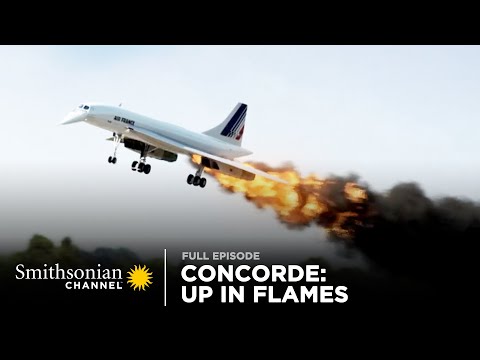
Video from the channel Smithsonian Channel Aviation Nation about Concorde, linked on its Above Ten Thousand entry. Duration: 44:05. Language: English. Video type: Documentary.
What it's about
Episode of the documentary series Air Disasters devoted to the accident of Air France flight 4590, a Concorde that caught fire during its takeoff run on runway 26 right at Paris Charles de Gaulle Airport in July 2000 and crashed into a hotel near the airport. All 109 people on board died, along with four more on the ground. The program combines dramatized reconstructions, cockpit recordings, amateur footage and interviews with the tower controller, the French investigators and the US NTSB representative, Bob McIntosh, to follow the investigation step by step.
Historical context
The Concorde, the result of collaboration between the United Kingdom and France, first flew in 1969 and was the only supersonic passenger aircraft in service: it flew at more than twice the speed of sound and above 55,000 feet. Its delta wing reduces drag at supersonic speed but requires a high-speed takeoff with a lot of thrust. Until the accident it had gone 31 years without a single fatal accident, although its record included six cases in which a burst tire damaged a fuel tank, the most serious in 1979. After the accident, France and then British Airways grounded their fleets.
Key facts
Investigators found tank debris, pieces of tire and a titanium metal strip with rivets and traces of adhesive that did not belong to the Concorde on the runway. After ruling out other aircraft, they identified it as a wear strip from the engine of a Continental Airlines DC-10 that had taken off on the same runway about five minutes earlier; it had been replaced a few weeks before with new drilled holes and adhesive because it did not fit properly. Tests showed the strip could cut a Concorde tire and that a roughly five-kilogram piece of rubber, on striking a completely full tank, could burst it from within through the pressure wave of the fuel. With engines 1 and 2 lost and the landing gear unable to retract, the crew could not get the aircraft to climb. The report led to more resistant tires, Kevlar-reinforced tanks and better runway monitoring. The Concorde flew again fifteen months later and was permanently retired on 26 November 2003.