Aviation générale · Civil · Royaume-Uni
Britten-Norman Islander
- 13 juin 1965
- Premier vol
- 1967
- Mise en service
- En service
- Statut
- 1 280
- Exemplaires construits


_11-1600.webp)
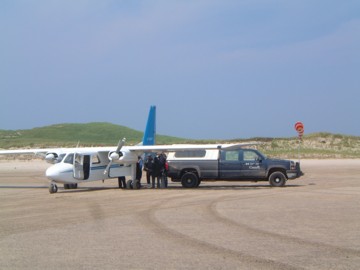
Le Britten-Norman Islander est un bimoteur utilitaire léger britannique, capable d'emporter un pilote et neuf passagers, conçu dans les années soixante pour le transport de troisième niveau entre pistes courtes et sommairement aménagées. Il a volé pour la première fois le 13 juin 1965, a obtenu la certification britannique en août 1967 et reste en production, avec 1280 exemplaires construits et un retour à l'usine d'origine de Bembridge annoncé en 2023.
Fiches liées
Catégorie
Histoire
John Britten et Desmond Norman, associés dans la conversion d'avions agricoles, commencèrent en 1963 à travailler sur un bimoteur à pistons simple et bon marché. Leur lecture du marché fut juste : les naissantes compagnies de troisième niveau se souciaient davantage de la charge marchande que de la vitesse ou du rayon d'action, de sorte que le nouvel avion sacrifia les performances au profit de la capacité. Les ailes et les surfaces de queue furent dessinées à corde et à épaisseur constantes, et toutes les nervures de l'aile sont identiques, décisions prises pour abaisser le coût de fabrication. Le prototype G-ATCT vola le 13 juin 1965 avec deux moteurs Rolls-Royce Continental IO-360-B et se présenta quatre jours plus tard au Salon de Paris ; les essais conduisirent à augmenter l'envergure et à adopter les Avco Lycoming O-540-E, qui restèrent la motorisation standard. Le premier avion de série vola le 24 avril 1967 et la certification britannique arriva en août de la même année.
L'Islander est un monoplan à aile en position haute d'épaule, fuselage rectangulaire et train tricycle fixe, sans couloir central : ses rangées de sièges exploitent au maximum une cabine d'à peine 1,09 m de large, avec deux portes à bâbord et une à tribord. Cette cabine se reconfigure en peu de temps, d'où la variété des métiers du type : vols réguliers et charters, fret, ambulance à trois civières, travail agricole, surveillance aérienne, largage de parachutistes et missions de police. La version militaire, présentée en 1970 sous le nom de Defender, ajouta des points d'emport sous l'aile, et la Maritime Defender fut orientée vers la patrouille côtière et le sauvetage. À partir de 1980, il put être commandé avec des turbopropulseurs Allison 250, configuration désignée BN-2T, dont les premiers exemplaires entrèrent en service en 1981.
La demande dépassa vite la capacité de Bembridge, sur l'île de Wight. La production se répartit à travers l'Europe — assemblage en Roumanie, finition en Belgique après le rachat de l'entreprise par Fairey en 1972 — et en 1975 s'y ajouta une licence philippine ; plus de 500 appareils sortirent de la chaîne roumaine. En 1974, les ventes dépassèrent le record de 548 commandes que détenait le bimoteur commercial britannique le plus vendu, et en 1982 fut livré l'Islander numéro 1000. Les ventes chutèrent ensuite, en partie parce que les avions déjà vendus duraient longtemps : en 2016, le constructeur évoquait quelque 500 exploitants dans plus de 120 pays, et en octobre 2019 800 appareils étaient encore en service. Le type détient un record curieux : il assure pour Loganair la liaison régulière la plus courte du monde, entre Westray et Papa Westray, longue de 2,7 km et d'environ deux minutes de vol.
Variantes
| BN-2 (prototipo) | BN-2A-10 | BN-2A-2 | BN-2A-20 | BN-2A-21 | BN-2A-23 | BN-2A-24 | BN-2A-25 | BN-2A-26 | BN-2A-27 | BN-2A-3 | BN-2A-30 (hidroavión con flotadores) | BN-2A-41 Turbo Islander | BN-2A-6 | BN-2A-7 | BN-2A-8 | BN-2A-9 | BN-2A Islander | BN-2B-20 | BN-2B-21 | BN-2B-26 | BN-2B-27 | BN-2B Defender | BN-2B Islander II | BN-2 con fanes entubados (banco de pruebas) | BN-2E Islander Super | BN-2T-4R AEW Defender | BN-2T-4S Defender 4000 | BN-2T Turbine Islander | Defender AL Mk 1 | Defender AL Mk 2 / R2 | Defender T Mk 3 | Islander AL1 / R1 | Islander CC2 / CC2A | Maritime Defender | Project Fresson (Islander eléctrico) | |
|---|---|---|---|---|---|---|---|---|---|---|---|---|---|---|---|---|---|---|---|---|---|---|---|---|---|---|---|---|---|---|---|---|---|---|---|---|
| Premier vol | 13 juin 1965 | — | — | — | — | — | — | — | — | — | — | — | — | — | — | — | — | — | — | — | — | — | — | — | — | — | — | — | — | — | — | — | — | — | — | — |
| Type d'aéronef | Light utility aircraft | Light utility aircraft | Light utility aircraft | Avión utilitario ligero | Light utility aircraft | Light utility aircraft | Light utility aircraft | Light utility aircraft | Light utility aircraft | Light utility aircraft | Light utility aircraft | Light utility aircraft | Avión utilitario ligero | Light utility aircraft | Light utility aircraft | Light utility aircraft | Light utility aircraft | Light utility aircraft | Light utility aircraft | Avión utilitario ligero | Light utility aircraft | Light utility aircraft | Armed light patrol and surveillance aircraft | Light utility aircraft | Light utility aircraft | Light utility aircraft | Light military surveillance aircraft | Armed light patrol and surveillance aircraft | Light utility aircraft | Light military surveillance aircraft | Light military surveillance aircraft | Light military training aircraft | Light military liaison and reconnaissance aircraft | Light military liaison aircraft | Armed light maritime patrol aircraft | Light utility aircraft |
| Groupe motopropulseur | 2 × Rolls-Royce/Continental IO-360-B piston engines of 157 kW (210 hp) each; the prototype was soon re-engined with 194 kW Lycoming O-540-E4C5 units. | 2 × turbocharged, fuel-injected Lycoming TIO-540-H1A piston engines of 201 kW (270 hp) each, on the BN-2A-8 airframe with raised take-off weight. | 2 × fuel-injected Lycoming IO-540-K1B5 piston engines of 224 kW (300 hp) each. | 2 × motor de pistón de inyección Lycoming IO-540-K1B5 de 224 kW (300 hp) unitarios. | 2 × fuel-injected Lycoming IO-540-K1B5 piston engines of 224 kW (300 hp) each. | 2 × fuel-injected Lycoming IO-540-K1B5 piston engines of 224 kW (300 hp) each: a single BN-2A-24 re-engined and fitted with wingtip tanks. | 2 × Lycoming O-540-E4C5 piston engines of 194 kW (260 hp) each, as on the BN-2A-27 it derives from. | 2 × Lycoming O-540-E4C5 piston engines of 194 kW (260 hp) each: essentially a BN-2A-26 with the BN-2A-8S long nose, built by Fairey at Gosselies as the donor airframe for the BN-2A-41 prototype. | 2 × Lycoming O-540-E4C5 piston engines of 194 kW (260 hp) each. | 2 × Lycoming O-540-E4C5 piston engines of 194 kW (260 hp) each. | 2 × fuel-injected Lycoming IO-540-K1B5 piston engines of 224 kW (300 hp) each. | 2 × Lycoming O-540-E4C5 piston engines of 194 kW (260 hp) each; the BN-2A-3x family covered the floatplane and amphibian projects, the even-numbered designations taking the 224 kW engine instead. | 2 × turbohélice Lycoming LTP 101 con hélices de abanderamiento automático, montados unos 15 cm más al exterior que los pistones de serie. | 2 × Lycoming O-540-E4C5 piston engines of 194 kW (260 hp) each. | 2 × Lycoming O-540-E4C5 piston engines of 194 kW (260 hp) each. | 2 × Lycoming O-540-E4C5 piston engines of 194 kW (260 hp) each. | 2 × Lycoming O-540-E4C5 piston engines of 194 kW (260 hp) each. | 2 × Lycoming O-540-E4C5 piston engines of 194 kW (260 hp) each. | 2 × fuel-injected Lycoming IO-540-K1B5 piston engines of 224 kW (300 hp) each, with two- or three-blade Hartzell propellers depending on modification. | 2 × motor de pistón de inyección Lycoming IO-540-K1B5 de 224 kW (300 hp) unitarios. | 2 × Lycoming O-540-E4C5 piston engines of 194 kW (260 hp) each; some aircraft carry the three-blade Hartzell propeller of modification NB-M-1361. | 2 × Lycoming O-540-E4C5 piston engines of 194 kW (260 hp) each. | 2 × fuel-injected Lycoming IO-540-K1B5 piston engines of 224 kW (300 hp) each. | 2 × Lycoming O-540-E4C5 piston engines of 194 kW (260 hp) each, driving two-blade Hartzell constant-speed propellers of 1.98 m diameter. | 2 × Lycoming O-540-E4C5 piston engines of 194 kW (260 hp) each driving Dowty Rotol ducted fans, tested in 1977 to cut noise against the conventional propeller; the installation called for local strengthening of the main wing spar at the root. | 2 × Lycoming O-540-E4C5 piston engines of 194 kW (260 hp) each, unchanged from the BN-2 it was converted from. | 2 × Allison 250-B17F/1 turboprops of 298 kW (400 shp) each, with 1.98 m three-blade Hartzell propellers. | 2 × Allison 250-B17F/1 turboprops of 298 kW (400 shp) each, with three-blade Hartzell propellers. | 2 × Allison 250-B17C turboprops flat-rated at 239 kW (320 shp) each, governed to a maximum of 2030 propeller rpm, with 1.98 m three-blade Hartzell propellers. | 2 × Allison 250-B17F/1 turboprops of 298 kW (400 shp) each. | 2 × Allison 250-B17F/1 turboprops of 298 kW (400 shp) each. | 2 × Allison 250-B17F/1 turboprops of 298 kW (400 shp) each. | 2 × Allison 250-B17C turboprops flat-rated at 239 kW (320 shp) each. | 2 × Allison 250-B17C turboprops flat-rated at 239 kW (320 shp) each. | 2 × fuel-injected Lycoming IO-540-K1B5 piston engines of 224 kW (300 hp) each. | Hydrogen fuel-cell electric powertrain (HFCPS) by Cranfield Aerospace Solutions: 240 kW of electrical power yielding up to 220 kW at the motor. The demonstrator replaces one of the Islander's two piston engines. |
| Motorisation | 2 × Rolls-Royce/Continental IO-360-B | 2 × Lycoming TIO-540-H1A | 2 × Lycoming IO-540-K1B5 | 2 × Lycoming IO-540-K1B5 | 2 × Lycoming IO-540-K1B5 | 2 × Lycoming IO-540-K1B5 | 2 × Lycoming O-540-E4C5 | 2 × Lycoming O-540-E4C5 | 2 × Lycoming O-540-E4C5 | 2 × Lycoming O-540-E4C5 | 2 × Lycoming IO-540-K1B5 | 2 × Lycoming O-540-E4C5 | 2 × Lycoming LTP 101 | 2 × Lycoming O-540-E4C5 | 2 × Lycoming O-540-E4C5 | 2 × Lycoming O-540-E4C5 | 2 × Lycoming O-540-E4C5 | 2 × Lycoming O-540-E4C5 | 2 × Lycoming IO-540-K1B5 | 2 × Lycoming IO-540-K1B5 | 2 × Lycoming O-540-E4C5 | 2 × Lycoming O-540-E4C5 | 2 × Lycoming IO-540-K1B5 | 2 × Lycoming O-540-E4C5 | 2 × Lycoming O-540-E4C5 | 2 × Lycoming O-540-E4C5 | 2 × Allison 250-B17F/1 | 2 × Allison 250-B17F/1 | 2 × Allison 250-B17C | 2 × Allison 250-B17F/1 | 2 × Allison 250-B17F/1 | 2 × Allison 250-B17F/1 | 2 × Allison 250-B17C | 2 × Allison 250-B17C | 2 × Lycoming IO-540-K1B5 | Cranfield Aerospace Solutions HFCPS (pila de combustible de hidrógeno) |
| Puissance unitaire | 211 hp | 270 hp | 300 hp | 300 hp | 300 hp | 300 hp | 260 hp | 260 hp | 260 hp | 260 hp | 300 hp | 260 hp | — | 260 hp | 260 hp | 260 hp | 260 hp | 260 hp | 300 hp | 300 hp | 260 hp | 260 hp | 300 hp | 260 hp | 260 hp | 260 hp | 400 hp Meilleure valeur de la ligne | 400 hp Meilleure valeur de la ligne | 321 hp | 400 hp Meilleure valeur de la ligne | 400 hp Meilleure valeur de la ligne | 400 hp Meilleure valeur de la ligne | 321 hp | 321 hp | 300 hp | 220 kW |
| Longueur | 10,9 m | — | — | — | — | — | — | — | — | — | — | — | — | — | — | — | — | 10,9 m | — | — | — | — | — | 10,9 m | — | — | 12,4 m Meilleure valeur de la ligne | 12,2 m | 10,9 m | — | — | — | — | — | — | — |
| Envergure | — | — | — | — | — | — | — | — | — | — | — | — | — | — | — | — | — | — | — | — | — | — | — | 14,9 m | — | — | 16,2 m Meilleure valeur de la ligne | 16,2 m Meilleure valeur de la ligne | — | — | — | — | — | — | — | — |
| Hauteur | 4,2 m | — | — | — | — | — | — | — | — | — | — | — | — | — | — | — | — | 4,2 m | — | — | — | — | — | 4,2 m | — | — | 4,2 m | 4,4 m | 4,5 m Meilleure valeur de la ligne | — | — | — | — | — | — | — |
| Surface alaire | 30,2 m² | — | 30,2 m² | — | — | — | — | — | — | — | — | — | — | 30,2 m² | — | — | — | 30,2 m² | 30,2 m² | — | 30,2 m² | — | — | 30,2 m² | — | — | 32,7 m² Meilleure valeur de la ligne | 32,7 m² Meilleure valeur de la ligne | 30,2 m² | 32,7 m² Meilleure valeur de la ligne | 32,7 m² Meilleure valeur de la ligne | 32,7 m² Meilleure valeur de la ligne | 30,2 m² | 30,2 m² | — | — |
| Masse à vide | — | — | — | — | — | — | — | — | — | — | — | — | — | — | — | — | — | — | — | — | — | — | — | 1 866 kg Meilleure valeur de la ligne | — | — | — | 2 223 kg | — | — | — | — | — | — | — | — |
| MTOW | 2 585 kg | — | 2 858 kg | 2 994 kg | 2 994 kg | — | — | — | 2 994 kg | 2 994 kg | 2 858 kg | — | — | 2 858 kg | — | 2 858 kg | 2 858 kg | 2 722 kg | 2 994 kg | 2 994 kg | 2 994 kg | 2 994 kg | 2 994 kg | 2 994 kg | — | — | 3 855 kg | 3 856 kg Meilleure valeur de la ligne | 3 175 kg | 3 855 kg | 3 855 kg | 3 855 kg | 3 175 kg | 3 175 kg | 2 994 kg | — |
| Vitesse maximale | — | — | — | — | — | — | — | — | — | — | — | — | — | — | — | — | — | — | — | — | — | — | — | 274 km/h | — | — | — | 326 km/h Meilleure valeur de la ligne | — | — | — | — | — | — | — | — |
| Altitude de vitesse maximale | — | — | — | — | — | — | — | — | — | — | — | — | — | — | — | — | — | — | — | — | — | — | — | 0 m | — | — | — | — | — | — | — | — | — | — | — | — |
| Vitesse de croisière | — | — | — | — | — | — | — | — | — | — | — | — | — | — | — | — | — | — | — | — | — | — | — | 240 km/h | — | — | — | 280 km/h Meilleure valeur de la ligne | — | — | — | — | — | — | — | — |
| Altitude de croisière | — | — | — | — | — | — | — | — | — | — | — | — | — | — | — | — | — | — | — | — | — | — | — | 3 700 m | — | — | — | — | — | — | — | — | — | — | — | — |
| Plafond pratique | — | — | — | — | — | — | — | — | — | — | — | — | — | — | — | — | — | — | — | — | — | — | — | 4 000 m | — | — | — | 7 600 m Meilleure valeur de la ligne | — | — | — | — | — | — | — | — |
| Vitesse ascensionnelle initiale | — | — | — | — | — | — | — | — | — | — | — | — | — | — | — | — | — | — | — | — | — | — | — | 4,4 m/s | — | — | — | — | — | — | — | — | — | — | — | — |
| Distance franchissable | — | — | — | — | — | — | — | — | — | — | — | — | — | — | — | — | — | — | — | — | — | — | — | 1 398 km | — | — | — | 1 863 km Meilleure valeur de la ligne | — | — | — | — | — | — | — | — |
| Rayon d'action | 0 km Meilleure valeur de la ligne | 0 km Meilleure valeur de la ligne | 0 km Meilleure valeur de la ligne | 0 km Meilleure valeur de la ligne | 0 km Meilleure valeur de la ligne | 0 km Meilleure valeur de la ligne | 0 km Meilleure valeur de la ligne | 0 km Meilleure valeur de la ligne | 0 km Meilleure valeur de la ligne | 0 km Meilleure valeur de la ligne | 0 km Meilleure valeur de la ligne | 0 km Meilleure valeur de la ligne | 0 km Meilleure valeur de la ligne | 0 km Meilleure valeur de la ligne | 0 km Meilleure valeur de la ligne | 0 km Meilleure valeur de la ligne | 0 km Meilleure valeur de la ligne | 0 km Meilleure valeur de la ligne | 0 km Meilleure valeur de la ligne | 0 km Meilleure valeur de la ligne | 0 km Meilleure valeur de la ligne | 0 km Meilleure valeur de la ligne | — | 0 km Meilleure valeur de la ligne | 0 km Meilleure valeur de la ligne | 0 km Meilleure valeur de la ligne | — | — | 0 km Meilleure valeur de la ligne | — | — | — | — | — | — | 0 km Meilleure valeur de la ligne |
| Endurance | — | — | — | — | — | — | — | — | — | — | — | — | — | — | — | — | — | — | — | — | — | — | — | — | — | — | — | 510 min | — | — | — | — | — | — | — | — |
| Conditions de distance franchissable | — | — | — | — | — | — | — | — | — | — | — | — | — | — | — | — | — | — | — | — | — | — | — | 1,398 km with reserves at 240 km/h and 3,700 m, at 59% power; service ceiling 4,000 m. | — | — | — | 1,863 km on VFR reserves and eight and a half hours of endurance; service ceiling 7,600 m. | — | — | — | — | — | — | — | — |
| Armement | None: civil prototype with no weapons capability. | None: civil variant with no weapons capability. | None: civil variant with no weapons capability. | Ninguno: variante civil sin capacidad de armamento. | None in civil guise; the production Defender was armed on this airframe. | None: civil variant with no weapons capability. | None: civil variant with no weapons capability. | None: civil variant with no weapons capability. | None: civil variant with no weapons capability. | None: civil variant with no weapons capability. | None: civil variant with no weapons capability. | None: civil project with no weapons capability. | Ninguno: prototipo civil sin capacidad de armamento. | None: civil variant with no weapons capability. | None: civil variant with no weapons capability. | None: civil variant with no weapons capability. | None: civil variant with no weapons capability. | None: civil variant with no weapons capability. | None: civil variant with no weapons capability. | Ninguno en la versión civil; la célula sostuvo el BN-2B-21 Defender y el Maritime Defender. | None: civil variant with no weapons capability. | None: civil variant with no weapons capability. | Four underwing hardpoints for up to 1,134 kg of drop tanks, bombs, missiles, 7.62 mm machine-gun pods, rocket pods, flares and sensors; the wing carries dedicated strengthening for the pylons. | None: civil transport variant, with neither hardpoints nor combat systems. | None: civil flying testbed. | None: civil prototype with no weapons capability. | No weapons of its own: the payload is the early-warning radar in the nose radome and its mission consoles. | Four underwing hardpoints for up to 1,134 kg of bombs, missiles, machine-gun pods, rocket pods, drop tanks or sensors. | None on the civil transport version. | No offensive weapons as standard: a low-light-level television camera in an under-nose turret, cabin-mounted cameras or COMINT equipment, and infrared jammers in underwing pods against surface-to-air missiles. | No offensive weapons: as the Defender AL.1 but with a different sensor fit. Redesignated Defender R.2 in 2019. | None: training version of the Defender AL.1. | Only two underwing pylons, half the Defender's; in British Army service they carry mission equipment rather than weapons. | None: RAF communications and liaison aircraft. | Bendix/King search radar, forward-looking infrared, sonobuoys, a magnetic anomaly detector and acoustic processors; on the four underwing hardpoints, two Sting Ray torpedoes, four Sea Skua anti-ship missiles or other stores, up to 1,134 kg. | None: civil propulsion demonstrator. |
| Charge militaire maximale | 0 kg | 0 kg | 0 kg | 0 kg | 0 kg | 0 kg | 0 kg | 0 kg | 0 kg | 0 kg | 0 kg | 0 kg | 0 kg | 0 kg | 0 kg | 0 kg | 0 kg | 0 kg | 0 kg | 0 kg | 0 kg | 0 kg | 1 134 kg Meilleure valeur de la ligne | 0 kg | 0 kg | 0 kg | — | 1 134 kg Meilleure valeur de la ligne | 0 kg | — | — | — | — | — | 1 134 kg Meilleure valeur de la ligne | 0 kg |
| Charge utile | — | — | — | — | — | — | — | — | — | — | — | — | — | — | — | — | — | — | — | — | — | — | — | 929 kg | — | — | — | — | — | — | — | — | — | — | — | — |
| Capacité d'emport | Cabin for up to ten occupants: pilot plus nine passengers. | Cabin for up to ten occupants: pilot plus nine passengers. | Cabin for up to ten occupants: pilot plus nine passengers. | Cabina de hasta diez ocupantes: piloto y nueve pasajeros. | Cabin for up to ten occupants, with increased span and wingtip tanks. | BN-2A-8S long nose; cabin for up to ten occupants. | Identical to the BN-2A-27 apart from the BN-2A-8S long nose; cabin for up to ten occupants. | Cabin for up to ten occupants, long-nose configuration. | Cabin for up to ten occupants; the agricultural and firefighting Islanders came from this version. | Cabin for up to ten occupants, with increased span and wingtip tanks. | Cabin for up to ten occupants: pilot plus nine passengers. | Projected float configuration; never went beyond mock-up. | El avión de serie previsto llevaba piloto y once pasajeros; el único prototipo mantuvo la cabina estándar con el morro largo del BN-2A-8S. | Cabin for up to ten occupants: pilot plus nine passengers. | Cabin for up to ten occupants: pilot plus nine passengers. | Lengthened nose with extra baggage bay; cabin for up to ten occupants. | Cabin for up to ten occupants: pilot plus nine passengers. | Cabin for up to ten occupants — pilot plus nine passengers — reached through individual side doors. | Cabin for up to ten occupants, with better soundproofing and interior than the BN-2A. | Cabina de hasta diez ocupantes con envergadura aumentada y depósitos en punta de ala. | Cabin for up to ten occupants; the most numerous piston version of the B series. | Cabin for up to ten occupants, with increased span and wingtip tanks. | Cabin for up to ten occupants, adaptable to troop transport, logistic support and casualty evacuation. | Ten seats — pilot plus nine passengers — in a cabin served by individual side doors and no aisle; maximum payload 929 kg, with 620 litres of fuel. | Standard Islander airframe, cabin unchanged. | Fuselage stretched by an 84 cm plug ahead of the wing and the internal baggage step removed: two more double seats, up to thirteen passengers besides the pilot, with a new starboard rear door. | Stretched fuselage and the Trislander's larger-span wing; the ten-seat cabin is given over to operator stations. | Stretched fuselage with the Trislander's strengthened wing and undercarriage; up to sixteen troops in the transport role, with two flight crew. | Cabin for up to ten occupants; the turbine raises maximum take-off weight to 3,175 kg. | Defender 4000 configured for reconnaissance; the cabin houses the mission equipment and its operators. | Cabin taken up by mission consoles and sensors. | Cabin arranged for crew training on the Defender mission system. | Built as Defenders though designated Islanders; no sliding door, but provision for a wide range of mission equipment. | Transport cabin for up to ten occupants; the CC.2A is a civil BN-2T brought up to CC.2 standard. | Cabin reworked as a sensor-operator station for long-range patrol and reconnaissance. | Keeps the Islander's nine-passenger cabin; hydrogen is carried in SHyFT tanks. |
| Équipage | 1 Meilleure valeur de la ligne | 1 Meilleure valeur de la ligne | 1 Meilleure valeur de la ligne | 1 Meilleure valeur de la ligne | 1 Meilleure valeur de la ligne | 1 Meilleure valeur de la ligne | 1 Meilleure valeur de la ligne | 1 Meilleure valeur de la ligne | 1 Meilleure valeur de la ligne | 1 Meilleure valeur de la ligne | 1 Meilleure valeur de la ligne | — | — | 1 Meilleure valeur de la ligne | 1 Meilleure valeur de la ligne | 1 Meilleure valeur de la ligne | 1 Meilleure valeur de la ligne | 1 Meilleure valeur de la ligne | 1 Meilleure valeur de la ligne | 1 Meilleure valeur de la ligne | 1 Meilleure valeur de la ligne | 1 Meilleure valeur de la ligne | 1 Meilleure valeur de la ligne | 1 Meilleure valeur de la ligne | — | 1 Meilleure valeur de la ligne | 1 Meilleure valeur de la ligne | 2 | 1 Meilleure valeur de la ligne | 2 | 2 | 2 | — | 1 Meilleure valeur de la ligne | 2 | — |
| Passagers | 9 | 9 | 9 | 9 | 9 | 9 | 9 | 9 | 9 | 9 | 9 | 9 | — | 9 | 9 | 9 | 9 | 9 | 9 | 9 | 9 | 9 | 9 | 9 | — | 13 Meilleure valeur de la ligne | 9 | 9 | 9 | — | — | — | — | 9 | — | 9 |
| Exemplaires construits | — | — | — | — | — | 1 | — | — | — | — | — | — | 1 | — | — | — | — | — | — | — | — | — | — | — | 1 | 1 | — | — | — | 4 | — | 1 | 7 Meilleure valeur de la ligne | 3 | — | — |