Project Mercury · NASA · Uncrewed
Little Joe 1
- August 21, 1959
- Launch date
- 0 min
- Duration
- Failure
- Outcome


Little Joe 1 (LJ-1) was the first flight attempt of the Little Joe programme, the series of uncrewed tests with which NASA set out to prove — before risking anyone — that the Project Mercury escape system could pull the capsule clear of a failing rocket at the worst moment of the climb. It was scheduled for 21 August 1959 from Wallops Island, Virginia, and it never flew as planned: half an hour before the appointed time, with the area still being evacuated, the escape motor fired by itself. The test objective was demanding and very specific: to measure how the escape rocket behaved under the most severe dynamic loading anticipated during a Mercury-Atlas launch, that is, at the instant of maximum aerodynamic pressure. That did not call for an expensive booster. Little Joe was a deliberately simple, unguided vehicle built around a cluster of Pollux and Recruit solid-fuel motors, conceived to repeat the one stretch of flight that mattered at a price no Atlas or Redstone could match. On top of it rode a structurally equivalent Mercury boilerplate capsule built by McDonnell. What happened on 21 August was an unexpected flash during the countdown. When the smoke cleared it was evident that only the capsule-and-tower combination had been launched, on a trajectory resembling an off-the-pad abort; the booster and the adapter clamp ring stayed intact on the launcher. The stack reached about 610 metres, and near apogee the ring holding the tower to the capsule released and the small pyrotechnic tower-jettison rocket fired. The whole flight lasted twenty seconds and ended with no recovery: the parachutes never deployed. The accident report, issued on 18 September 1959, blamed the premature firing on an electrical leak — what missile engineers called transients or ghost voltages in a relay circuit — with the rapid-abort system wired straight into the destruct arming busbar and with batteries that were being charged on the pad at that very moment. The same shortage of power that had fired the escape motor then prevented the tower jettison motor and the parachute recovery charge from working. LJ-1 met none of its flight objectives, but it met one that had not been written down: it showed that the danger did not live only in the big rocket, but in the electrical integration of the whole stack and in ground procedures. The tests that followed — LJ-6 in October 1959, the LJ-1A repeat in November, LJ-1B with the rhesus monkey "Miss Sam" in January 1960 — were built on what those twenty seconds taught, and the same class of fault would reappear, with variations, on LJ-5 and LJ-5A.
Payload
The payload of LJ-1 was a Mercury boilerplate capsule built by McDonnell Aircraft: a structural mock-up with the shape, mass and attachment points of the real spacecraft, instrumented for measurement rather than for crewed flight. Its launch mass was 2555 lb. On the nose it carried the launch escape tower, a lattice structure holding a Grand Central 1KS52000 solid-fuel motor; the escape system as a whole weighed 460 kg (1010 lb) and included a separate small pyrotechnic rocket to jettison the tower and a clamping ring that held tower to capsule. The capsule also carried its parachute recovery system, fired by a pyrotechnic charge. At the moment of the accident the batteries for the programmer and the destruct system in the test booster were being charged; those of the abort circuit had been shipped from England uncharged and shorted, as their transport required. The rapid-abort system included a coil designed to protect biological specimens from too rapid an abort, a provision aimed at later flights: the material consulted records no animal, experiment or ballast aboard LJ-1, and no capsule serial number. What flew on 21 August 1959 was only the capsule-and-tower combination, for 20 seconds and to about 610 m, with no parachute deployment.
History
Why a Little Joe programme was needed
As the Space Task Group began shaping Project Mercury, it ran into a question no simulation of the period could fully answer: if the launch vehicle failed during the climb, could the escape tower separate the capsule and pull it far enough away, and would the structure survive that yank? The critical point was neither lift-off nor the high-altitude phase, but the region of maximum aerodynamic pressure, where the combination of speed and air density subjects the stack to the harshest loads of the whole trajectory. An abort there is the worst case: the capsule has to tear itself away from a vehicle moving fast through air that is still dense.
Testing that with an Atlas was unthinkable on grounds of both cost and availability, and a Redstone could not reach the conditions of interest either. The answer was a vehicle purpose-built for that single stretch of flight: cheap, simple and expendable. That is where Little Joe came from.
A deliberately crude rocket
Little Joe carried no guidance. It was a cluster of solid-fuel motors — Pollux and Recruit units — mounted in a finned airframe, able to put a Mercury capsule into the desired flight regime and to do it from a modest facility, Wallops Island on the Virginia coast. That modesty was the design's virtue: several could be built, launched fairly often, and lost without hurting the programme. The payload of LJ-1 was a McDonnell boilerplate capsule, a structural mock-up with the shape, weight and attachment points of the real spacecraft, instrumented to measure rather than to carry anyone.
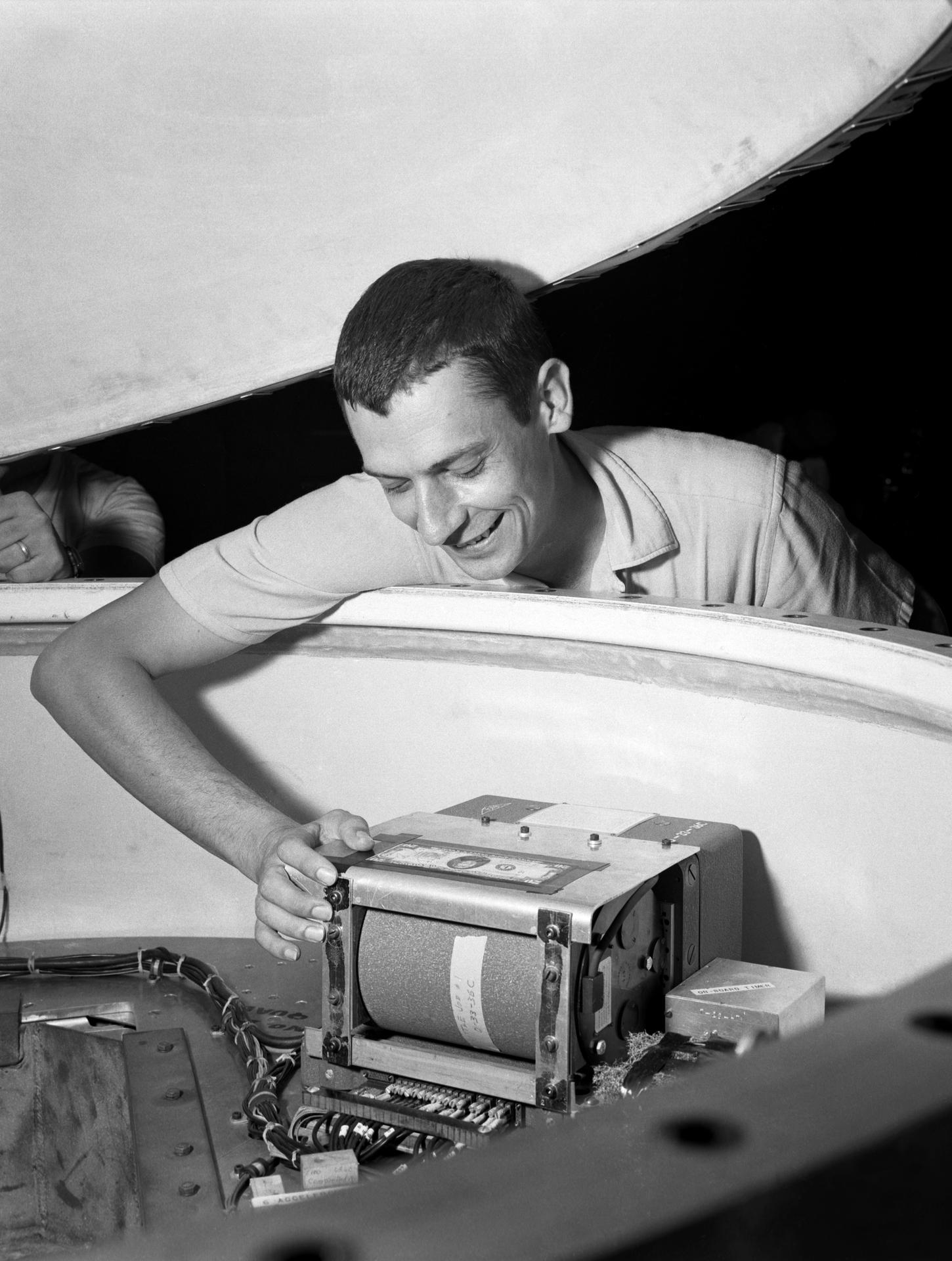
The system under test was the escape tower: a lattice structure above the capsule's nose holding a Grand Central solid-fuel motor. Its job was to ignite in fractions of a second, drag the capsule up and to one side, and leave it in a condition to deploy its parachutes. Once the danger had passed, a separate small pyrotechnic rocket was to jettison the tower so it would not obstruct the descent.
Beach abort tests had already been carried out before LJ-1, with the capsule fired from the ground by its own tower. On 28 July 1959 the second of those tests flew a boilerplate instrumented to measure sound pressure level and vibration, precisely in order to characterise the acoustic and vibration environment the capsule experienced during the firing of the Grand Central abort rocket. Little Joe was the next step: taking that same test to real speed and altitude.
Wallops Island, 21 August 1959
The day was running to plan. Thirty-five minutes before launch time the evacuation of the area was proceeding on schedule and the batteries for the programmer and the destruct system in the test booster were being charged. Four minutes later — half an hour before the scheduled launch — an explosive flash occurred.
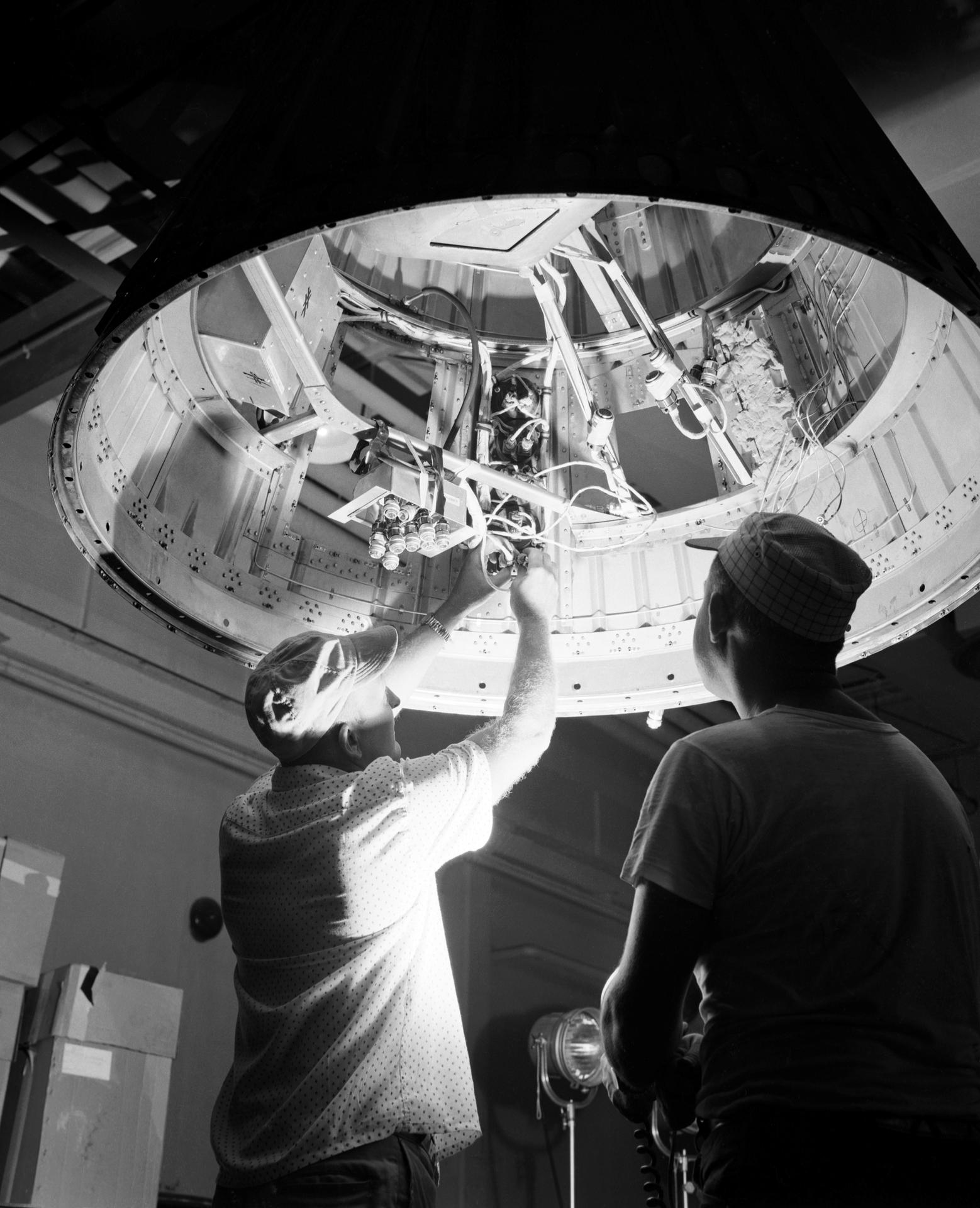
When the smoke cleared, the scene told the story by itself: only the capsule-and-tower combination had been launched, on a trajectory much like an off-the-pad abort. The booster and the adapter clamp ring were still intact on the launcher, without a single motor having fired. The stack rose to about 610 metres. Near apogee the ring holding the tower to the capsule released and the small pyrotechnic tower-jettison rocket fired. The complete flight lasted twenty seconds.
There was no recovery. Neither the tower jettison motor nor the parachute recovery charge completed its function on the power available, so capsule and tower ended their brief trajectory unbraked. The intended test — an abort at maximum dynamic pressure — was never carried out at all: the vehicle that was to take the capsule to those conditions stayed on the ground.
The report of 18 September 1959
The accident report was issued less than a month later. Its conclusion was that the Grand Central escape rocket had fired prematurely because of an electrical leak: what missile engineers called transients, or ghost voltages, in a relay circuit. The fault was traced to a coil intended, paradoxically, to protect biological specimens from too rapid an abort.
The analysis laid out the whole chain. The rapid-abort system was wired directly into the destruct arming busbar. The batteries had arrived from England uncharged and shorted, as their shipment required, and were being charged on the pad; on reaching a certain state of charge they actuated the sequencer of the abort system. The sequencer did what it was designed to do: it sensed insufficient altitude and fired the squibs in the abort motor. Afterwards, that same insufficient power prevented the tower jettison motor and the parachute recovery charge from being initiated.
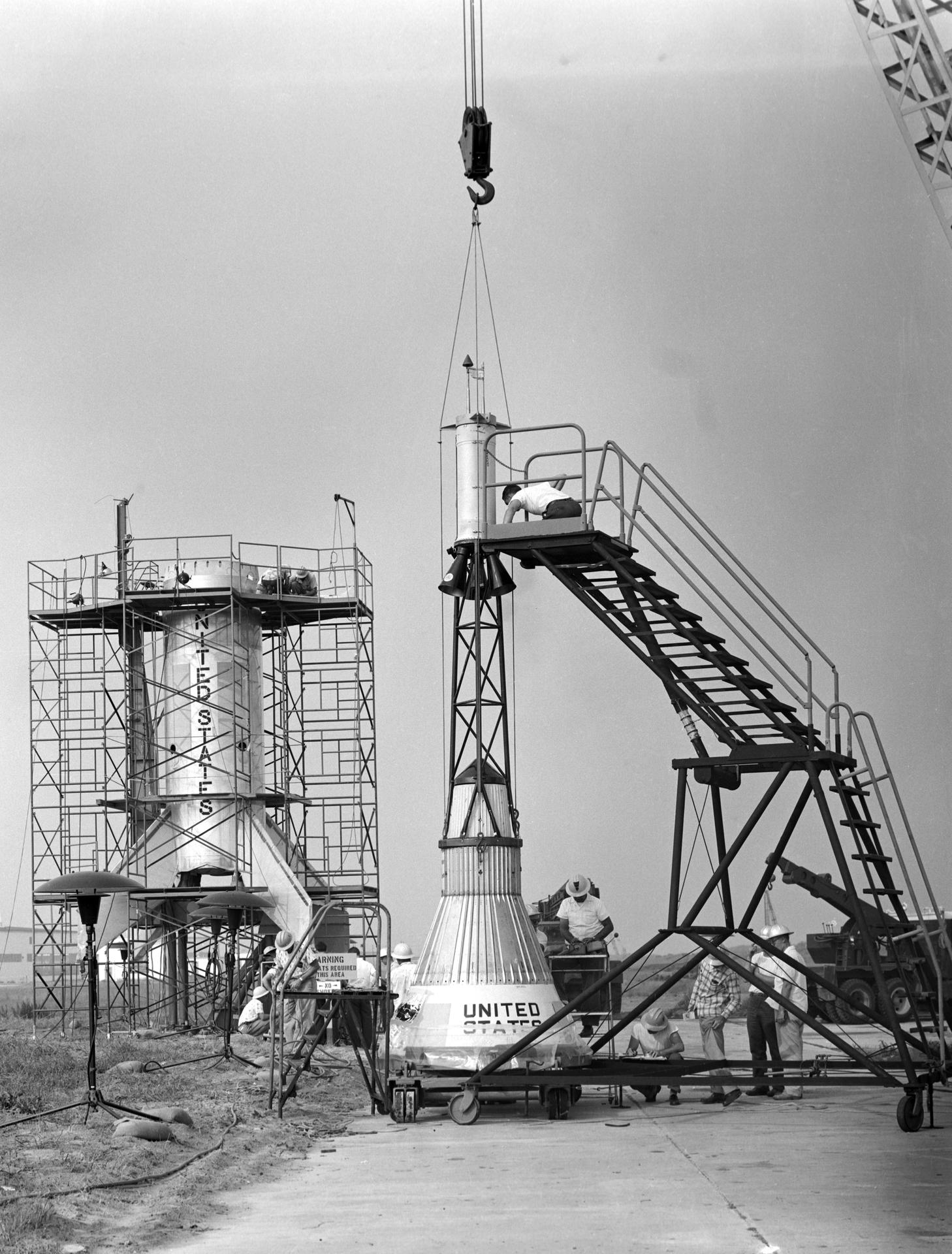
Seen this way, the failure was not that of an isolated component but of the way three systems that should have been kept apart had been linked: ground battery charging, arming of the destruct system, and the automatic abort logic. None of the three was broken; the problem was that they shared an electrical path.
What changed in the flights that followed
The programme's response was not to stop but to reorder the test sequence. On 4 October 1959 LJ-6 was successfully launched from Wallops Island with a boilerplate capsule and deliberately basic objectives: to check the integrity of the launch vehicle airframe and motor system, to check the operation of the launcher, to check the validity of the calculated wind corrections, to obtain performance and drag data, and to check the operation of the destruct system. In other words, before trusting the abort electronics again, the programme first re-established trust in the rocket.
On 4 November 1959 came LJ-1A, described explicitly in the programme chronology as a repeat of the flight that had been planned for 21 August. In it a pressure sensing system was to supply a signal when the intended abort dynamic pressure was reached. The test flew, but the dynamic buildup in the abort manoeuvre proved too low, so the objective was again left short of fully met.
On 21 January 1960 LJ-1B was launched with a rhesus monkey aboard, "Miss Sam", with the same test objectives as LJ-1 and LJ-1A and with a physiological study of the primate focused on the effects of the rapid onset of the manoeuvre. On that mission all sequences operated as planned and all test objectives were successfully fulfilled; thirty minutes from launch time a Marine recovery helicopter deposited the spacecraft and its occupant at Wallops Station, the monkey in good condition. What LJ-1 had failed to demonstrate had finally been demonstrated.
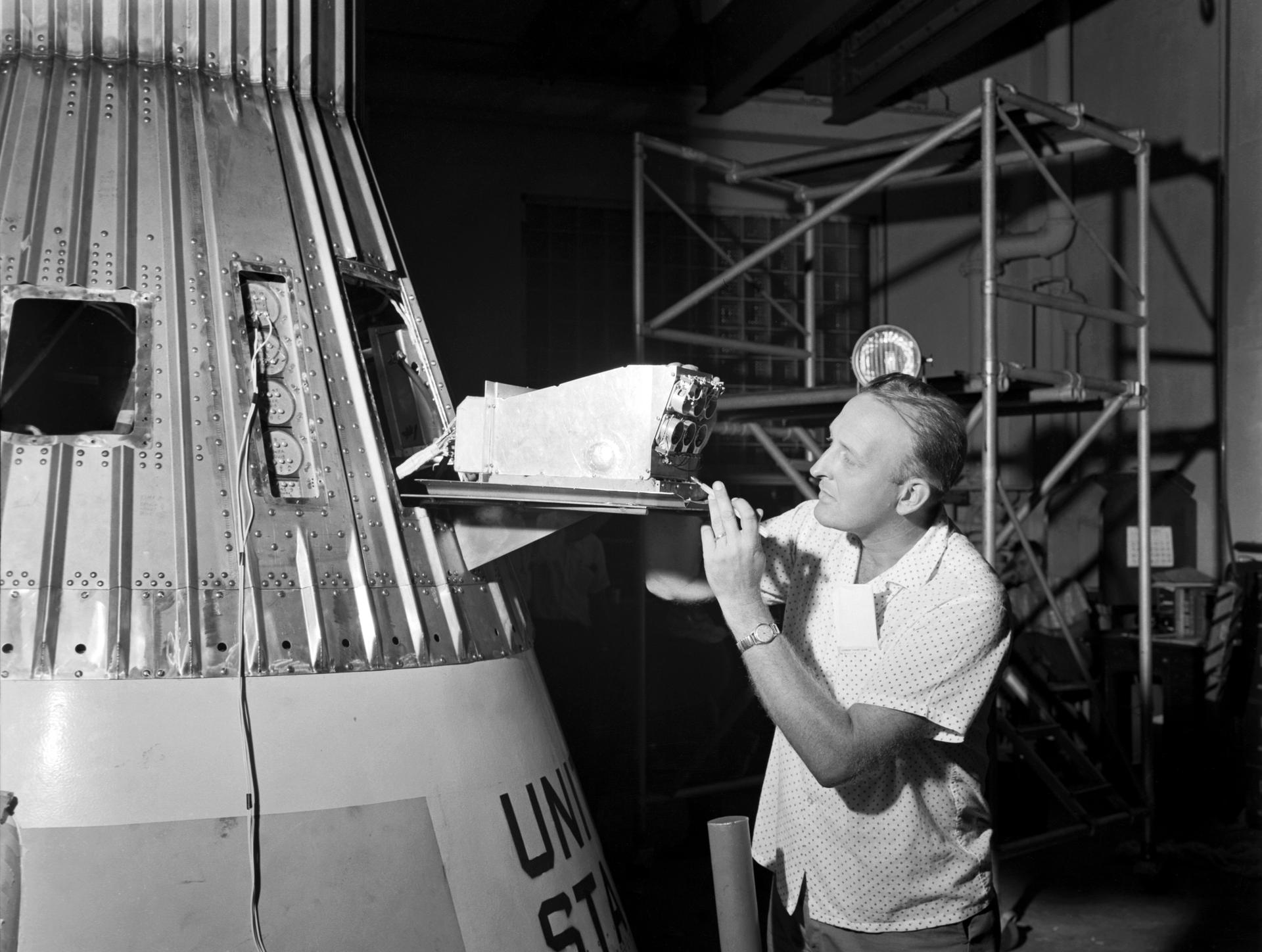
The story did not end there, however. On 8 November 1960 LJ-5 — the first of the series to fly a McDonnell production Mercury spacecraft — launched normally until the escape rocket motor ignited prematurely during the climb; the spacecraft did not detach from the launch vehicle until impact and was destroyed. On 18 March 1961 LJ-5A repeated an uncomfortably familiar scene: a normal lift-off followed seconds later by premature firing of the escape tower. It took LJ-5B, launched on 28 April 1961, to close the chapter on the maximum-dynamic-pressure escape test, and even then one of the launch vehicle's motors ignited late, pitching the vehicle onto a lower trajectory so that the abort manoeuvre met greater dynamic pressures than the flight test plan had specified.
The value of a cheap failure
LJ-1 usually appears in Mercury summaries as a footnote: a rocket that never lit and an uncrewed capsule lost in twenty seconds. Read more carefully, it is the opposite of an anecdote. It was the first serious warning that the system designed to save the astronaut's life could arm and fire on its own, on the ground, with personnel still working in the area, and that the cause would lie not in a motor or a structure but in a shared cable and a battery on charge.
That is precisely the kind of knowledge a crewed programme has to buy before putting anyone inside, and the kind that can only be obtained by actually flying. Little Joe's deliberately cheap design made it payable without consequences: what was lost was a structural mock-up and an escape tower, not a production spacecraft and certainly not a life. The lesson was charged in dollars and in schedule, which was exactly the trade Little Joe existed to make.
It is worth being clear about what LJ-1 was not. It was not a failure of the escape tower concept — the tower in fact worked: it tore the capsule away and flew it, only at the wrong moment — nor a failure of the Little Joe rocket, which never even took part. It was a failure of electrical integration and of ground procedure, the class of problem that never shows up in component testing and only appears once every system is assembled, connected and armed at the same time.
Images