Did you know…
How many Spanish D.H.9s remained in 1936?
Short answer
Twenty-five: that was the number of DH.9s still in service when the Civil War broke out, used mainly for conversion training. Hispano-Suiza had built more than 500 examples under licence in Guadalajara since 1925. The South African Air Force, for its part, received 48.

A Spanish licence
Hispano-Suiza built more than 500 DH.9s under licence in Guadalajara from 1925. Hundreds of aircraft of the type carried the 220 kW (300 hp) Hispano-Suiza engine, and some remained in service as late as 1940.
Twenty-five when war broke out
At the start of the Civil War, 25 aircraft remained in service, used mainly for conversion training.
Other operators of the type
The South African Air Force received a total of 48 DH.9s and used them intensively, including against the 1922 Rand Revolt. The DH.9A version, colloquially known as the "Ninak" — from the phonetic-alphabet rendering of the designation "nine-A" — served in large numbers with the RAF after the end of the war, both in the United Kingdom and overseas, where it was used for colonial policing duties in the Middle East until its final withdrawal in 1931. It entered service in July 1918 with No. 110 Squadron RAF. Between 1920 and 1931, 24 squadrons were equipped with the type, at home and abroad. Five DH.9A squadrons served in the Middle East.
More questions
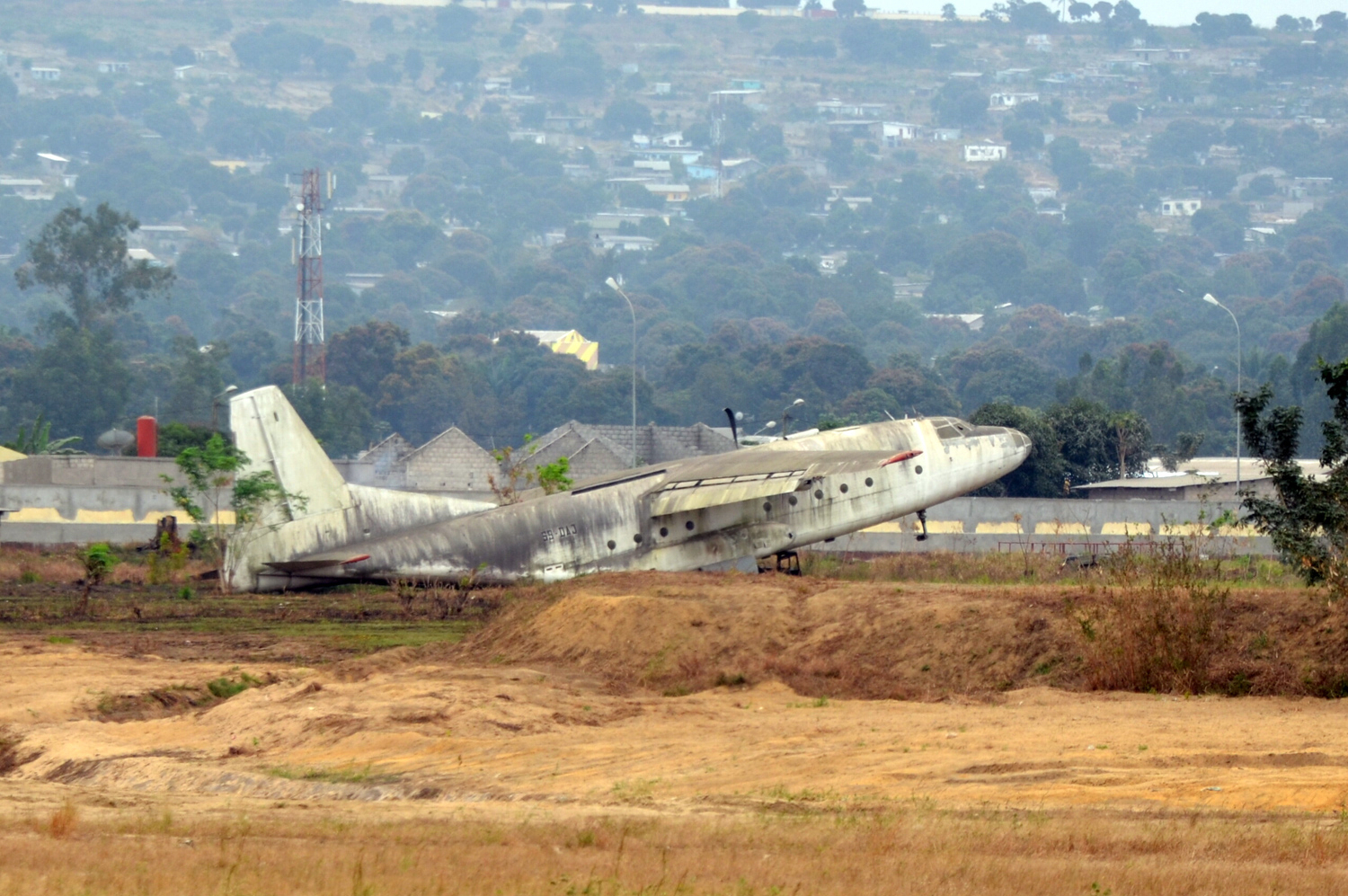
Vitaly Druchenok (CC BY SA), vía commons Aviation history
What "typically Russian" features did the An-8 have?
The An-8 was a Soviet light military transport with a high wing and two turboprops, featuring a glazed nose for the navigator, a chin radome for navigation… more…

RB7MRV (CC BY SA), vía commons Aviation history
Why is the E-25 called "Mirlo"?
Mirlo is the official nickname of the C-101 in Spain. The air force designated it the E.25 Mirlo, "Blackbird" in English, while CASA identified it as the… more…
RB7MRV (CC BY SA), vía commons Aviation history
What did CASA do with the C-101's first flight for safety?
CASA kept it deliberately simple: on 27 June 1977 the P1 only had to check the controls' response, and for extra safety its landing gear was not even… more…
RB7MRV (CC BY SA), vía commons Aviation history
What requirement made the C-101 fly inverted?
Among its requirements, the Aviojet had to be able to remain in inverted flight for 20 s and land at 100 knots (185 km/h). It also had to withstand load… more…

Aviation history
What was the An-2 called before it became an Antonov?
SKh-1. The letters stood for Sel'sko Khozyaystvennyi — pervoy, "agricultural, the first," and corresponded to the first design from Antonov's bureau, later… more…
Aviation history
At what altitude did the weather-research An-4 biplane fly?
Up to 10,000 m: the An-4 — the design-bureau designation for the meteorological An-2ZA, intended for high-altitude weather research — could maintain power up… more…


