Did you know…
Why is the moon red tonight?
Short answer
Almost always it's our atmosphere, not the Moon itself: when it's low on the horizon, its light crosses much more air, which scatters away the blue and lets red and yellow through; dust and smoke make the tint stronger. The other possible cause is a total lunar eclipse, which only happens at full moon and is predictable in advance.

Most likely cause: the Moon is low on the horizon
When the Moon is rising or setting, its light travels through much more air before reaching your eyes. The atmosphere scatters blue light more efficiently because it travels in shorter waves — the same reason the daytime sky is blue; the more air a ray crosses, the more blue gets scattered away along the path, leaving the rest looking redder. The same thing happens to the Sun at sunset, when its light has to cross more atmosphere to reach us. Airborne dust, wildfire smoke, and pollution strengthen the effect, since those particles also scatter blue light: during haze or after a large fire, the Moon can look orange even fairly high in the sky.
The other cause: a total eclipse
The second possibility is a total lunar eclipse, and it's easy to rule in or out, since it can only happen at full moon and is known years in advance. During a total eclipse the Moon enters Earth's shadow, and the only light reaching its surface is light that has grazed the edge of our atmosphere; air molecules scatter away most of the blue, and the remaining light reflects off the lunar surface with a red glow. At least two partial lunar eclipses happen every year, but total ones are rare.
How to tell the two apart
The practical test is altitude and duration. Atmospheric reddening affects the whole disk equally and fades as the Moon climbs higher above the horizon. An eclipse, by contrast, advances like a bite of shadow moving across the disk over several hours and keeps the coppery tone even when the Moon is high. And if the Moon isn't full, an eclipse isn't possible at all — what you're seeing is atmosphere.
More questions
Moon and Mars
How does neil armstrong look like?
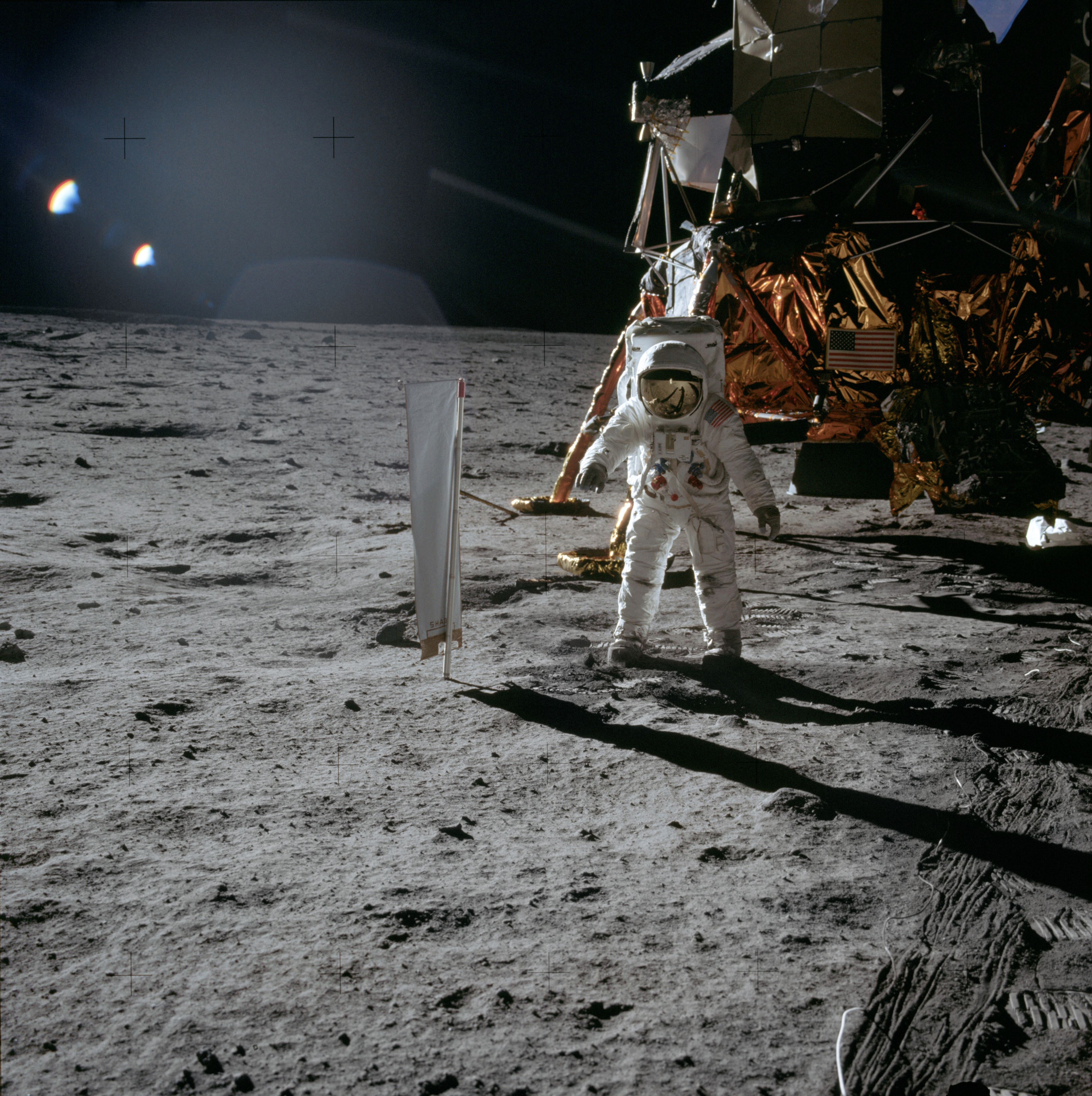
The face most people picture is not his: the gold-visored astronaut in the famous Apollo 11 photograph is Buzz Aldrin, shot by Armstrong. Armstrong himself is… more…

Richard Dorrell (CC BY SA), vía commons Moon and Mars
How does the moon affect the tides?
By pulling unevenly on it. Tidal forces vary inversely as the cube of the distance, so the near side of the Earth is tugged harder than the far side: one… more…
Moon and Mars
Why does neil armstrong have a hollywood star?
Strictly he does not have a star. Armstrong, Aldrin and Collins share four circular monuments resembling the Moon, one at each corner of Hollywood and Vine… more…
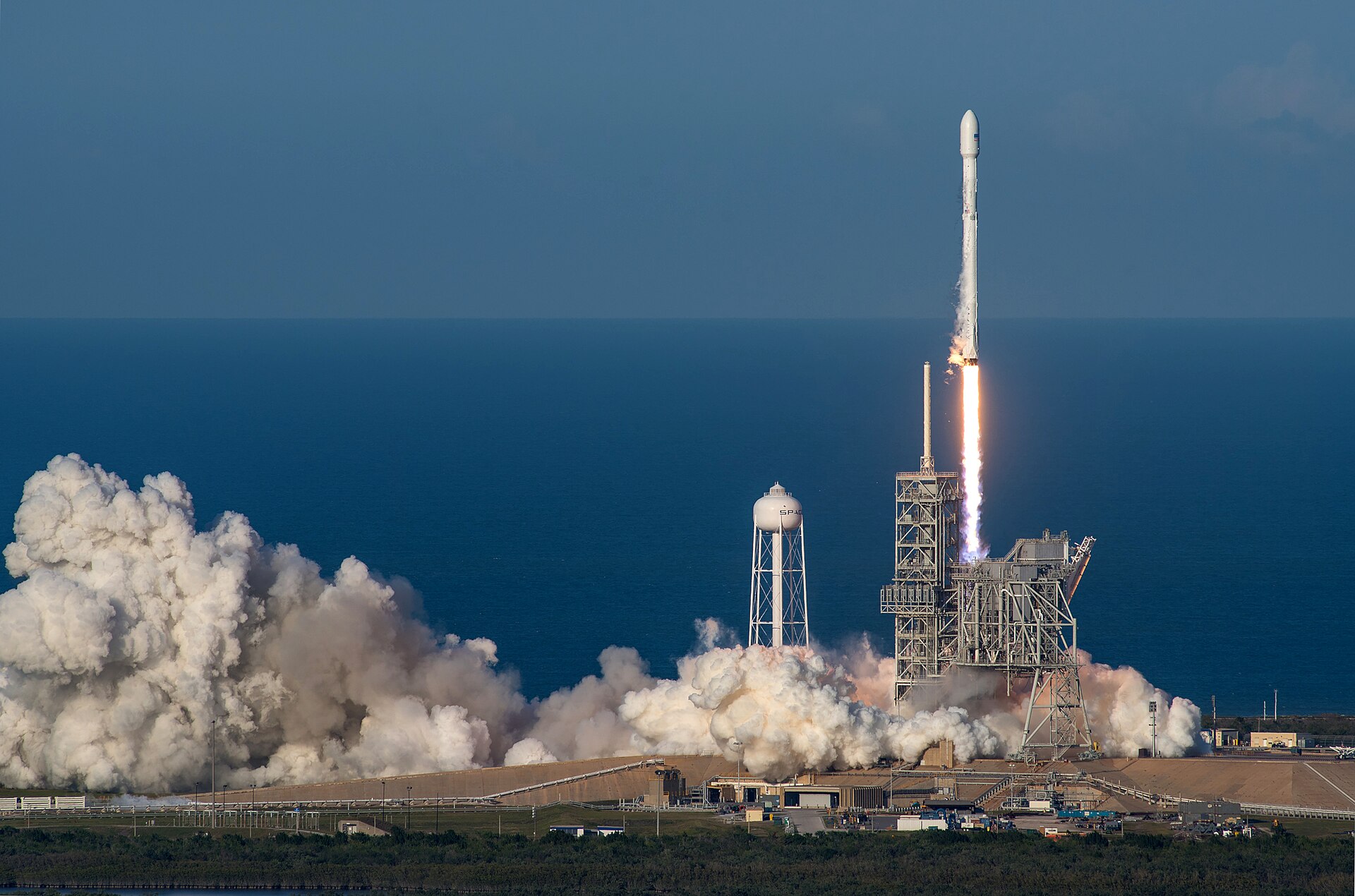
Foto: SpaceX (CC0) Moon and Mars
Why did falcon 9 hit the moon?
Because a spent upper stage on a lunar trajectory has no mission and no way to steer. A Falcon 9 upper stage from the January 2025 Firefly Blue Ghost 1 launch… more…
Moon and Mars
How much apollo 11 cost?
NASA never published a price for Apollo 11 on its own; what is documented is the program. The United States spent $25.8 billion on Project Apollo between 1960… more…
Moon and Mars
How much time neil armstrong spent on moon?
Armstrong and Aldrin spent 21 hours, 36 minutes on the Moon's surface, almost all of it inside the lunar module Eagle. Armstrong stepped onto the surface… more…

