Did you know…
Why doesn't Mars have a magnetic field?
Short answer
Because its core's dynamo shut down billions of years ago. Mars has no global magnetic field today, but parts of the southern hemisphere's crust are strongly magnetized, a trace of a field from 4 billion years ago. Today the solar wind strips away about 100 grams of gas per second.
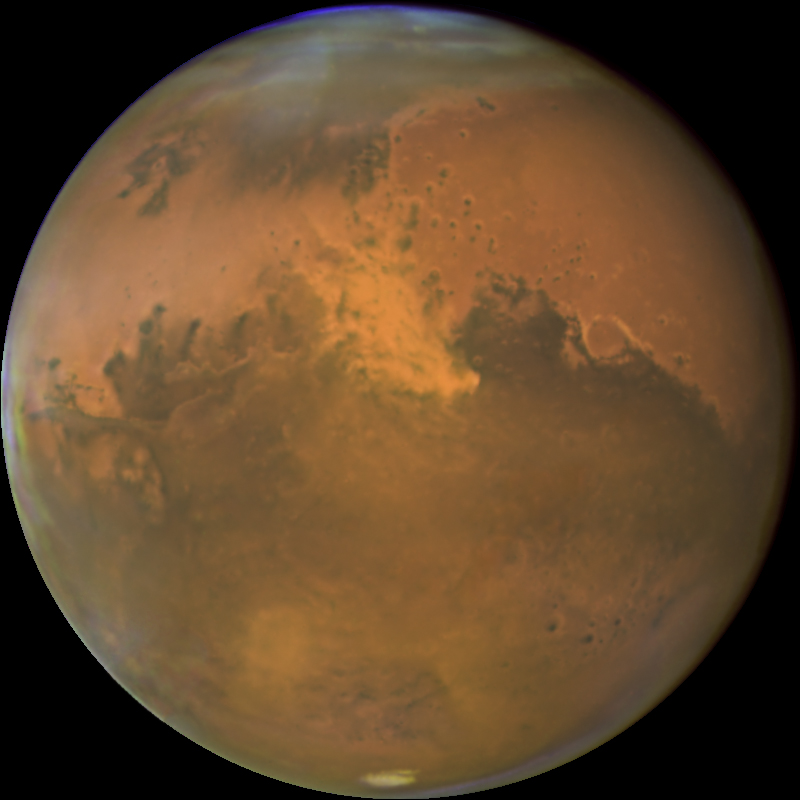
A dynamo that stopped
A planet's global magnetic field doesn't come from a buried magnet, but from an engine: molten metal moving within the core, which as it circulates generates electric currents and, with them, a field. Mars has a dense core of iron, nickel and sulphur, with an estimated radius between 1,500 and 2,100 kilometres, but that engine stopped working. A small planet loses its internal heat before a large one does, and without that heat the convection that kept the dynamo running ceases.
The imprint in the rocks
That the field once existed is not a guess. NASA notes that, although Mars has no global magnetic field today, there are strongly magnetized regions of the crust in the southern hemisphere, carrying traces of a field from 4 billion years ago. These are rocks that cooled while the dynamo was still active and were fixed in place as witnesses: a magnetic memory scattered in patches, rather than a field wrapping the whole planet.
An atmosphere left exposed
The consequence can be measured. Observations from the MAVEN mission indicate that the solar wind strips gas from the Martian atmosphere at a rate of about 100 grams per second, and that this erosion increases markedly during solar storms. The mechanism is electrical: the magnetic field carried by the solar wind, as it passes by Mars, generates an electric field that accelerates ions in the upper atmosphere and expels them into space. Repeated over geological ages, that drip is enough to turn a once mild, wet climate into the cold desert with thin air that we see today.
More questions
Moon and Mars
How does neil armstrong look like?
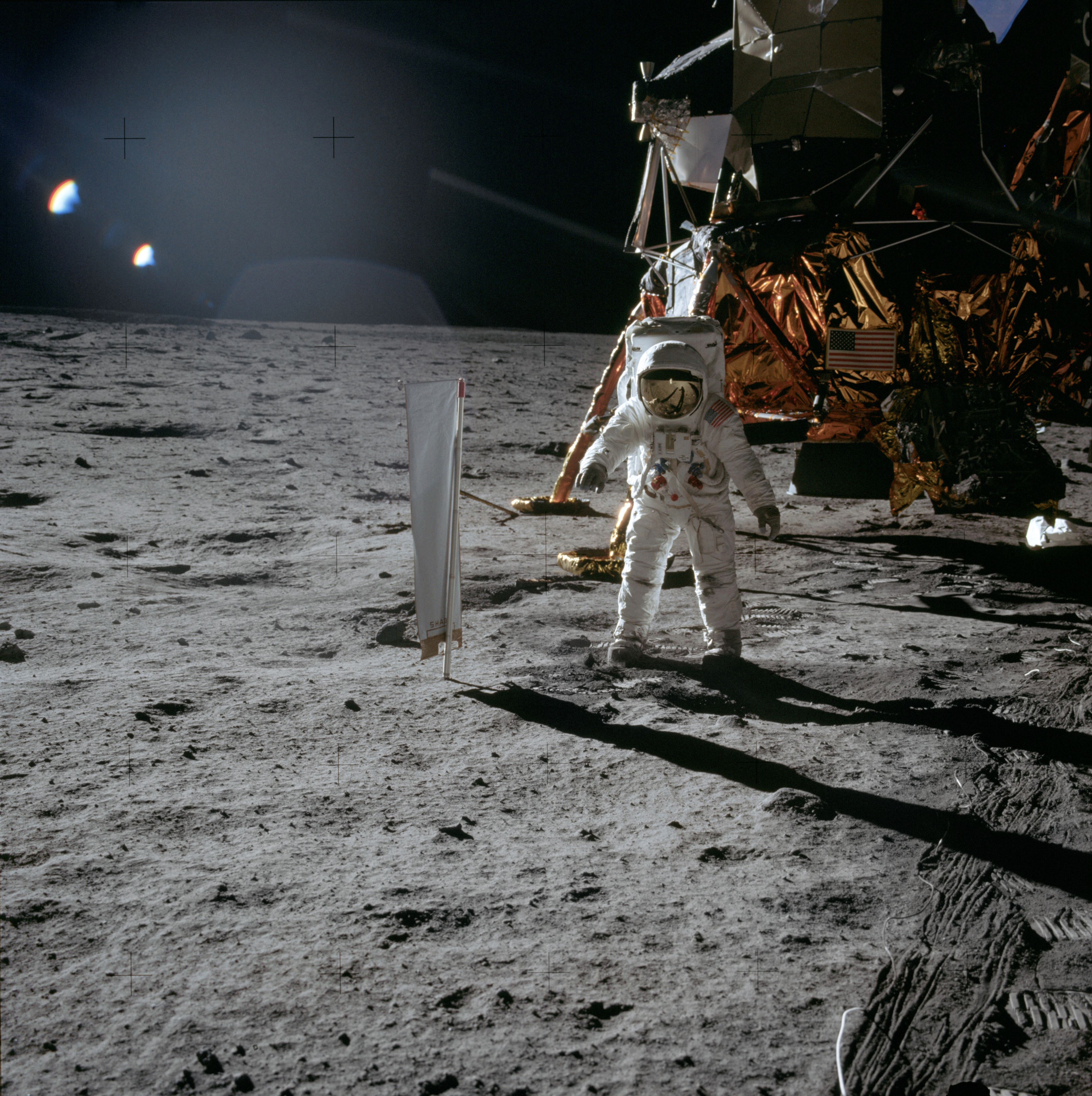
The face most people picture is not his: the gold-visored astronaut in the famous Apollo 11 photograph is Buzz Aldrin, shot by Armstrong. Armstrong himself is… more…

Richard Dorrell (CC BY SA), vía commons Moon and Mars
How does the moon affect the tides?
By pulling unevenly on it. Tidal forces vary inversely as the cube of the distance, so the near side of the Earth is tugged harder than the far side: one… more…
Moon and Mars
Why does neil armstrong have a hollywood star?
Strictly he does not have a star. Armstrong, Aldrin and Collins share four circular monuments resembling the Moon, one at each corner of Hollywood and Vine… more…

Foto: SpaceX (CC0) Moon and Mars
Why did falcon 9 hit the moon?
Because a spent upper stage on a lunar trajectory has no mission and no way to steer. A Falcon 9 upper stage from the January 2025 Firefly Blue Ghost 1 launch… more…
Moon and Mars
How much apollo 11 cost?
NASA never published a price for Apollo 11 on its own; what is documented is the program. The United States spent $25.8 billion on Project Apollo between 1960… more…
Moon and Mars
How much time neil armstrong spent on moon?
Armstrong and Aldrin spent 21 hours, 36 minutes on the Moon's surface, almost all of it inside the lunar module Eagle. Armstrong stepped onto the surface… more…

