Did you know…
Why does the Moon turn red?
Short answer
The Moon turns red when it enters Earth's shadow. During a total lunar eclipse, the only light reaching its surface has passed through the edge of our atmosphere: air molecules scatter blue light, leaving the rest reddened. NASA describes it as every sunrise and sunset on Earth projected onto the Moon at once.

What happens during a total eclipse
The reddish color isn't a property of the Moon itself, but of Earth's atmosphere. When the Sun, Earth, and Moon align, our planet casts a shadow that the Moon can enter; if the disk falls completely within the darkest part of that shadow, the eclipse is total. The Moon doesn't disappear: it stops receiving direct sunlight, but remains lit by light grazing the edge of the atmosphere. During the eclipse of March 14, 2025, totality lasted from 2:26 to 3:31 EDT, with the Moon tinted a coppery red.
Why red and not black
The atmosphere doesn't filter all colors equally: blue light scatters more because it travels in shorter waves, while red light passes through the air more directly. Dust, pollution, and other aerosols also scatter blue light, so the exact shade of each eclipse depends on the condition of the air that light has crossed. Hence the image NASA uses: it's as if every sunrise and sunset on the planet were projected at once onto the lunar surface.
How often it happens
Lunar eclipses are only possible at full moon, and the alignment doesn't occur every month: there are two eclipse seasons a year, each about 35 days long. At least two partial lunar eclipses occur every year, while total ones are rare. No equipment is needed to see them, though binoculars or a telescope improve the view. And if the Moon looks reddish with no eclipse happening, the cause is different: it's usually low on the horizon, and its light arrives after crossing much more air.
More questions
Moon and Mars
How does neil armstrong look like?
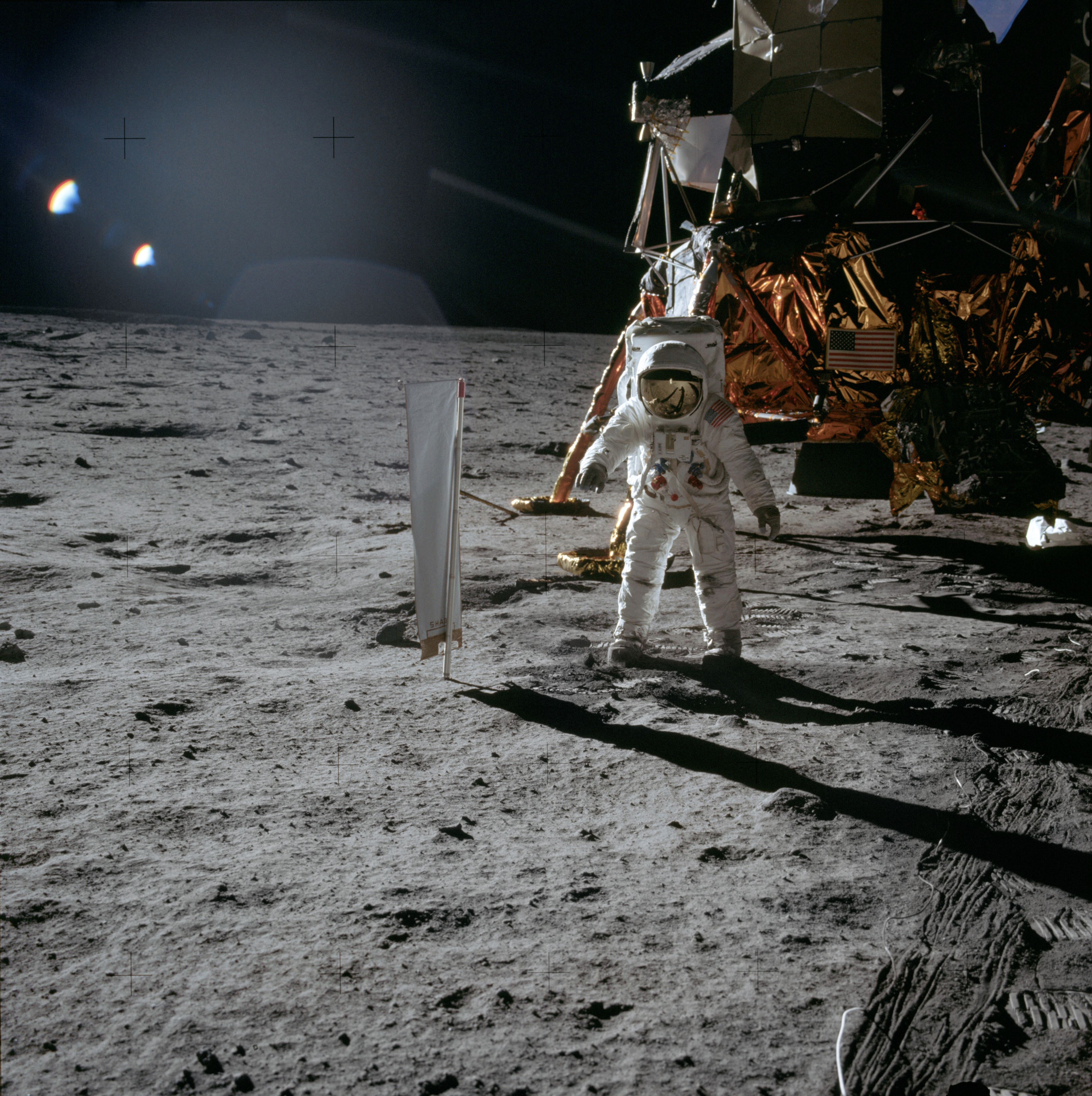
The face most people picture is not his: the gold-visored astronaut in the famous Apollo 11 photograph is Buzz Aldrin, shot by Armstrong. Armstrong himself is… more…

Richard Dorrell (CC BY SA), vía commons Moon and Mars
How does the moon affect the tides?
By pulling unevenly on it. Tidal forces vary inversely as the cube of the distance, so the near side of the Earth is tugged harder than the far side: one… more…
Moon and Mars
Why does neil armstrong have a hollywood star?
Strictly he does not have a star. Armstrong, Aldrin and Collins share four circular monuments resembling the Moon, one at each corner of Hollywood and Vine… more…
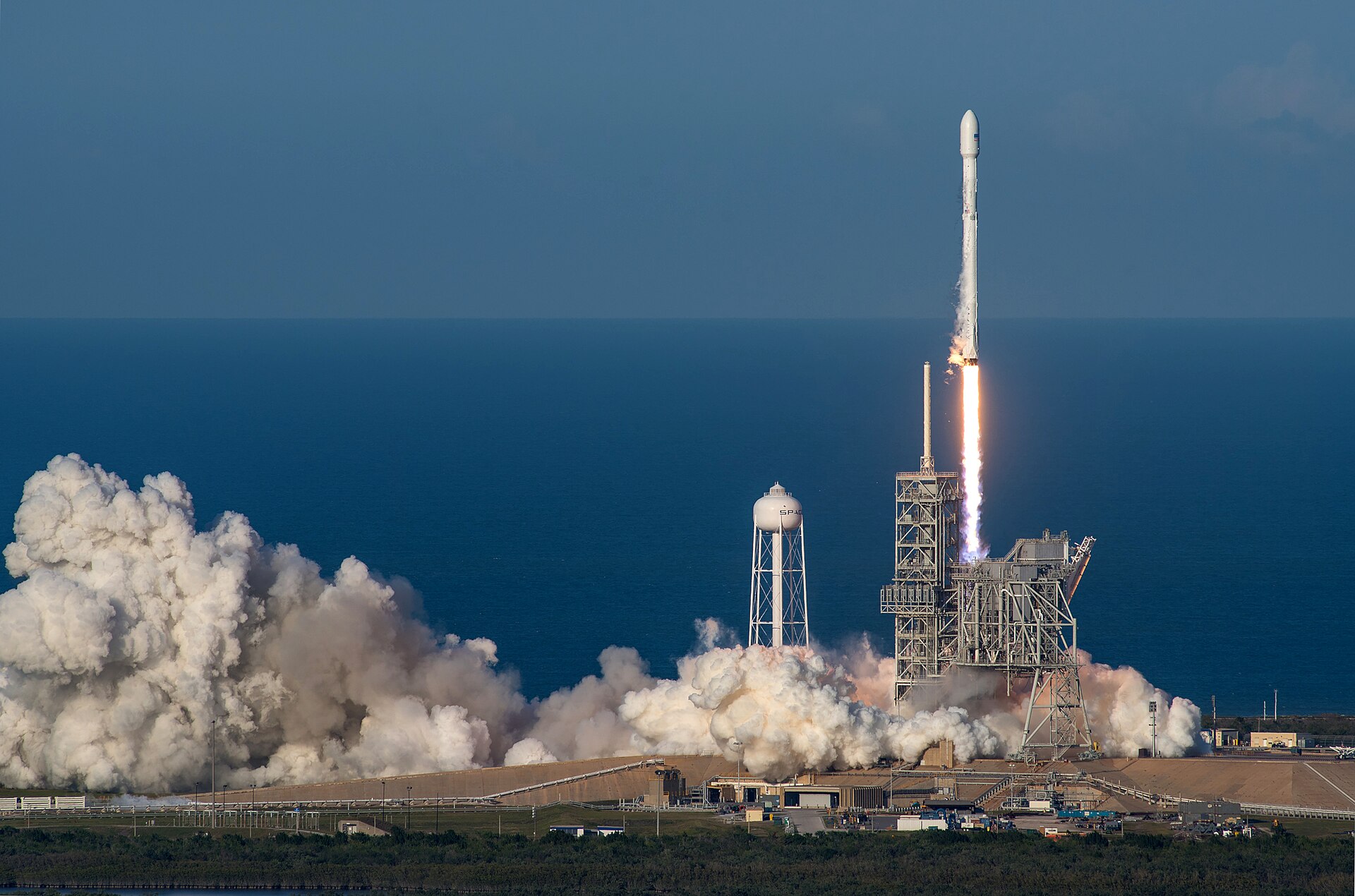
Foto: SpaceX (CC0) Moon and Mars
Why did falcon 9 hit the moon?
Because a spent upper stage on a lunar trajectory has no mission and no way to steer. A Falcon 9 upper stage from the January 2025 Firefly Blue Ghost 1 launch… more…
Moon and Mars
How much apollo 11 cost?
NASA never published a price for Apollo 11 on its own; what is documented is the program. The United States spent $25.8 billion on Project Apollo between 1960… more…
Moon and Mars
How much time neil armstrong spent on moon?
Armstrong and Aldrin spent 21 hours, 36 minutes on the Moon's surface, almost all of it inside the lunar module Eagle. Armstrong stepped onto the surface… more…

