Did you know…
Why did Italians call the F-104 the "spillone"?
Short answer
Spillone means hatpin in Italian, and that is what Italian pilots called their F-104, a nickname that shaped, for better or worse, daily life in the Aeronautica Militare. A harsher one circulated in the press: bara volante, flying coffin, a translation of the German nickname Fliegender Sarg.

Spillone and flying coffin
Italian pilots loved their Spillone, "hatpin" in Italian. With that name, the fighter marked, for better or worse, the daily life of the Aeronautica Militare. The pilots themselves also used a second nickname, bara volante, "flying coffin." That second name emerged from a debate often heated in the media about the aircraft's reliability, and was a translation of the German nickname Fliegender Sarg.
An Italian Starfighter
Italy chose the F-104S over other competing fighters in the mid-1960s and operated it longer than any other country. Aeritalia built 246 examples of the F-104S variants, of which 205 were delivered to Italy and 40 to Turkey, with deliveries continuing until 1979. The F-104S was the definitive Starfighter. Italy was the country that, more than any other, tied its fate to this interceptor.
Ten wings and nearly a million hours
The Aeronautica Militare used seven different versions of the F-104, which equipped ten wings and fifteen squadrons and accumulated just under a million flight hours. The last operational mission took place on October 31, 2004. Major Aurelio Covotta and Lieutenant Rolando Pellegrini flew the last training scramble.
More questions
Aviation history
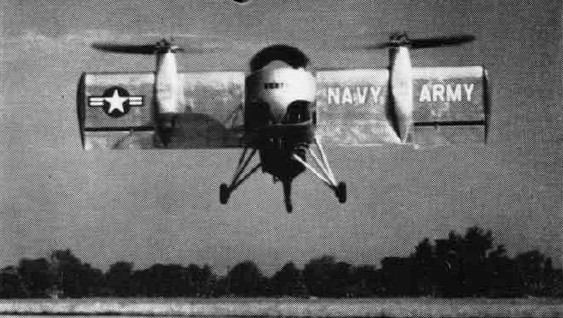
What was special about the Vertol 76?
Vertol's VZ-2 tested the tiltwing concept for vertical take-off and landing. After ground trials beginning in April 1957, it first took off on 13 August only… more…

Aviation history
Which was the most-produced American fighter of the Second World War?
The Republic P-47 Thunderbolt, of which 15,636 or 15,683 units were built, depending on the source. It was also one of the heaviest fighters of the conflict… more…

Aviation history
Who flew the E-66 at 2,149 km/h?
Konstantin or Vladimir Kokkinaki, depending on the source. Konstantin is credited with the absolute record on a closed 100 km circuit, at 2,148.66 km/h, set… more…

Fly-by-Owen (CC BY SA), vía commons Aviation history
How many I-11Bs were built?
Between 208 and around 450, depending on the source: one of the AISA I-11 reference sheets gives 208 examples built, while All-Aero speaks of around 400 built… more…

Aviation history
How many HH-53s could be converted to Pave Low III?
Eight HH-53C aircraft received an improved systems package and were redesignated HH-53H Pave Low III. The other figure in circulation, nine MH-53H and 32… more…

SCDBob (CC BY SA), vía commons Aviation history
What did the A129 Mangusta's armor protect?
The fuselage: the A129's airframe is armored and, according to All-Aero, designed to protect against 12.7 mm rounds, with partial protection against 23 mm… more…


