Did you know…
Where did Apollo 11 land on the Moon?
Short answer
Apollo 11 landed in the Sea of Tranquility, a basaltic plain on the near side, at 0.67416° N latitude and 23.47314° E longitude. The Eagle lunar module touched down there on July 20, 1969, at 20:17:40 UTC, and the crew named the site Tranquility Base. Armstrong stepped down at 02:56:15 UTC on July 21.

A sea that isn't a sea
The place is called Mare Tranquillitatis, the Sea of Tranquility: there's no water there, but a plain of basaltic lava solidified billions of years ago, on the near side of the Moon and very close to the lunar equator. That plain is one of the dark patches visible to the naked eye from Earth. The Eagle lunar module touched down there on July 20, 1969, at 20:17:40 UTC, at the coordinates 0.67416° north latitude and 23.47314° east longitude. The crew named the site Tranquility Base, and Armstrong climbed down the ladder at 02:56:15 UTC on July 21.
Why that spot exactly
The choice was engineering before science. For the first attempt, mission planners wanted the most boring terrain possible: an equatorial zone, which simplifies the orbital mechanics of rendezvous with the command module; with the Sun low on the horizon, so shadows would reveal the relief during descent; flat, free of large craters or slopes, and well photographed by precursor probes. Apollo 11 also carried very little margin: the goal was to land and return, so anything that added risk to the terrain was ruled out. The geologically more appealing sites, with mountains and valleys, came in later missions.
What was left at the site
From the visit, the Eagle's descent stage remains, along with footprints, deployed instruments, and a plaque. Of what came back to Earth, the important part is the 21.55 kg of rock and soil collected during the 21 hours and 36 minutes the crew spent on the surface: basalts from a lunar sea, the first terrain from another world that could be dated in a laboratory. Current reconnaissance probes have photographed the site with enough resolution to still make out the module and the trail of footsteps.
More questions
Moon and Mars
How does neil armstrong look like?
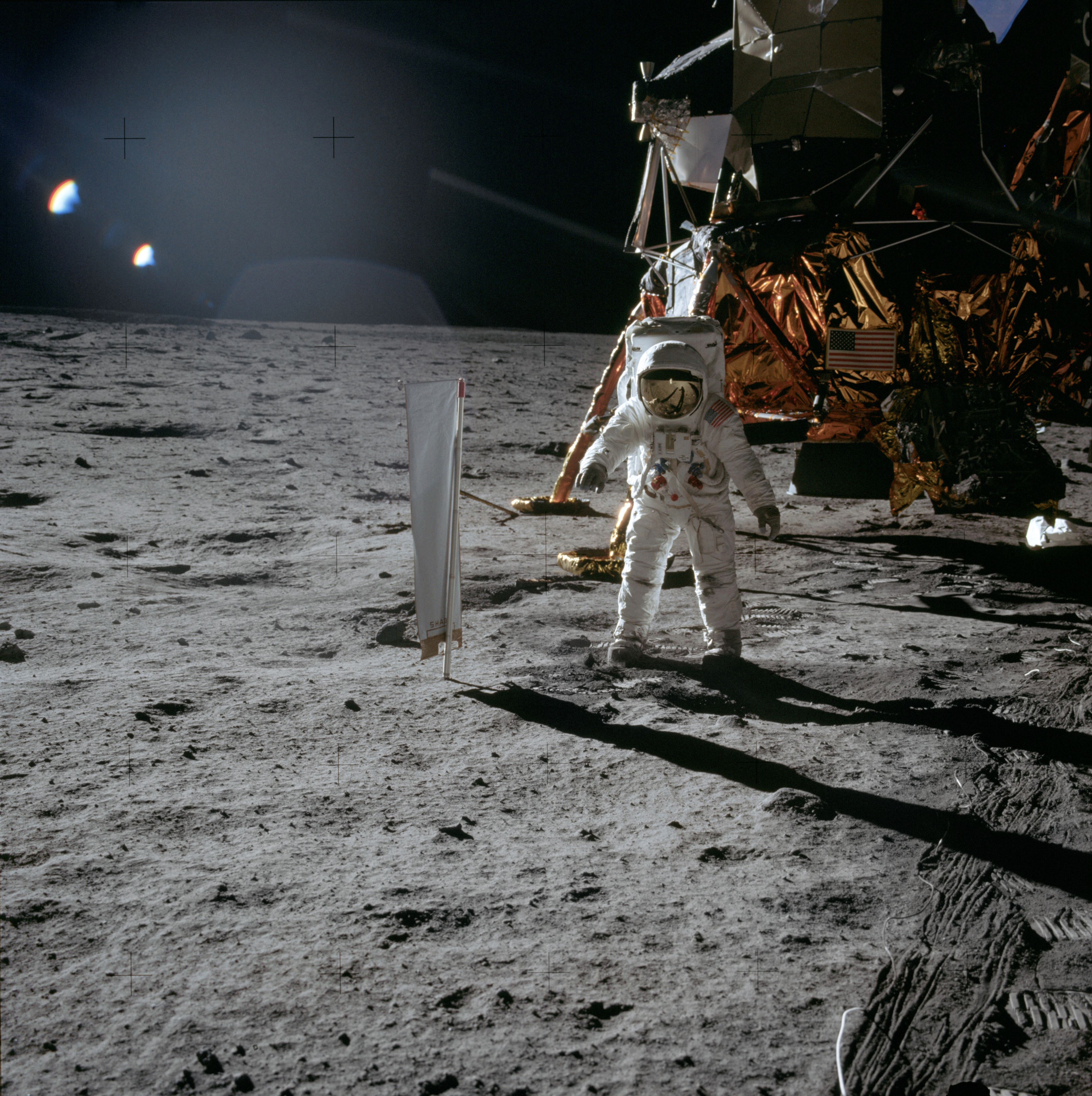
The face most people picture is not his: the gold-visored astronaut in the famous Apollo 11 photograph is Buzz Aldrin, shot by Armstrong. Armstrong himself is… more…

Richard Dorrell (CC BY SA), vía commons Moon and Mars
How does the moon affect the tides?
By pulling unevenly on it. Tidal forces vary inversely as the cube of the distance, so the near side of the Earth is tugged harder than the far side: one… more…
Moon and Mars
Why does neil armstrong have a hollywood star?
Strictly he does not have a star. Armstrong, Aldrin and Collins share four circular monuments resembling the Moon, one at each corner of Hollywood and Vine… more…
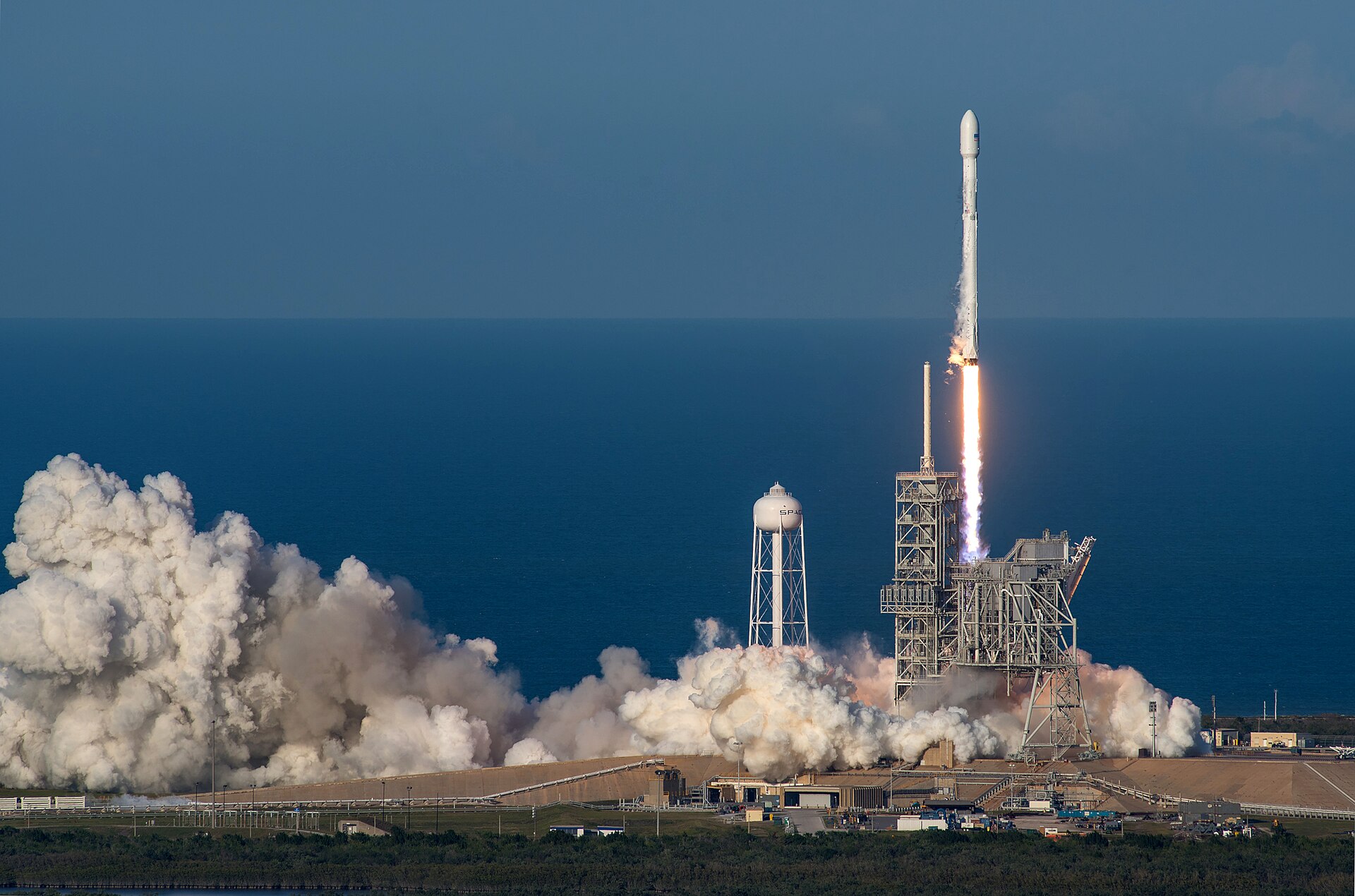
Foto: SpaceX (CC0) Moon and Mars
Why did falcon 9 hit the moon?
Because a spent upper stage on a lunar trajectory has no mission and no way to steer. A Falcon 9 upper stage from the January 2025 Firefly Blue Ghost 1 launch… more…
Moon and Mars
How much apollo 11 cost?
NASA never published a price for Apollo 11 on its own; what is documented is the program. The United States spent $25.8 billion on Project Apollo between 1960… more…
Moon and Mars
How much time neil armstrong spent on moon?
Armstrong and Aldrin spent 21 hours, 36 minutes on the Moon's surface, almost all of it inside the lunar module Eagle. Armstrong stepped onto the surface… more…
