Did you know…
When did astronauts first land on the moon?
Short answer
On 20 July 1969. The Apollo 11 lunar module Eagle touched down in the Sea of Tranquility that afternoon US time, and Neil Armstrong stepped onto the surface a few hours later, followed by Buzz Aldrin. Five more Apollo crews landed between 1969 and December 1972, the last being Apollo 17.

The date and the moment
The first crewed lunar landing took place on 20 July 1969, when Eagle, the Apollo 11 lunar module, settled onto the basaltic plain of Mare Tranquillitatis with Neil Armstrong and Buzz Aldrin aboard. Armstrong's first footstep came several hours after touchdown, once the crew had checked the lander's systems and prepared for the walk. In Coordinated Universal Time the footstep falls in the early hours of 21 July, which is why some countries remember the anniversary a day later than the United States does.
The descent was not routine. The onboard computer raised program alarms caused by an unexpected data load, and Armstrong took semi-manual control to steer past a crater strewn with boulders, landing with very little propellant left in the descent stage.
Uncrewed landings came first
Machines got there long before people. The Soviet Luna 9 achieved the first soft landing on the Moon in February 1966 and returned images from the surface, and the American Surveyor series followed later that year, proving that the regolith would bear the weight of a spacecraft. That question mattered: before Surveyor, engineers could not rule out that a lander might sink into deep dust.
Five more crews, then a long pause
Apollo 12, 14, 15, 16 and 17 repeated the feat, with the final crewed landing in December 1972. Apollo 13 suffered an oxygen tank failure on the way out and looped around the Moon without landing. In total twelve people have walked on the lunar surface, all of them within a span of three and a half years. No crew has returned since, although several national and commercial programmes are now working towards it.
More questions
- Image pending
Astronauts and life in space
Why does astronauts float in space?
Because they are in free fall, not because gravity is absent. At the International Space Station's altitude of about 400 km, Earth still pulls almost as hard… more…
- Image pending
Astronauts and life in space
Why did yuri gagarin die?
Gagarin died in an aircraft crash, not in a spacecraft. On 27 March 1968 the MiG-15UTI trainer he was flying with instructor Vladimir Seryogin went down in… more…
- Image pending
Astronauts and life in space
How much an astronaut is paid?
NASA's civilian astronauts are ordinary federal employees, paid on the General Schedule grade-and-step scale with no bonus per flight, per spacewalk or per… more…
.png)
Astronauts and life in space
Why is blue origin so slow?
Blue Origin was built on deliberate, owner-funded incrementalism: its motto is Gradatim Ferociter, step by step, and it spent its first two decades on… more…
Astronauts and life in space
When did astronauts last walk on the moon?
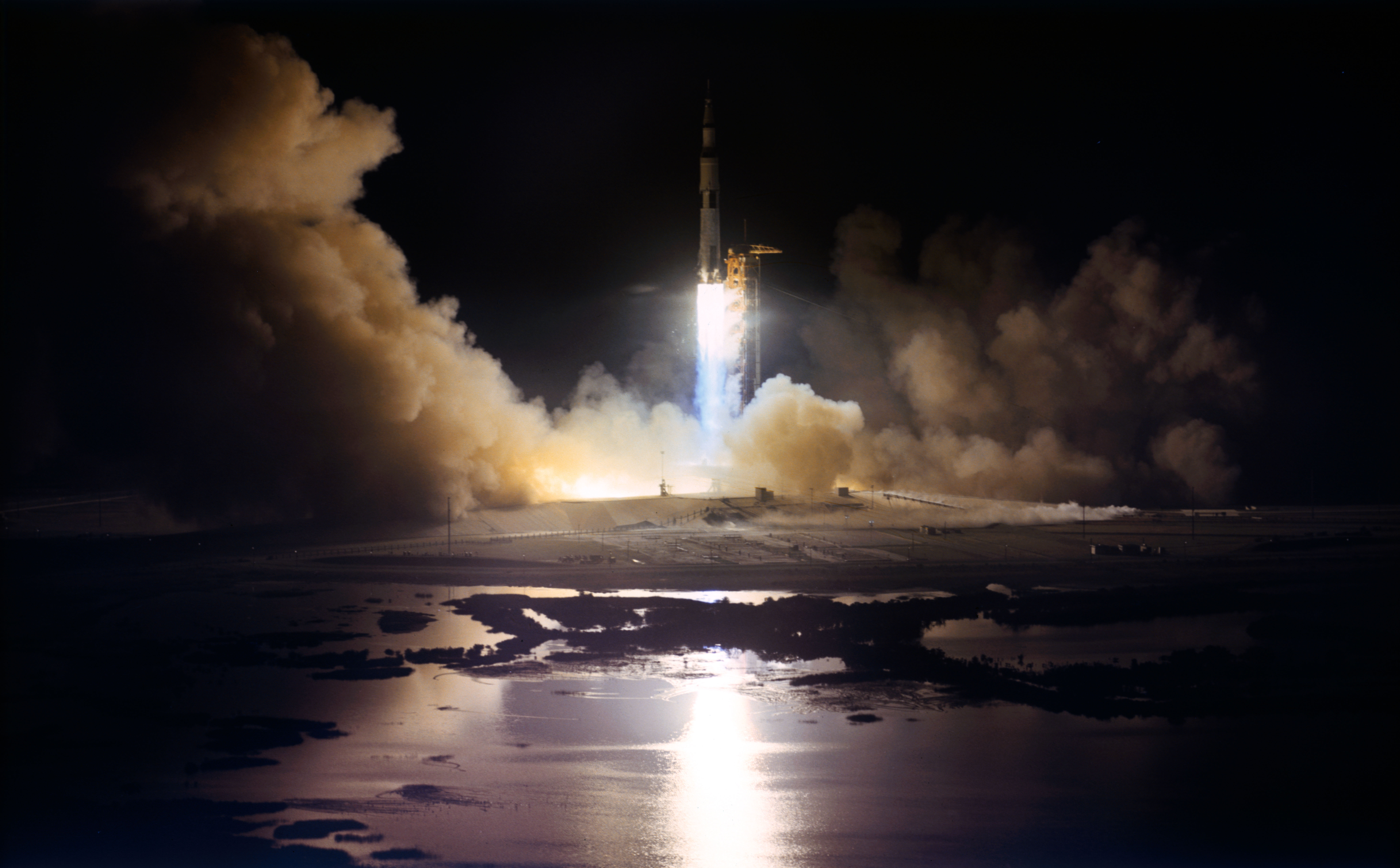
Apollo 17, in December 1972. Eugene Cernan and Harrison Schmitt landed in the Taurus-Littrow valley on 11 December 1972, worked on the surface for three days… more…
- Image pending
Astronauts and life in space
How high do astronauts orbit the earth?
Crewed spaceflight today happens a few hundred kilometres up. The International Space Station orbits at about 400 km, lapping the planet roughly every 90… more…
