Did you know…
What scale were the Avro 707s compared to the Vulcan?
Short answer
The Avro 707 was designed at one-third the scale of the Avro 698, the future Vulcan, to study the delta wing at low speed. Avro also planned the Avro 710, at half scale and for high speed, but cancelled it as too slow to develop and replaced it with the 707A.

Learning the delta on a small scale
When Avro set out to design the Type 698 bomber, the company had no experience flying delta wings. To reduce risk, it planned two smaller experimental aircraft based on the 698: the Type 707, at one-third scale, to study low-speed behaviour, and the Type 710, at half scale, for high-speed flight. Two examples of each were ordered. The French Wikipedia likewise describes the 707 as a single-jet 1/3-scale demonstrator.
The 710 that never flew
The Avro 710 was cancelled because its development was judged to take too long. In its place, a fast variant of the 707 itself was designed, the 707A. The first 707, VX784, flew in September 1949 and crashed that same month; the second, low-speed aircraft, VX790, was built with the nose section of the 707A, redesignated 707B, and flew in September 1950, piloted by Roly Falk. The high-speed 707A, WD280, followed in July 1951.
Did they serve any purpose?
Because of the programme's delay, the contribution of the 707B and 707A to the basic design of the 698 was not considered significant, although they did point to some necessary changes. What they did do was demonstrate the validity of the design and build confidence in the delta planform. A second 707A, WZ736, and a two-seat 707C, WZ744, were built afterwards, but they no longer played any part in the Vulcan's development. At the 1953 Farnborough air show, the two Vulcan prototypes flew together with four Avro 707s.
The aircraft originated from Air Ministry specification B.35/46.
More questions
Aviation history
What was special about the Vertol 76?
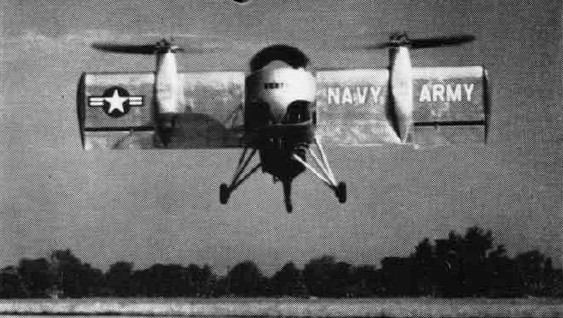
Vertol's VZ-2 tested the tiltwing concept for vertical take-off and landing. After ground trials beginning in April 1957, it first took off on 13 August only… more…

Aviation history
Which was the most-produced American fighter of the Second World War?
The Republic P-47 Thunderbolt, of which 15,636 or 15,683 units were built, depending on the source. It was also one of the heaviest fighters of the conflict… more…

Aviation history
Who flew the E-66 at 2,149 km/h?
Konstantin or Vladimir Kokkinaki, depending on the source. Konstantin is credited with the absolute record on a closed 100 km circuit, at 2,148.66 km/h, set… more…

Fly-by-Owen (CC BY SA), vía commons Aviation history
How many I-11Bs were built?
Between 208 and around 450, depending on the source: one of the AISA I-11 reference sheets gives 208 examples built, while All-Aero speaks of around 400 built… more…

Aviation history
How many HH-53s could be converted to Pave Low III?
Eight HH-53C aircraft received an improved systems package and were redesignated HH-53H Pave Low III. The other figure in circulation, nine MH-53H and 32… more…

SCDBob (CC BY SA), vía commons Aviation history
What did the A129 Mangusta's armor protect?
The fuselage: the A129's airframe is armored and, according to All-Aero, designed to protect against 12.7 mm rounds, with partial protection against 23 mm… more…


