Did you know…
What is the "gravel kit" on some Boeing 737-200s for?
Short answer
It prevents damage or foreign object debris (FOD) ingestion when operating on unpaved surfaces. It includes a gravel deflector shaped like a wide ski on the nose wheel and vortex dissipators fed by compressor air ahead of each engine. Boeing built it in 1969 so the 737 could reach more remote destinations.

A problem with stones
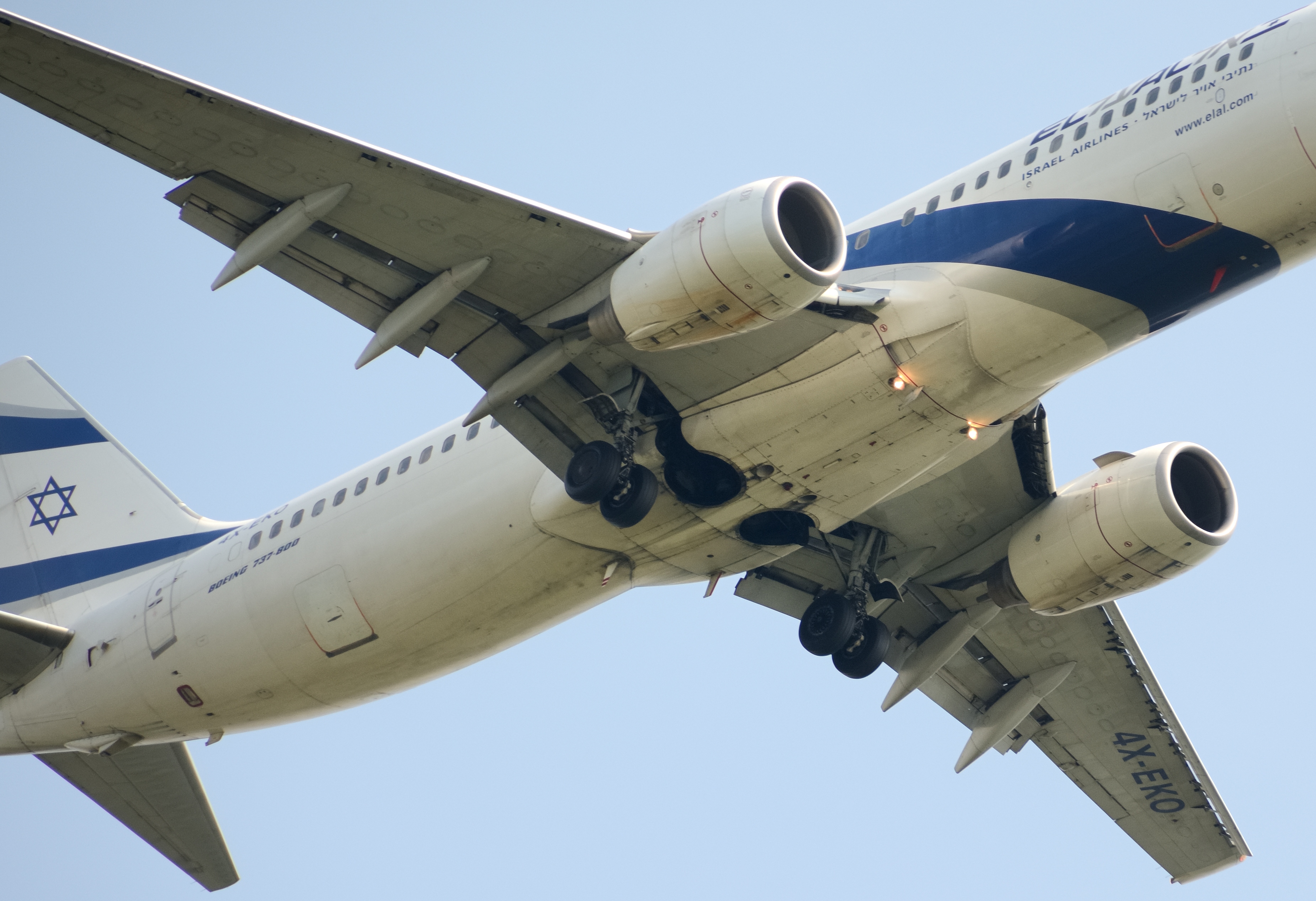
A gravel kit is a modification designed to prevent damage or foreign object debris (FOD) ingestion while the aircraft operates on unpaved surfaces. The stones, dust and debris an aircraft kicks up on landing can damage vital engine parts. The kit addresses two issues: the nose gear throwing FOD toward the engine and toward the lower fuselage or wings, and each engine ingesting FOD from the ground just ahead of it. In 1969 Boeing built a gravel kit for its well-known 737, letting its commercial jets reach more remote locations. The option reduced foreign-object damage when operating from remote, unimproved or unpaved runways.
What the modification includes
The kit includes a gravel deflector, similar in shape to a wide ski, mounted on the nose wheel, and vortex dissipators fed by compressor bleed air ahead of each engine. Deflectors are added to both the landing gear and the nose gear to keep rocks from damaging the underside of the aircraft and the flaps. The package also adds metal shields to prevent damage to brake lines and hydraulics. The vortex dissipators blow engine bleed air downward, below the intake. The work also includes reinforcing the flaps, applying Teflon paint to the underside of the wings and fuselage, and installing an extra light.
Who has used it
Alaska Airlines historically used this modification. It remains in use at Air Inuit, Canadian North, Air North and Nolinor Aviation, which operate in northern Canada.
More questions
Peter Haas (CC BY SA), vía commons Commercial aviation
How many Boeing 737-100s, the first version, were ever built?
Only 30 Boeing 737-100s were built. Twenty-two went to Lufthansa, five to Malaysia-Singapore Airlines and two to Avianca. The first rolled out on 17 January… more…
Peter Haas (CC BY SA), vía commons Commercial aviation
Which airline was the first outside the United States to launch a new Boeing jet?
It was Lufthansa: it signed as the Boeing 737's launch customer on 19 February 1965, with an order for 21 aircraft. That made it the first non-US airline to… more…
Peter Haas (CC BY SA), vía commons Commercial aviation
How many generations does the Boeing 737 family have?
Four generations: the Original (737-100 and -200), launched in February 1965; the Classic (-300, -400 and -500), launched in 1979; the Next Generation (-600… more…
Julian Herzog (Website) (CC BY), vía commons Commercial aviation
What rival order pushed Airbus to launch the A320neo?
Republic Airways Holdings' order to Bombardier for 40 CS300s plus 40 options, closed in 2010. Republic then owned Frontier Airlines, an all-A319/A320… more…
Julian Herzog (Website) (CC BY), vía commons Commercial aviation
How often does an A320 family aircraft take off or land somewhere in the world?
According to Airbus, an A320 family aircraft takes off somewhere in the world every six seconds. The worldwide fleet had completed more than 176 million… more…
Julian Herzog (Website) (CC BY), vía commons Commercial aviation
How often is the cabin air on an A320 refreshed?
Cabin air on Airbus aircraft is refreshed roughly every two to three minutes in normal operation, and that interval holds even without using part of the… more…
