Did you know…
What are rockets?
Short answer
A rocket is a vehicle or engine that propels itself by expelling at high speed the mass it carries on board, without needing outside air — which is why it works in a vacuum. It applies Newton's third law, action and reaction. Solid- and liquid-propellant rockets are today the only practical way to put payloads into orbit or travel beyond Earth.
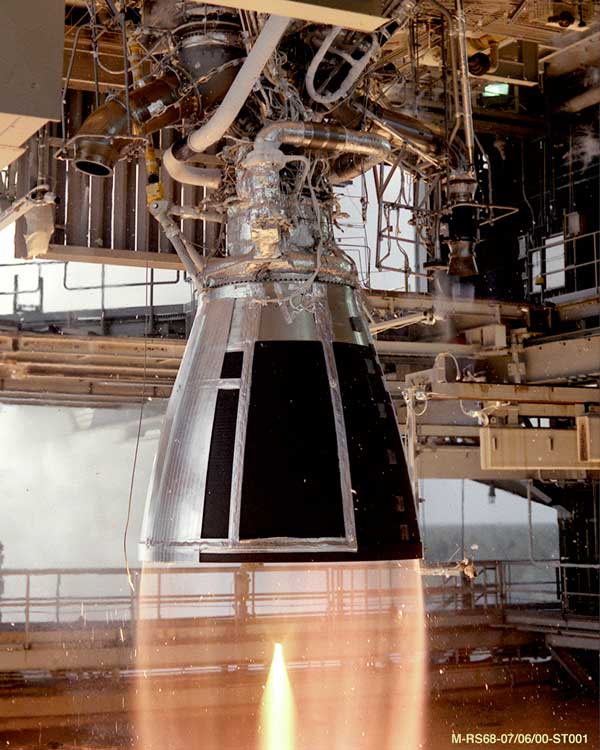
The principle: action and reaction
A rocket engine works by Newton's third law: if it expels gas backward at high speed, it receives an equal and opposite thrust forward. Unlike a jet engine, which draws oxygen from the atmosphere to burn its fuel, a rocket carries both fuel and oxidizer with it. That independence from air lets it operate in the vacuum of space, but it also forces it to carry an enormous mass: in a typical orbital launcher, more than 85% of the mass on the pad is propellant.
Solid, liquid, and hybrid
Solid-propellant rockets, descendants of 13th-century Chinese fireworks, mix fuel and oxidizer into a single block that burns all at once; they are simple and powerful but cannot be shut off or throttled. Liquid-propellant rockets, first flown successfully by Robert Goddard in 1926, pump two separate fluids into the combustion chamber, such as kerosene or hydrogen with liquid oxygen; they are more complex but can be throttled, shut down, and relit, which makes them essential for maneuvering and landing. Hybrids combine a solid fuel with a liquid oxidizer and occupy a small niche.
Stages and orbit
Reaching low Earth orbit requires about 7.8 km/s, plus losses from gravity and drag. No single-stage rocket achieves this with a reasonable payload, so launchers are divided into stages that separate once spent, lightening the vehicle. Sizes range from sounding rockets a few meters long to giants like the Saturn V or Starship; in all of them, the Tsiolkovsky equation relates the achievable velocity to the exhaust velocity of the gases and the fraction of mass burned.
More questions
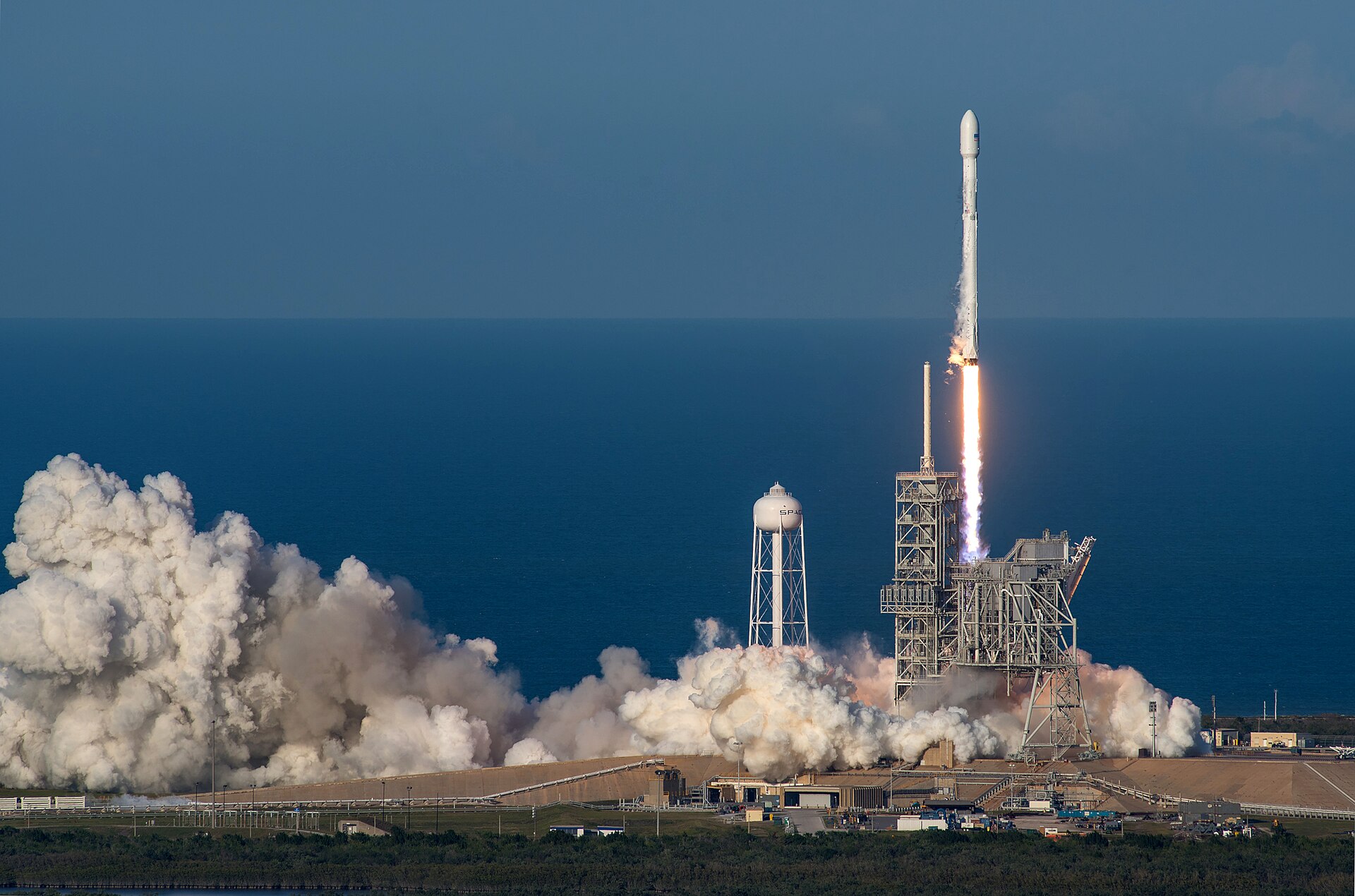
Foto: SpaceX (CC0) Rockets and launches
How many horsepower does the Falcon 9 have?
Rockets aren't measured in horsepower, but in thrust: the Falcon 9's first stage's nine Merlin engines deliver 7,686 kN (1,710,000 lbf) combined at sea level… more…
Foto: SpaceX (CC0) Rockets and launches
How much a rocket weight?
Rockets range from about 13 t for Rocket Lab's Electron to roughly 549 t for Falcon 9, 2,800 t for Saturn V and close to 5,000 t for Starship with its Super… more…

Rockets and launches
What does the saturn v look like?
Saturn V looked like a white needle 110.6 m (363 ft) tall and 10.1 m wide at the base, painted with black roll-pattern stripes, the words UNITED STATES and… more…
Foto: SpaceX (CC0) Rockets and launches
Why do rockets launch from florida?
Rockets launch from Florida because the Cape sits at 28.5 degrees north, low enough to gain about 410 m/s from the Earth's rotation on an eastward launch, and… more…
Foto: SpaceX (CC0) Rockets and launches
How much falcon 9 launch cost?
SpaceX lists a standard Falcon 9 mission at 69.75 million dollars, with the booster recovered (data as of January 2025). Small satellites can share a ride… more…
Rockets and launches
How does the saturn v work?
Saturn V worked by staging: a kerosene first stage with five F-1 engines (about 34,000 kN) lifted the 2,800 t rocket for two and a half minutes, a… more…

