Did you know…
Who devised the blitzkrieg theory that Germany applied?
Short answer
It is attributed above all to J. F. C. Fuller, regarded as one of the progenitors of the Blitzkrieg; the German army applied tactics similar to his analysis in the 1930s. B. H. Liddell Hart, who collaborated with him, also claimed his share, but that influence is not found in pre-war documents.
Fuller and mechanisation
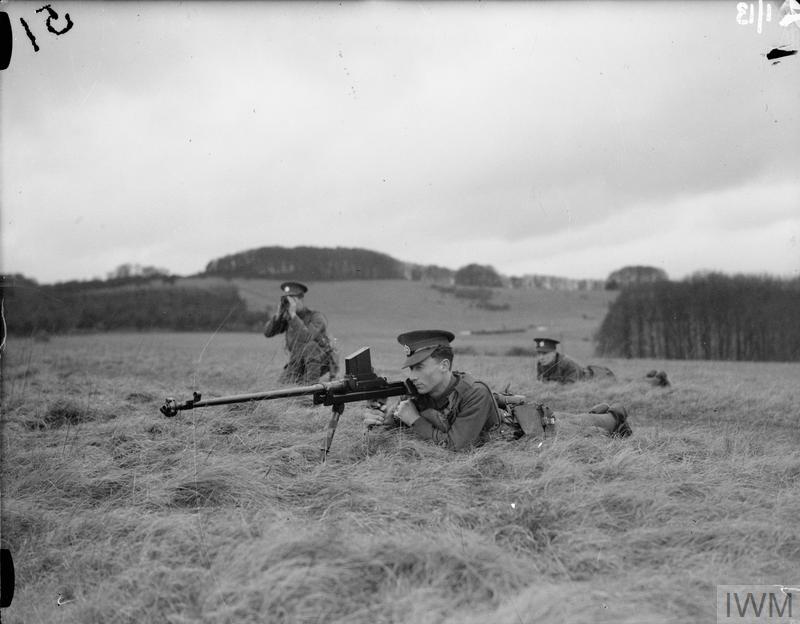
Fuller focused his attention on the potential of new weapons, especially tanks and aircraft. He worked with his colleague B. H. Liddell Hart on developing ideas for the mechanisation of armies and, together with him, launched a campaign in favour of mechanising and modernising the British Army. In his approach, areas of heavy enemy activity were to be avoided so that they could eventually be encircled and destroyed. He is regarded as one of the progenitors of Blitzkrieg. Heinz Guderian paid out of his own pocket for the translation of his manual Provisional Instructions for Tank and Armoured Car Training.
Liddell Hart's contribution
Liddell Hart argued that infantry should be carried alongside fast-moving armoured formations, troops he referred to as "tank marines". He himself pointed out that the German Wehrmacht adopted theories developed from those of J. F. C. Fuller and from his own.
A disputed attribution
After the war, Liddell Hart himself tried to pin down his influence on the way the German generals fought. The influence attributed to him at that point had not been claimed before, and no contemporary, pre-war documentation has been found to support it. He has been criticised for having created the concept of a Blitzkrieg doctrine after the fact, rather than influencing its original development. What is on record is that, in the 1930s, the German army put into practice tactics similar in many respects to Fuller's analysis, which came to be known as Blitzkrieg.
More questions

Aviation history
Which was the most-produced American fighter of the Second World War?
The Republic P-47 Thunderbolt, of which 15,636 or 15,683 units were built, depending on the source. It was also one of the heaviest fighters of the conflict… more…

Aviation history
Who flew the E-66 at 2,149 km/h?
Konstantin or Vladimir Kokkinaki, depending on the source. Konstantin is credited with the absolute record on a closed 100 km circuit, at 2,148.66 km/h, set… more…

Fly-by-Owen (CC BY SA), vía commons Aviation history
How many I-11Bs were built?
Between 208 and around 450, depending on the source: one of the AISA I-11 reference sheets gives 208 examples built, while All-Aero speaks of around 400 built… more…

Aviation history
How many HH-53s could be converted to Pave Low III?
Eight HH-53C aircraft received an improved systems package and were redesignated HH-53H Pave Low III. The other figure in circulation, nine MH-53H and 32… more…

SCDBob (CC BY SA), vía commons Aviation history
What did the A129 Mangusta's armor protect?
The fuselage: the A129's airframe is armored and, according to All-Aero, designed to protect against 12.7 mm rounds, with partial protection against 23 mm… more…
Fly-by-Owen (CC BY SA), vía commons Aviation history
What landing gear and canopy did the AISA I-11B have?
According to one account, AISA reduced the cockpit canopy and fitted tailwheel gear on the production I-11B. All-Aero claims the opposite: the I-11B was… more…


