Did you know…
Which Air India Constellation crashed into Mont Blanc?
Short answer
The Lockheed L-749 Constellation registered VT-CQP, operating Air India Flight 245 on the Bombay–Cairo–Geneva–London route. On November 3, 1950, it crashed into Mont Blanc, killing all 48 people on board: 40 passengers and 8 crew. It was one of the deadliest accidents involving the Constellation family.

Flight 245
On November 3, 1950, Air India Flight 245 was operating the Bombay–Cairo–Geneva–London route with a Lockheed L-749 Constellation registered VT-CQP. On the leg toward Geneva, the aircraft struck the Mont Blanc massif. There were no survivors: all 40 passengers and 8 crew members died, 48 people in total.
Air India and the Constellation
The L-749 was one of the most widely used versions of the original Constellation, predating the stretched fuselage of the Super Constellation. Its pressurized cabin and range made it attractive to airlines that, like Air India, were beginning to establish long-haul routes between Asia and Europe after World War II. Those flights were made in stages, with intermediate stops such as Cairo or Geneva, and crossed mountainous areas where navigation depended heavily on the crew's skill and on still-limited ground aids.
The massif, a repeated scene
Mont Blanc, the great massif of the Alps, lay across the final leg of a route linking India to London in stages. The crash of the VT-CQP appears in the list of accidents involving the Constellation family, in which the same L-749 model appears in other tragedies of the era, such as the crash of Aeronaves de México Flight 111 into the La Latilla hill in 1958.
The case of the VT-CQP is also an example of how the history of these accidents is reconstructed today: the Constellation accident record lists for each one the date, model, registration, operator, route, and number of victims, allowing comparison of tragedies widely separated in time and place. In it, the L-749 appears again and again, a reflection of how widespread it was among international airlines in the immediate post-war period.
More questions
Aviation history
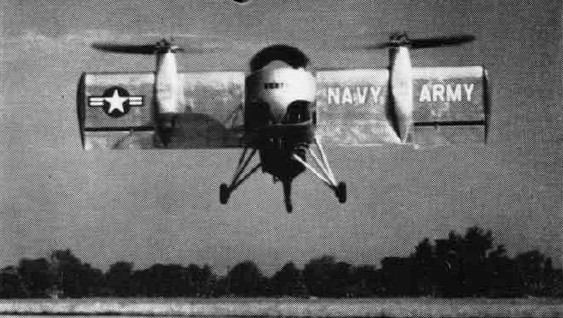
What was special about the Vertol 76?
Vertol's VZ-2 tested the tiltwing concept for vertical take-off and landing. After ground trials beginning in April 1957, it first took off on 13 August only… more…

Aviation history
Which was the most-produced American fighter of the Second World War?
The Republic P-47 Thunderbolt, of which 15,636 or 15,683 units were built, depending on the source. It was also one of the heaviest fighters of the conflict… more…

Aviation history
Who flew the E-66 at 2,149 km/h?
Konstantin or Vladimir Kokkinaki, depending on the source. Konstantin is credited with the absolute record on a closed 100 km circuit, at 2,148.66 km/h, set… more…

Fly-by-Owen (CC BY SA), vía commons Aviation history
How many I-11Bs were built?
Between 208 and around 450, depending on the source: one of the AISA I-11 reference sheets gives 208 examples built, while All-Aero speaks of around 400 built… more…

Aviation history
How many HH-53s could be converted to Pave Low III?
Eight HH-53C aircraft received an improved systems package and were redesignated HH-53H Pave Low III. The other figure in circulation, nine MH-53H and 32… more…

SCDBob (CC BY SA), vía commons Aviation history
What did the A129 Mangusta's armor protect?
The fuselage: the A129's airframe is armored and, according to All-Aero, designed to protect against 12.7 mm rounds, with partial protection against 23 mm… more…


