Did you know…
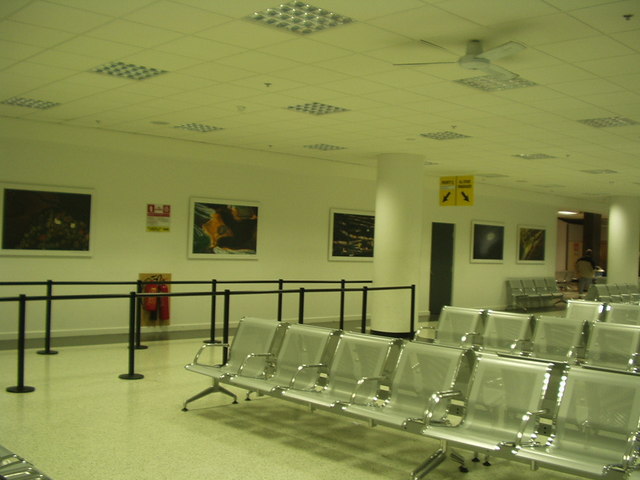
What happens if a flight is delayed?
Short answer
The passenger keeps their seat and the airline must inform and rebook them. In the European Union, assistance (food, communications and a hotel if an overnight stay is needed) starts after two hours of delay, and from five hours onward passengers can give up the trip and request a full refund of the ticket.
The thresholds that make the difference
Regulation (EC) 261/2004 scales the response according to how long the wait lasts and how long the route is. Assistance kicks in at two hours for flights up to 1,500 km, at three hours for those between 1,500 and 3,500 km, and at four hours for longer distances. It includes food and drink appropriate to the waiting time, two phone calls or messages, and accommodation with transfer if departure is rescheduled to another day.
From five hours of delay onward, passengers may withdraw: the airline must refund the ticket price within seven days for the unflown portion, and, if the flight no longer serves the purpose of the trip, also for the portion already flown, with a return flight to the point of departure if applicable.
Compensation: it depends on the cause
Lump-sum compensation applies when the passenger reaches their final destination three hours or more late. The airline is exempt if it proves an extraordinary circumstance beyond its control: adverse weather, an air traffic controllers' strike, airspace closure or an order from the authority. Routine maintenance problems, crew shortages or overbooking do not exempt it.
What to do at the airport
It's worth requesting the cause of the delay in writing and keeping receipts for any expenses if the airline doesn't provide assistance on its own, since these are reimbursable when the amount is reasonable. Outside the European framework the rules change completely; in the United States, for example, there's no mandatory compensation for delays, and in Latin America each national regulator sets its own thresholds. Before filing a claim, it's worth checking which regulation covers the specific route based on the point of departure and the operator's nationality.
More questions

Foto: 4300streetcar (CC BY 4.0) Commercial aviation
Which 747 carried Enterprise "piggyback"?
The first Shuttle Carrier Aircraft was a Boeing 747-123 registered N905NA, originally built for American Airlines and acquired by NASA in 1974. Boeing… more…

Commercial aviation
Was there an amphibious DC-3?
Yes: the Douglas XC-47C was created by fitting Edo Model 78 floats onto a standard C-47. The single-step metal floats carried retractable wheels that also… more…

OTFW, Berlin (CC BY SA), vía commons Commercial aviation
Was a C-47 converted into a glider?
Yes: the Douglas XCG-17 was an assault glider created by converting a twin-engine C-47 Skytrain during World War II. Its engines were removed and the nacelles… more…
Commercial aviation
What did the USSR build from the DC-3?
The USSR built a version of the DC-3 under a licence granted to its government on 15 July 1936. It was designated PS-84 and, in 1942, renamed Lisunov Li-2… more…
Commercial aviation
What was "Puff, the Magic Dragon"?
It was the nickname of the Douglas AC-47 Spooky, the first in a series of fixed-wing gunships developed by the United States Air Force during the Vietnam War… more…
Commercial aviation
How did the RAF refer to the C-47?
The RAF called it Dakota: the Dakota I was the designation for 53 C-47s received under Lend-Lease. The Dakota III designated 962 C-47A Skytrains. The Dakota… more…


