Did you know…
What happened to the pilots who dared to try "viffing"?
Short answer
The question has no single protagonist: rotating the vectored-thrust nozzles forward during normal flight, "viffing", was formally developed as a combat tactic by the US Marine Corps in the early 1970s. One pilot summed it up as more than one complete departure from controlled flight.

Where the manoeuvre comes from
The Harrier descended from the Hawker P.1127, whose formal design work began in 1957 with Sydney Camm, Ralph Hooper and Stanley Hooker. Its powerplant was the Pegasus, a vectored-thrust turbofan. The production Harrier GR.1 completed its first flight on 28 December 1967 and officially entered RAF service on 1 April 1969. Swivelling the vectored-thrust nozzles to a forward-facing position during normal flight is what is called vectoring in forward flight, or "VIFFing".
Who turned it into a tactic
As a close-combat resource, the technique allowed sharper braking and higher turn rates. The US Marine Corps formally developed this combat technique for the Harrier in the early 1970s. Its pilots wondered what that curious lever could achieve and whether an unloaded wing could be immediately reloaded with greater effect.
What happened to the pilots
One pilot described how the manoeuvre caused him more than one complete departure from controlled flight, something like being thrown through space inside an asymmetric washing machine. A serious accident ended with aircraft that were viffing crashed in eastern England. A Sea Harrier pilot of 800 Naval Air Squadron used the nozzles to brake his descent while trying to achieve a Sidewinder lock on an Argentine Pucará close-support aircraft, without it working out for him.
More questions
Aviation history
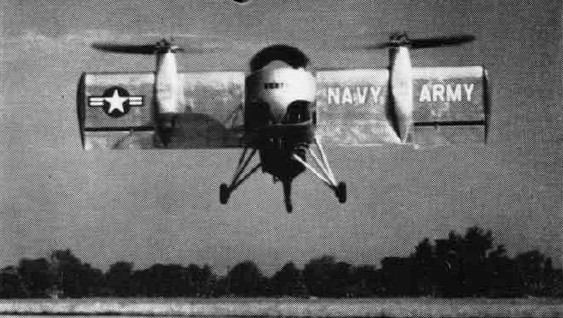
What was special about the Vertol 76?
Vertol's VZ-2 tested the tiltwing concept for vertical take-off and landing. After ground trials beginning in April 1957, it first took off on 13 August only… more…

Aviation history
Which was the most-produced American fighter of the Second World War?
The Republic P-47 Thunderbolt, of which 15,636 or 15,683 units were built, depending on the source. It was also one of the heaviest fighters of the conflict… more…

Aviation history
Who flew the E-66 at 2,149 km/h?
Konstantin or Vladimir Kokkinaki, depending on the source. Konstantin is credited with the absolute record on a closed 100 km circuit, at 2,148.66 km/h, set… more…

Fly-by-Owen (CC BY SA), vía commons Aviation history
How many I-11Bs were built?
Between 208 and around 450, depending on the source: one of the AISA I-11 reference sheets gives 208 examples built, while All-Aero speaks of around 400 built… more…

Aviation history
How many HH-53s could be converted to Pave Low III?
Eight HH-53C aircraft received an improved systems package and were redesignated HH-53H Pave Low III. The other figure in circulation, nine MH-53H and 32… more…

SCDBob (CC BY SA), vía commons Aviation history
What did the A129 Mangusta's armor protect?
The fuselage: the A129's airframe is armored and, according to All-Aero, designed to protect against 12.7 mm rounds, with partial protection against 23 mm… more…


