Did you know…
Why was first class at the back of the Constellation?
Short answer
Because of noise. On the Constellation, first-class passengers travelled at the rear of the cabin, farthest from the engines, enjoying the quietest section of an aircraft powered by four large wing-mounted piston engines with propellers.

Away from the propellers
In propeller aircraft, the engines and spinning blades produce the most intense noise and vibration at wing height, right in the front and middle of the cabin. That's why, on the Constellation, first class was placed at the rear, far from the engines, where the journey was quieter. This is the opposite of what would happen in the jet age, when engines came to be heard mostly from behind and the premium cabin moved to the front.
An aircraft designed for comfort
The Constellation was an aircraft well ahead of its time. It was very fast, with a top speed of around 600 km/h, and its pressurized cabin allowed it to fly above bad weather, at about 7,500 m (around 25,000 ft), making it comfortable for travelers. Depending on the version and configuration, it carried between about 65 and about 90 passengers.
Long routes
After World War II it became very popular with airlines. Qantas used it on the famous Kangaroo Route to London and on its round-the-world service, one of the first of its kind. On such long flights, with many hours of engines running without pause, placing the passengers paying the most in the quietest part of the cabin was a first-rate selling point.
The layout persisted while piston aircraft dominated long-haul routes, and it still surprises visitors to the preserved examples on display in museums today.
Enthusiasts know it by the nickname "Connie." In its passenger versions, the engines hung from the wing at mid-cabin: the farther back a passenger sat, the farther away the propellers were, and the less noise and vibration they felt during the long cruising hours.
More questions
Aviation history
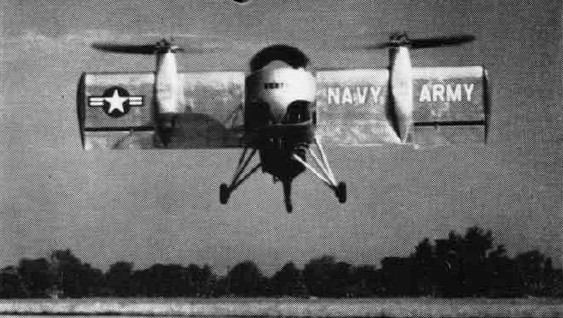
What was special about the Vertol 76?
Vertol's VZ-2 tested the tiltwing concept for vertical take-off and landing. After ground trials beginning in April 1957, it first took off on 13 August only… more…

Aviation history
Which was the most-produced American fighter of the Second World War?
The Republic P-47 Thunderbolt, of which 15,636 or 15,683 units were built, depending on the source. It was also one of the heaviest fighters of the conflict… more…

Aviation history
Who flew the E-66 at 2,149 km/h?
Konstantin or Vladimir Kokkinaki, depending on the source. Konstantin is credited with the absolute record on a closed 100 km circuit, at 2,148.66 km/h, set… more…

Fly-by-Owen (CC BY SA), vía commons Aviation history
How many I-11Bs were built?
Between 208 and around 450, depending on the source: one of the AISA I-11 reference sheets gives 208 examples built, while All-Aero speaks of around 400 built… more…

Aviation history
How many HH-53s could be converted to Pave Low III?
Eight HH-53C aircraft received an improved systems package and were redesignated HH-53H Pave Low III. The other figure in circulation, nine MH-53H and 32… more…

SCDBob (CC BY SA), vía commons Aviation history
What did the A129 Mangusta's armor protect?
The fuselage: the A129's airframe is armored and, according to All-Aero, designed to protect against 12.7 mm rounds, with partial protection against 23 mm… more…


