Did you know…
Which Antarctic airstrip is named after a Constellation?
Short answer
Pegasus Field, near McMurdo Station on Ross Island. It is named after a US Navy Lockheed C-121J Constellation that made a forced landing there during a snowstorm on October 8, 1970, with no casualties.

A forced landing in the snow
On October 8, 1970, a Lockheed C-121J Constellation with serial number 131644 had to make a forced landing near McMurdo Station, on Ross Island, Antarctica, in the middle of a snowstorm. The accident caused no casualties, which is unusual for an accident of that kind in such a hostile environment. The episode ended up giving its name to an airstrip: Pegasus Field, named after the aircraft.
The Constellation in the Navy
The C-121J was one of the transport variants of the Constellation family used by the US Navy. Besides logistics missions, some aircraft were adapted for very specific uses: four C-121J were converted into VIP transports, and one of them served with the Blue Angels aerobatic team until a C-130 Hercules replaced it in 1971. That a piston-engined airliner designed in the 1940s ended up operating in Antarctica shows the versatility the Navy found in it.
A name that survives
This aircraft's story is part of the long list of Constellation accidents and incidents, which ranges from catastrophes with dozens of victims to episodes like this one, in which the crew survived and the aircraft became part of the Antarctic landscape. For those who work in the area today, Pegasus is above all an aeronautical place name; but behind the name is a Lockheed four-engine aircraft that could not complete its flight and that, without meaning to, left its mark on one of the most remote places on the planet. That same year, 1970, the Navy still kept other C-121J in service on very different missions, such as the one supporting the Blue Angels.
More questions
Aviation history
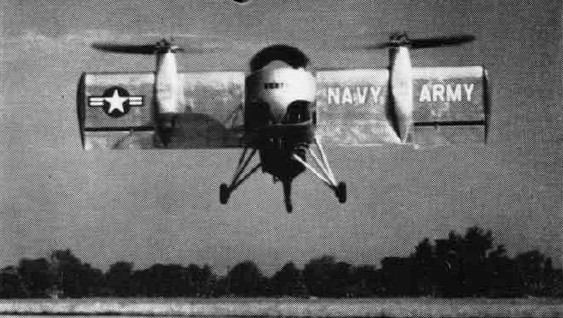
What was special about the Vertol 76?
Vertol's VZ-2 tested the tiltwing concept for vertical take-off and landing. After ground trials beginning in April 1957, it first took off on 13 August only… more…

Aviation history
Which was the most-produced American fighter of the Second World War?
The Republic P-47 Thunderbolt, of which 15,636 or 15,683 units were built, depending on the source. It was also one of the heaviest fighters of the conflict… more…

Aviation history
Who flew the E-66 at 2,149 km/h?
Konstantin or Vladimir Kokkinaki, depending on the source. Konstantin is credited with the absolute record on a closed 100 km circuit, at 2,148.66 km/h, set… more…

Fly-by-Owen (CC BY SA), vía commons Aviation history
How many I-11Bs were built?
Between 208 and around 450, depending on the source: one of the AISA I-11 reference sheets gives 208 examples built, while All-Aero speaks of around 400 built… more…

Aviation history
How many HH-53s could be converted to Pave Low III?
Eight HH-53C aircraft received an improved systems package and were redesignated HH-53H Pave Low III. The other figure in circulation, nine MH-53H and 32… more…

SCDBob (CC BY SA), vía commons Aviation history
What did the A129 Mangusta's armor protect?
The fuselage: the A129's airframe is armored and, according to All-Aero, designed to protect against 12.7 mm rounds, with partial protection against 23 mm… more…


