Did you know…
What nickname did the Ju 52/1m CF-ARM receive in Canada?
Short answer
«Flying Boxcar». That is how the CF-ARM became known in Canada, the sixth Ju 52/1m built (serial number 4006), which Canadian Airways received in late 1931. Re-engined with an Armstrong Siddeley Leopard and later a Rolls-Royce Buzzard, it carried 2,000 kg and supplied remote mines.

The original single-engine version
Before the famous trimotor there was the Ju 52/1m, the single-engine version, of which very few examples were built. In late 1931, James A. Richardson's company Canadian Airways received the sixth one, with serial number (Werknummer) 4006 and registration CF-ARM.
A flying "boxcar"
The aircraft was first re-engined with an Armstrong Siddeley Leopard radial engine and later with a Rolls-Royce Buzzard. In Canada it earned the nickname "Flying Boxcar" for its cargo capacity: it could carry 2,000 kg (4,400 lb) and had a maximum weight of 6,600 kg (14,600 lb). It was used mainly to supply mining operations and other activities in remote areas with equipment too large and heavy for other aircraft of the time.
From single-engine to trimotor
The Ju 52/1m remained a short production run, while the trimotor Ju 52/3m, designed as a passenger aircraft, was built in far greater numbers and became the Luftwaffe's basic transport. The CF-ARM was not preserved, but its memory was: at the Royal Aviation Museum of Western Canada, in Winnipeg, a replica of the Ju 52/1m is displayed in its colors, made by converting a trimotor into a single-engine aircraft. The same museum also holds the CASA 352L T.2B-148, one of the Ju 52s built in Spain after the war. The Ju 52 had a low cantilever wing with duralumin spars and corrugated skin, and the trimotor was used in the 1930s mainly as a 17-seat commercial airliner; in civilian service it flew with more than a dozen airlines, including Swissair and Deutsche Luft Hansa, as a passenger and cargo aircraft. Some examples of the family are still flying in the 21st century at airshows and on sightseeing flights.
More questions
Aviation history
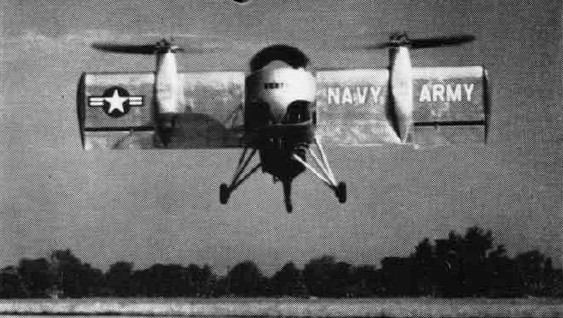
What was special about the Vertol 76?
Vertol's VZ-2 tested the tiltwing concept for vertical take-off and landing. After ground trials beginning in April 1957, it first took off on 13 August only… more…

Aviation history
Which was the most-produced American fighter of the Second World War?
The Republic P-47 Thunderbolt, of which 15,636 or 15,683 units were built, depending on the source. It was also one of the heaviest fighters of the conflict… more…

Aviation history
Who flew the E-66 at 2,149 km/h?
Konstantin or Vladimir Kokkinaki, depending on the source. Konstantin is credited with the absolute record on a closed 100 km circuit, at 2,148.66 km/h, set… more…

Fly-by-Owen (CC BY SA), vía commons Aviation history
How many I-11Bs were built?
Between 208 and around 450, depending on the source: one of the AISA I-11 reference sheets gives 208 examples built, while All-Aero speaks of around 400 built… more…

Aviation history
How many HH-53s could be converted to Pave Low III?
Eight HH-53C aircraft received an improved systems package and were redesignated HH-53H Pave Low III. The other figure in circulation, nine MH-53H and 32… more…

SCDBob (CC BY SA), vía commons Aviation history
What did the A129 Mangusta's armor protect?
The fuselage: the A129's airframe is armored and, according to All-Aero, designed to protect against 12.7 mm rounds, with partial protection against 23 mm… more…


