Did you know…
What are contrails?
Short answer
Contrails are condensation trails: lines of ice crystals formed when the hot, humid exhaust of a jet engine mixes with air colder than −40 °C. Water vapour from burnt kerosene condenses on soot particles and freezes at once. In dry air the trail vanishes in seconds; in ice-supersaturated air it can persist for hours and spread into cirrus cloud.

How a contrail forms
Burning a kilogram of jet fuel produces about 1.25 kg of water vapour, and the exhaust leaves the engine at several hundred degrees. At cruising altitude the surrounding air is typically at −40 to −60 °C and holds almost no moisture. As the hot plume mixes with it, the mixture passes through a state where it is supersaturated with respect to water: the vapour condenses onto the soot and sulphate particles the engine also emits, forming droplets that freeze almost immediately into ice crystals. The whole process takes well under a second, which is why the white line appears a short distance behind the engines rather than at the nozzle. The gap corresponds to the time the plume needs to cool.
Whether a contrail forms at all is predictable. The Schmidt-Appleman criterion, worked out in the 1940s and 1950s, combines ambient temperature, pressure, humidity and the engine's water and heat output per kilogram of fuel into a threshold temperature; below it a trail appears, above it none. Modern high-bypass engines, which exhaust cooler air for the same water output, form contrails at slightly warmer temperatures than older turbojets.
Short-lived and persistent trails
If the ambient air is dry, the ice crystals sublimate back into vapour within seconds and the trail is a short streak. If the air is already supersaturated with respect to ice, common in the upper troposphere ahead of a front, the crystals survive, grow by taking up ambient moisture and are spread by wind shear into broad bands. These persistent contrails can last for hours and become indistinguishable from natural cirrus; on some days a busy airway shows as a grid of them. The same aircraft type can leave a persistent trail one day and none the next, purely because the air mass has changed.
Climate effect
Contrail cirrus reflects some sunlight by day but traps outgoing heat by day and night, and the net effect is warming. Assessments for the European Union and by the IPCC estimate that aviation's non-CO2 effects, dominated by contrail cirrus, are of the same order as the warming from its CO2, though with large uncertainty. Because a small fraction of flights, in specific humid layers, produce most of the long-lived trails, airlines and researchers are testing flight-level changes of a few hundred metres to avoid them. Fuels with less sulphur and soot also produce fewer ice crystals.
Other trails
Not every white streak comes from an engine. In very humid air a wing can leave a brief trail from the pressure drop over its upper surface or at the flap edges, most often on approach. Wingtip vortices can also draw ice crystals into visible ropes. And the 'chemtrail' idea, that trails are deliberately sprayed chemicals, has no basis: the composition of contrails has been measured directly by research aircraft for decades, and it is ice.
More questions
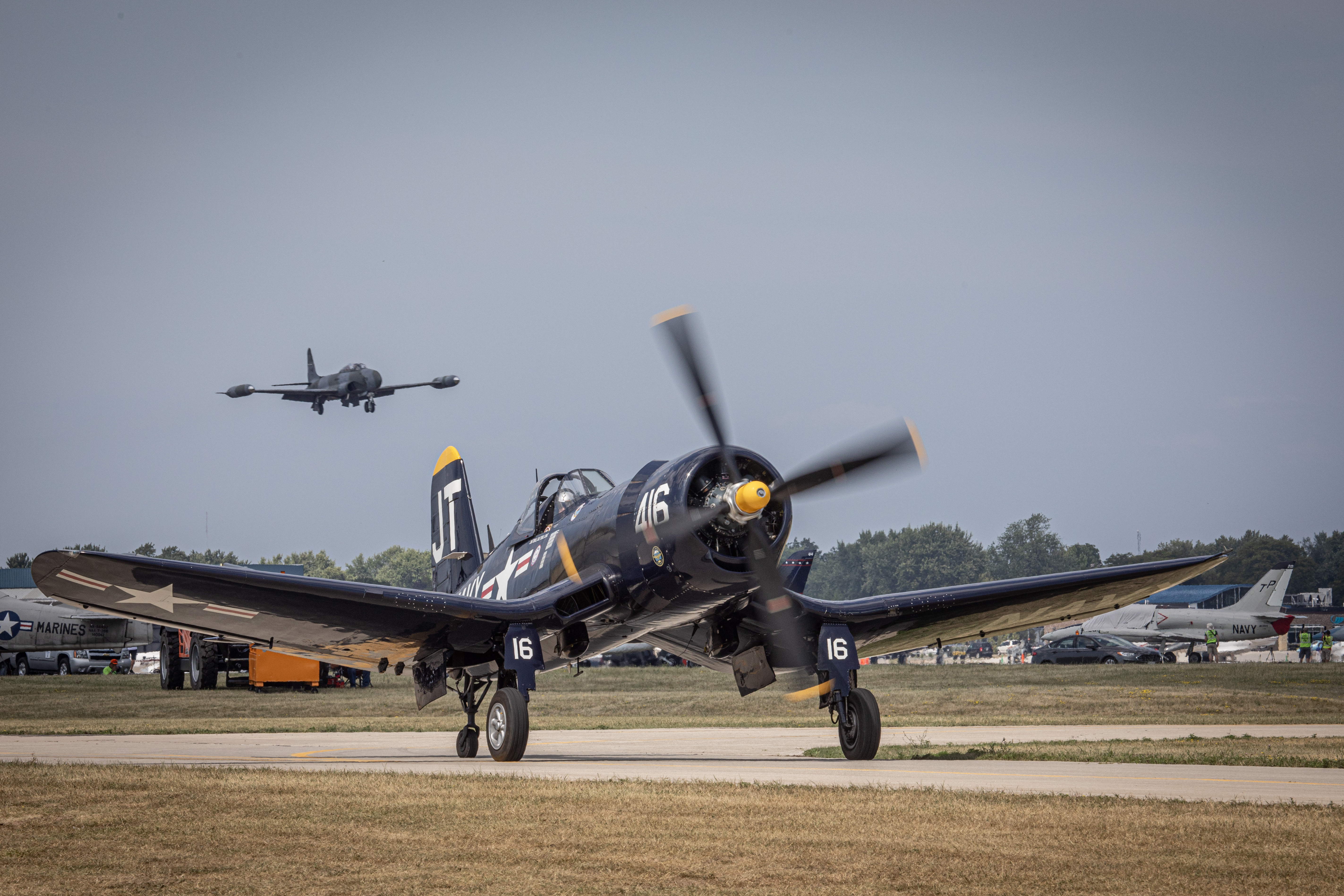
Physics of flight
Why can't a Corsair pilot apply full power when going around after a failed carrier landing?
Because at low speed and high power the Corsair would drop its left wing suddenly and with almost no warning, due to propeller torque. If the throttle was… more…
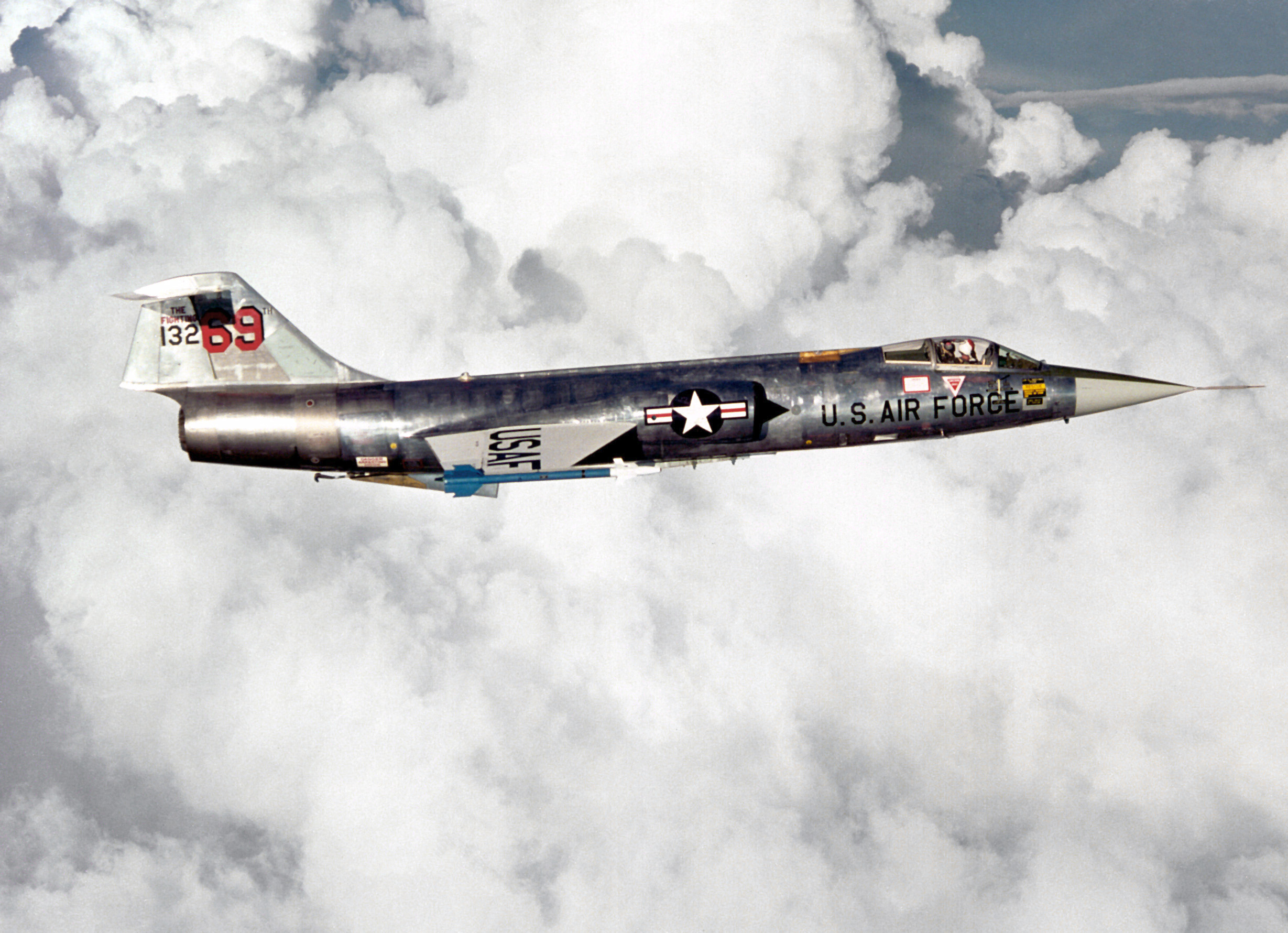
Physics of flight
What did the phrase "banking with intent to turn" mean among F-104 pilots?
It was a joke among Canadian F-104 pilots: banking the aircraft "with intent to turn" referred to its poor low-speed turning. Its sustained turn capability… more…
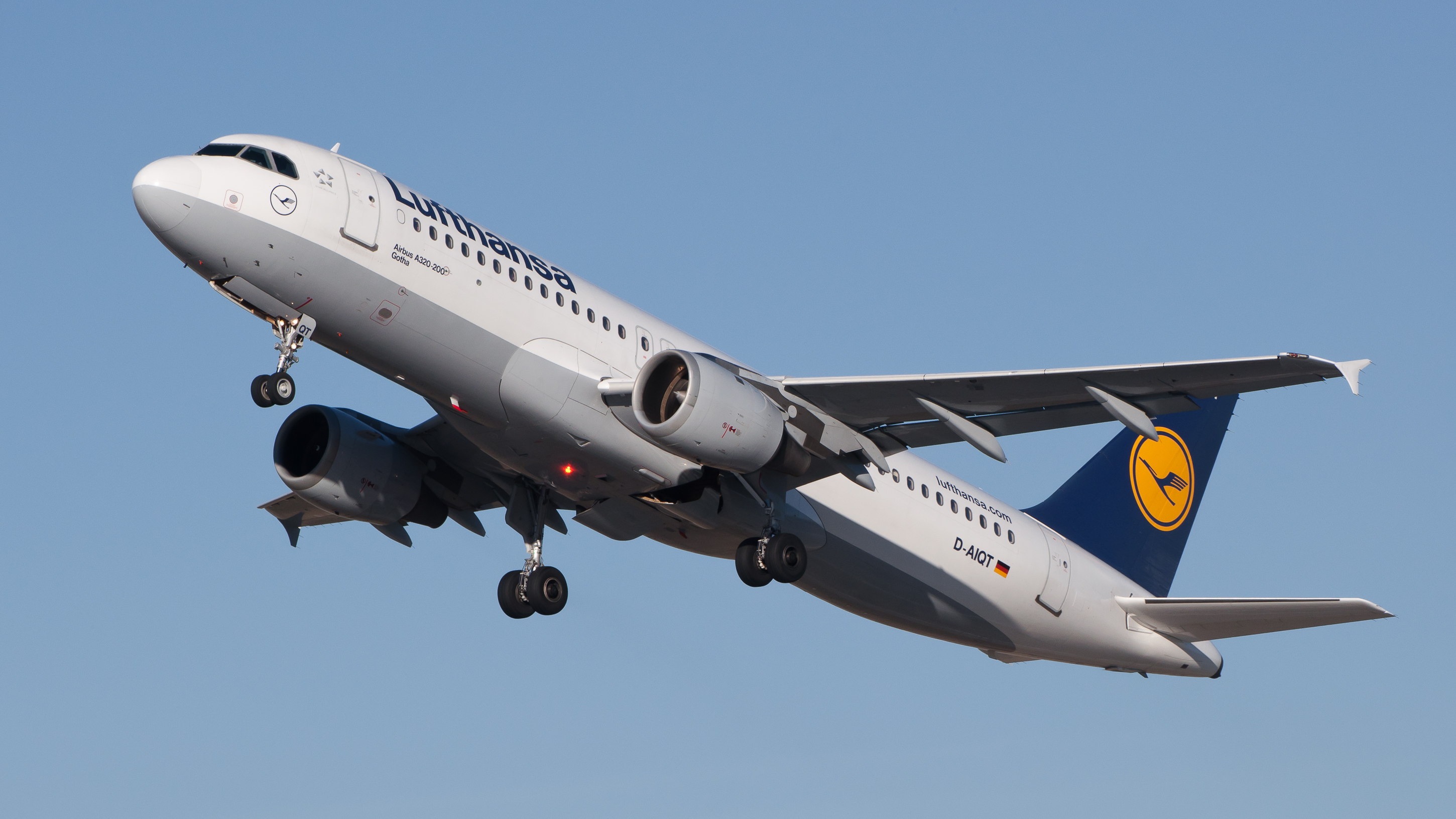
Julian Herzog (Website) (CC BY), vía commons Physics of flight
What is "flight envelope protection," which the A320 pioneered?
A set of limits embedded in the flight control software: it calculates the flight envelope, adds a safety margin, and blocks pilot inputs that would take the… more…
Julian Herzog (Website) (CC BY), vía commons Physics of flight
What is the A320's SHARP package for?
SHARP (SHort AiRfield Package) improves takeoff and landing performance on short runways and is designed to increase low-speed lift. It combines aerodynamic… more…
Physics of flight
What flaw sank Vought's all-metal V-141 fighter?
It wasn't a single flaw: tests showed the V-141 still flew poorly, was prone to spinning, and also suffered tail flutter, which is why it was rejected. It… more…
Physics of flight
What wind tunnel did NACA use to study the Corsair, and how big was it?
The full-scale 30- by 60-Foot Tunnel at the Langley Research Center, in Hampton, Virginia. NACA dedicated the facility on 27 May 1931 and used it to test the… more…


