Did you know…
How many passengers did the Ferry carry in its first year?
Short answer
Around 92,000 passengers: according to the aviation magazine Flight, that is how many the two Airspeed Ferrys carried in their first season of operation alone. Sir Alan Cobham, Airspeed's director, wanted a compact multi-engined type for the "air experience" flights of his National Aviation Day displays.

Aircraft for "Aviation Days"
Sir Alan Cobham, the aviation pioneer and Airspeed director, wanted a compact, multi-engined airliner for the "air experience" flights of his National Aviation Day displays. The Ferry arrived with an unorthodox layout, notably the mounting of the third engine in the centre section of the upper wing, an arrangement adopted mainly to give the pilot better outward visibility. The first example, G-ABSI Youth of Britain II, made its maiden flight on 5 April 1932 with H. V. Warrall at the controls. Only four examples were built, at the company's works in York, in the early 1930s.
92,000 passengers in one season
According to the aviation magazine Flight, in their first season of operation alone the two aircraft carried around 92,000 passengers. The type achieved a particularly fast turnaround, of just 30 seconds, while refuelling took only a minute and a half.
From the Ferry to the Courier
The Courier, designed by A. H. Tiltman, was the first British aircraft with retractable landing gear to enter series production. Its prototype, G-ABXN, first flew on 10 April 1933, piloted by George Stainforth of the Royal Aircraft Establishment.
More questions
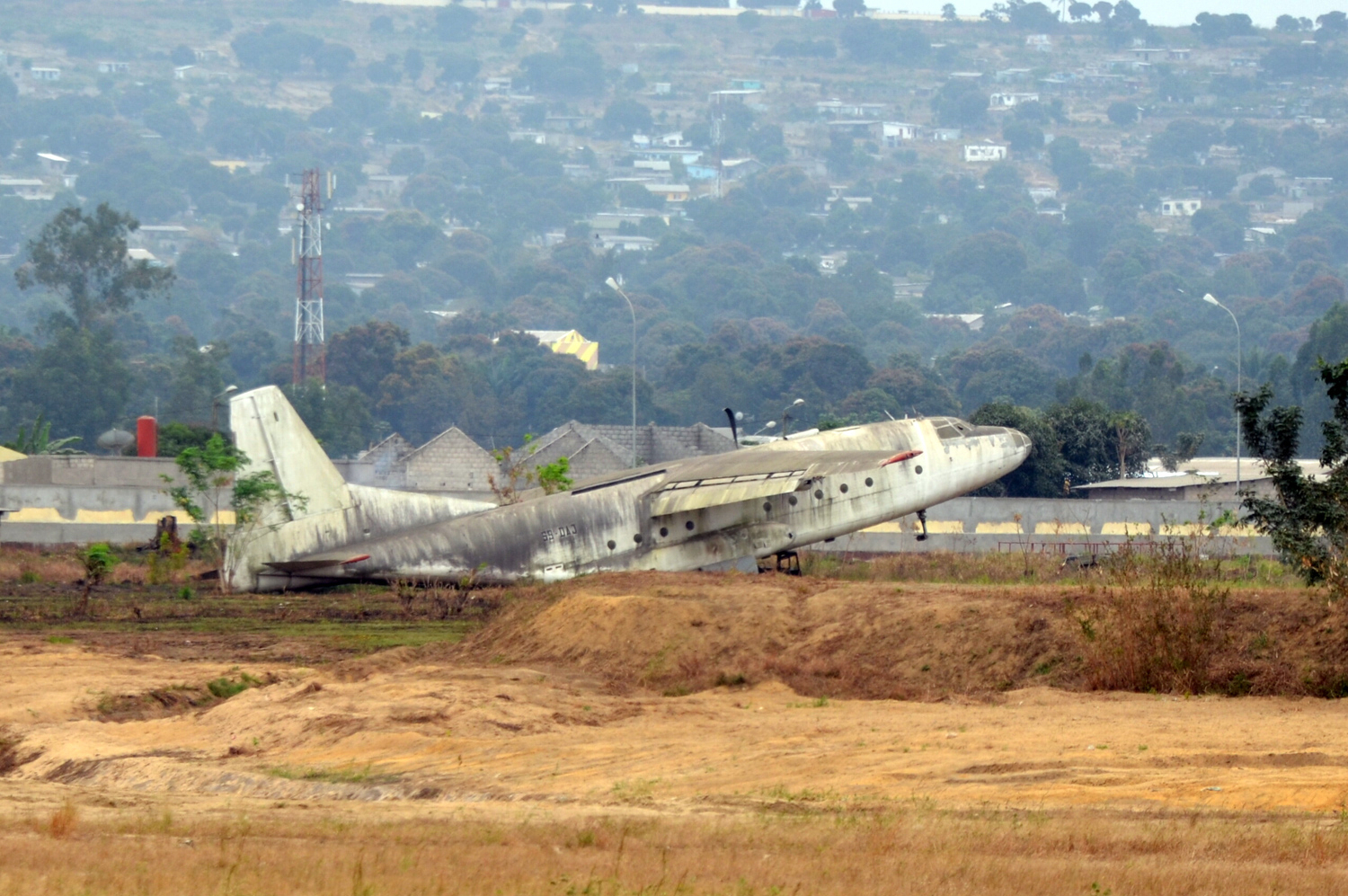
Vitaly Druchenok (CC BY SA), vía commons Aviation history
What "typically Russian" features did the An-8 have?
The An-8 was a Soviet light military transport with a high wing and two turboprops, featuring a glazed nose for the navigator, a chin radome for navigation… more…

RB7MRV (CC BY SA), vía commons Aviation history
Why is the E-25 called "Mirlo"?
Mirlo is the official nickname of the C-101 in Spain. The air force designated it the E.25 Mirlo, "Blackbird" in English, while CASA identified it as the… more…
RB7MRV (CC BY SA), vía commons Aviation history
What did CASA do with the C-101's first flight for safety?
CASA kept it deliberately simple: on 27 June 1977 the P1 only had to check the controls' response, and for extra safety its landing gear was not even… more…
RB7MRV (CC BY SA), vía commons Aviation history
What requirement made the C-101 fly inverted?
Among its requirements, the Aviojet had to be able to remain in inverted flight for 20 s and land at 100 knots (185 km/h). It also had to withstand load… more…

Aviation history
What was the An-2 called before it became an Antonov?
SKh-1. The letters stood for Sel'sko Khozyaystvennyi — pervoy, "agricultural, the first," and corresponded to the first design from Antonov's bureau, later… more…
Aviation history
At what altitude did the weather-research An-4 biplane fly?
Up to 10,000 m: the An-4 — the design-bureau designation for the meteorological An-2ZA, intended for high-altitude weather research — could maintain power up… more…


