Did you know…
Why was the Bede HB-1 called Super Demoiselle?
Short answer
Because its name honored the Demoiselle ("dragonfly" in French), Santos-Dumont's pioneering aircraft, which had a similar overall configuration. The HB-1 Super Demoiselle was an ultralight designed by Jim Bede in 1966 and marketed for amateur construction.

A tribute to the Demoiselle
The Bede HB-1 Super Demoiselle was an ultralight designed by Jim Bede in 1966 and marketed for amateur construction. It was named in honor of the Demoiselle —French for "dragonfly"— Santos-Dumont's pioneering aircraft, which had a similar overall configuration.
A recognizable configuration
The Super Demoiselle carried the pilot in an open structure suspended by struts beneath a parasol wing. Its V-tail was mounted on a boom extending from the wing, and a single tractor-propeller piston engine was fitted to the wing's leading edge. It was designed for engines of between 65 and 100 hp (48 to 75 kW).
Designed for the amateur builder
The wing was formed from 15 identical fiberglass sections mounted on an aluminum spar, and it was the first Bede design to introduce that construction method among home builders. The entire airframe consisted of only 85 components, and Bede claimed it could be built in a couple of months for $700.
Other designs by Jim Bede
Bede also designed the BD-2, conceived to attempt a round-the-world flight without in-flight refueling. That aircraft set a world distance record for a closed circuit for piston-engined aircraft, on a flight that had to be stopped due to a total electrical failure.
More questions
Aviation history
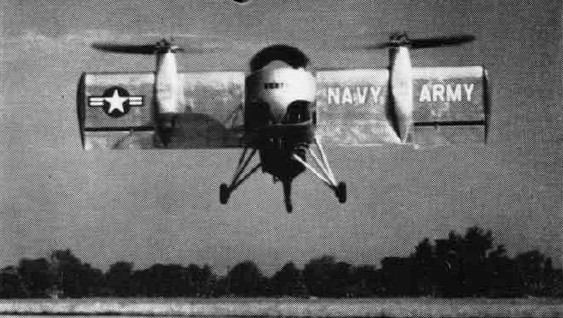
What was special about the Vertol 76?
Vertol's VZ-2 tested the tiltwing concept for vertical take-off and landing. After ground trials beginning in April 1957, it first took off on 13 August only… more…

Aviation history
Which was the most-produced American fighter of the Second World War?
The Republic P-47 Thunderbolt, of which 15,636 or 15,683 units were built, depending on the source. It was also one of the heaviest fighters of the conflict… more…

Aviation history
Who flew the E-66 at 2,149 km/h?
Konstantin or Vladimir Kokkinaki, depending on the source. Konstantin is credited with the absolute record on a closed 100 km circuit, at 2,148.66 km/h, set… more…

Fly-by-Owen (CC BY SA), vía commons Aviation history
How many I-11Bs were built?
Between 208 and around 450, depending on the source: one of the AISA I-11 reference sheets gives 208 examples built, while All-Aero speaks of around 400 built… more…

Aviation history
How many HH-53s could be converted to Pave Low III?
Eight HH-53C aircraft received an improved systems package and were redesignated HH-53H Pave Low III. The other figure in circulation, nine MH-53H and 32… more…

SCDBob (CC BY SA), vía commons Aviation history
What did the A129 Mangusta's armor protect?
The fuselage: the A129's airframe is armored and, according to All-Aero, designed to protect against 12.7 mm rounds, with partial protection against 23 mm… more…


