Did you know…
Is it true that a rocket crashed into the Moon?
Short answer
Yes. On March 4, 2022, an abandoned rocket stage hit the Moon near Hertzsprung crater, on the far side. NASA's LRO probe photographed the result: a double crater about 28 meters across at its longest dimension. NASA notes that the origin of that rocket remains uncertain.

An impact that was seen coming
Tracking systems for objects in high orbit detected, months in advance, that a spent upper stage, adrift for years, was on a collision course with the Moon. The impact occurred on March 4, 2022, on the far side, near Hertzsprung crater, at 5.226 degrees north latitude and 234.486 degrees east longitude. No one saw it live: no instrument was pointed at the area at that moment, so confirmation had to wait until NASA's Lunar Reconnaissance Orbiter flew over the site again and compared old images with new ones.
A double crater no one expected
The result surprised specialists. Instead of the single, rounded mark left by a compact body, a double formation appeared: an eastern crater 18 meters in diameter overlapping a western one 16 meters across, spanning about 28 meters along its longest dimension. No other known impact by a rocket stage has produced anything similar. NASA's working hypothesis is that the object carried significant mass at both ends, whereas a typical spent stage concentrates its weight near the engine and trails an empty fuel tank.
A rocket with no owner
The agency acknowledges that the object's origin remains uncertain, and notes that the crater's double shape could actually help identify it. The episode illustrates a largely invisible problem: space debris is not confined to low Earth orbit but also drifts on distant trajectories that no one tracks systematically. Natural micrometeorite impacts are constant on the Moon, but artificial ones offer something nature does not: a projectile of roughly known mass and velocity, useful for studying how craters form.
More questions
Moon and Mars
How does neil armstrong look like?
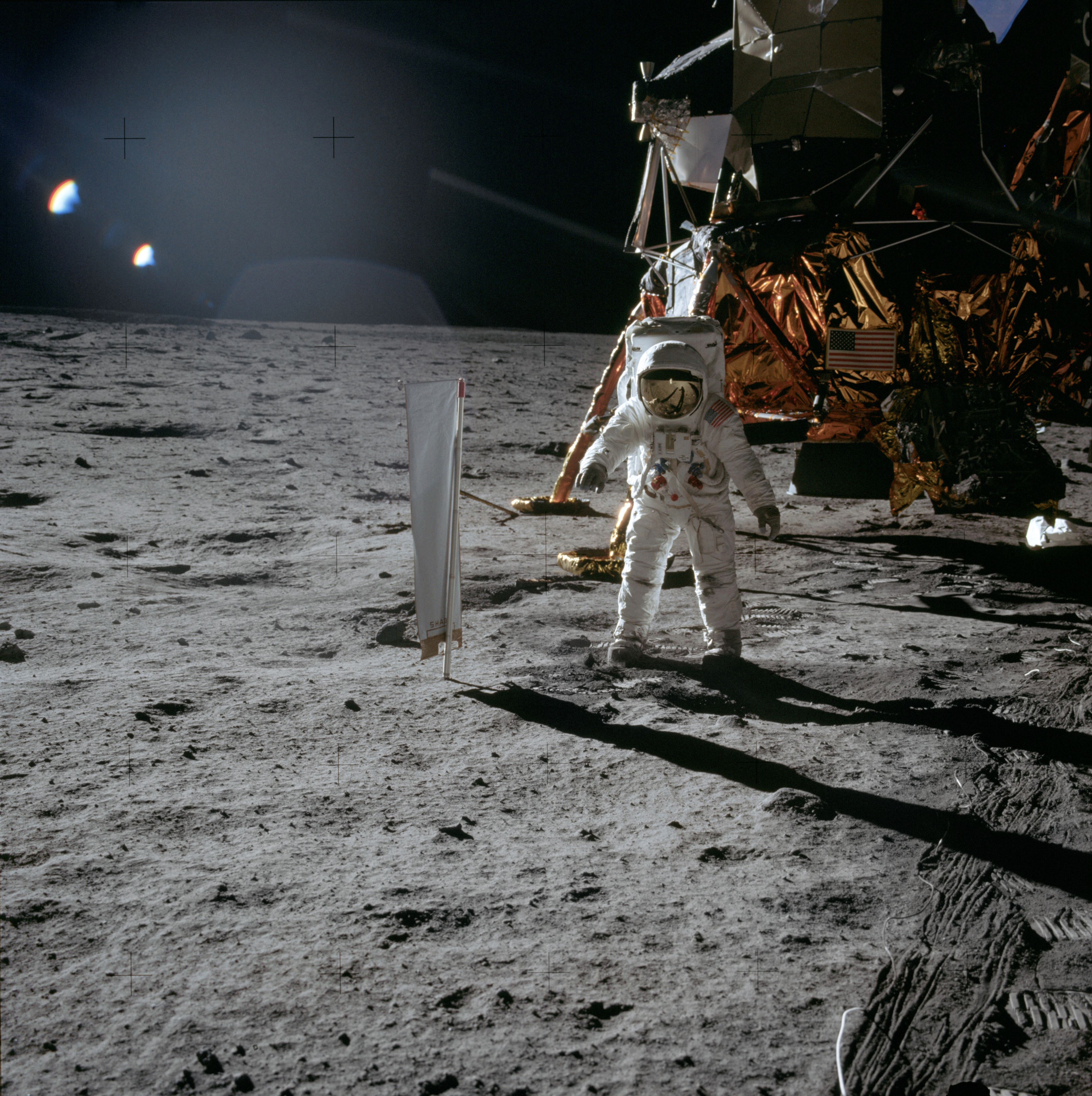
The face most people picture is not his: the gold-visored astronaut in the famous Apollo 11 photograph is Buzz Aldrin, shot by Armstrong. Armstrong himself is… more…

Richard Dorrell (CC BY SA), vía commons Moon and Mars
How does the moon affect the tides?
By pulling unevenly on it. Tidal forces vary inversely as the cube of the distance, so the near side of the Earth is tugged harder than the far side: one… more…
Moon and Mars
Why does neil armstrong have a hollywood star?
Strictly he does not have a star. Armstrong, Aldrin and Collins share four circular monuments resembling the Moon, one at each corner of Hollywood and Vine… more…
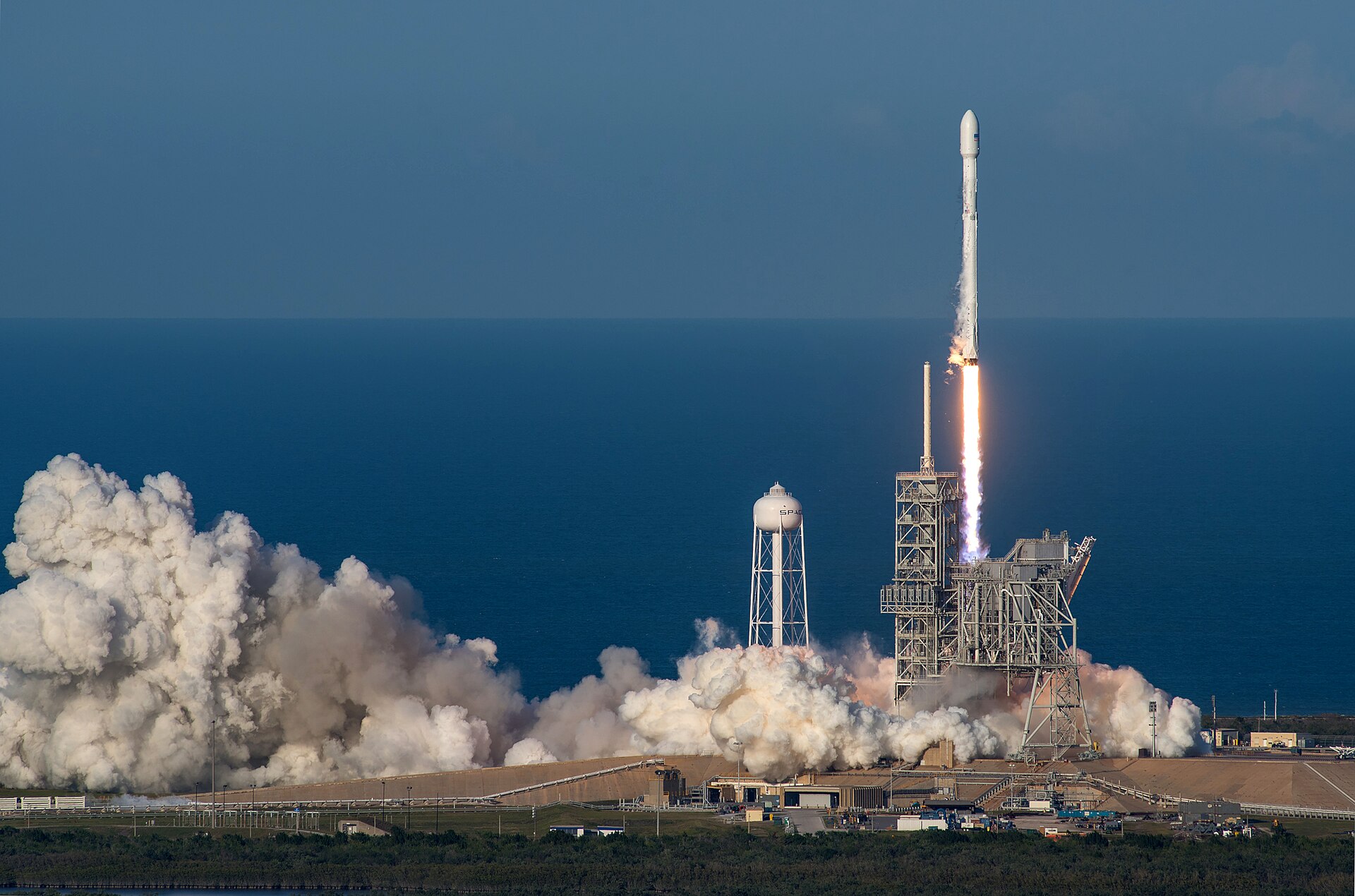
Foto: SpaceX (CC0) Moon and Mars
Why did falcon 9 hit the moon?
Because a spent upper stage on a lunar trajectory has no mission and no way to steer. A Falcon 9 upper stage from the January 2025 Firefly Blue Ghost 1 launch… more…
Moon and Mars
How much apollo 11 cost?
NASA never published a price for Apollo 11 on its own; what is documented is the program. The United States spent $25.8 billion on Project Apollo between 1960… more…
Moon and Mars
How much time neil armstrong spent on moon?
Armstrong and Aldrin spent 21 hours, 36 minutes on the Moon's surface, almost all of it inside the lunar module Eagle. Armstrong stepped onto the surface… more…

